 EMERGING TECH
EMERGING TECH
EMERGING TECH


EMERGING TECH

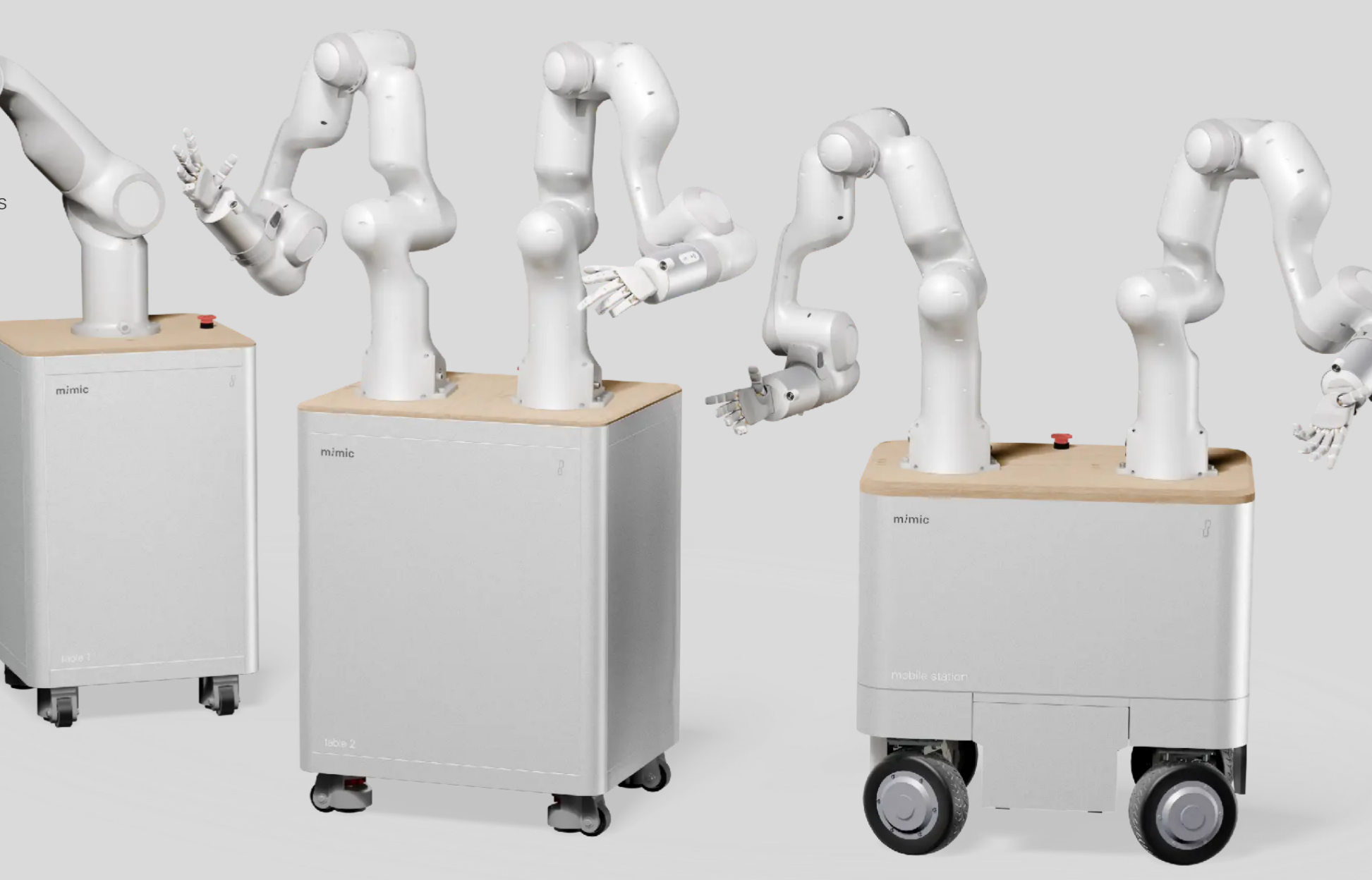
Switzerland-based Mimic Robotics AG today announced it’s launching a new specialized robotic hand that looks and behaves like a human hand, introducing a new architecture for embodied robotics.
Physical AI, or embodied artificial intelligence, combines AI models and sensors that can perceive the world with robotic frameworks that can intelligently plan and execute tasks.
Mimic Robotics not only develops AI models that provide high-mobility robotic hands with the architecture to understand and interact with the world, but it also builds the hands themselves. As part of today’s announcement, the company released the Mimic hand M1.0 for industrial automation.
The M1.0 is designed and manufactured in Switzerland, in-house, and weighs about 4 pounds. It uses bidirectional pulley-guided tendons, somewhat similar to a human hand, allowing the hands to flex fingers and grip objects. To prevent crushing or bruising of fragile or soft objects, it includes tactile fingertip sensors that provide information about different force angles. The hands also come with a variety of gloves for different applications.
Mimic argues that the robotics domain, especially when it comes to embodied AI, suffers from two massive challenges: Robotics lacks the vast corpus of internet data that large language models use as a growth engine — sheer volumes of human-generated text — and the current robotic trend toward two-finger grippers is a mismatch for human hand dexterity.
These two problems collide when it comes to physical AI attempting to mimic, as it were, human poses, grips and fine activity. Although it’s possible to train AI systems based on video, giving them trajectories, a physical understanding of how the world looks and how human hands approach and grab objects. The two-finger design doesn’t operate like a hand; its grip is completely different from how humans grab and manipulate objects.
To solve this, Mimic designed a system that blends human video pretraining to provide robotic embodiment during the understanding phase, then uses physical data from wearables during mid-training to deliver the last mile.

Mimic’s M1.0 hands exhibit tremendous dexterity. In a video, the company showed one using a pair of tweezers to pick up a packaged integrated circuit and lay it on a printed circuit board, then carefully tap it into place. Another picked up a bolt between two fingers and passed it off to another hand. The hands have enough grip strength to lift and hold over 25 kilograms, about 55 pounds.
Including the company’s training pipeline, the hands can be trained to perform highly fine work, as mentioned above. The company also demoed the hands moving fingers independently and forming hand signals – such as the peace sign. Although they are designed for industrial applications that require fine movements, heavy lift and robustness, this means that they could be operated gently for care situations or even potentially used to display sign language.
For industrial purposes, Mimic’s AI models and hands can provide powerful capabilities for assembly, packaging and sorting, and numerous other complex manual tasks. Coupled with cameras and touch sensors, they can operate in unstructured environments, such as opening and closing boxes, placing items, handling irregular objects, moving and placing wiring, and performing fine control tasks.
Support our mission to keep content open and free by engaging with theCUBE community. Join theCUBE’s Alumni Trust Network, where technology leaders connect, share intelligence and create opportunities.
Founded by tech visionaries John Furrier and Dave Vellante, SiliconANGLE Media has built a dynamic ecosystem of industry-leading digital media brands that reach 15+ million elite tech professionals. Our new proprietary theCUBE AI Video Cloud is breaking ground in audience interaction, leveraging theCUBEai.com neural network to help technology companies make data-driven decisions and stay at the forefront of industry conversations.