 INFRA
INFRA
INFRA
INFRA


INFRA

Intel Corp. today announced that it will produce processors for Fortinet Inc. firewalls.
The deal marks a major milestone for the chipmaker’s foundry business. The unit, which makes processors for other companies based on their custom designs, is at the center of Intel’s long-term growth strategy. Fortinet is the first foundry customer that the chipmaker has publicly named.
Nasdaq-listed Fortinet is a major supplier of data center firewall appliances. Its systems scan network traffic for malware, attempts to move sensitive data to external servers and other threats. The firewalls also enable workers to remotely log into business applications via virtual private network connections.
Fortinet’s newest appliances are powered by a custom chip called the SP5. It combines two Arm-based central processing unit cores with circuits optimized for networking and cybersecurity tasks. Intel will help Fortinet design and manufacture the successor to the SP5, which will aptly be called the SP6.
The companies didn’t share the chip’s specifications. However, they did disclose that it will be made using the Intel 4 process that the chipmaker debuted in 2022.
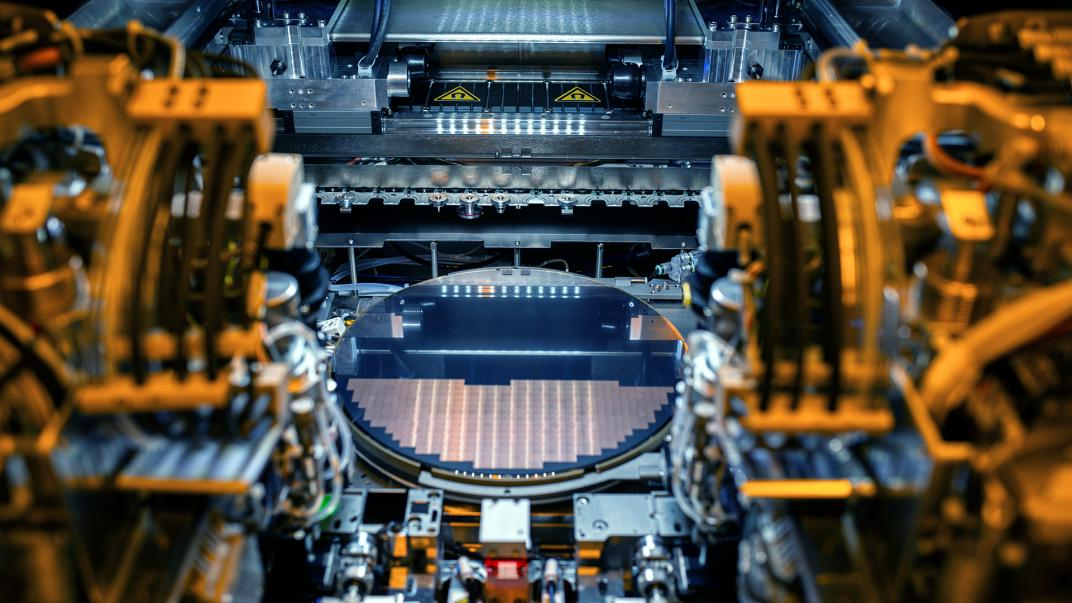
The launch of the node marked Intel’s switch to the EUV machines that now underpin its production lines. The systems use beams of ultraviolet light to carve transistors into wafers. Additionally, Intel adopted a copper-based interconnect design that helped boost chip reliability.
Fortinet’s most advanced firewalls include not only the SP5 but also two other custom chips. The first is a so-called content processor that performs cybersecurity tasks such as comparing files to known malware signatures. The other chip, in turn, carries out auxiliary networking chores.
Intel and Fortinet said today that they will explore opportunities to expand their partnership. That might mean broadening the manufacturing collaboration beyond the SP6 to the firewall maker’s other custom chips. Plus, Fortinet makes switches and Wi-Fi access points that may potentially also benefit from custom silicon.
The Fortinet deal could be followed by more foundry partnerships in the near future.
In May, Intel Chief Executive Officer Lip-Bu Tan disclosed that the company was expecting foundry commitments from multiple customers during the second half of 2026. He stated that the demand is being driven by Intel 18A, the company’s newest manufacturing process.
The chipmaker touts Intel 18A as its most significant node upgrade in more than a decade. The process can provide 18% more computing capacity than its predecessor or a 38% decrease in electricity use. The efficiency improvements are the fruit of a new transistor design, enhanced power delivery wires and tiny energy storage modules called Omni MIM capacitors.
Apple Inc. and Nvidia Corp. are reportedly considering Intel 18A for future chips. They’re said to be evaluating a version of the node called Intel 18A-P that delivers 9% higher performance than the standard edition. It’s believed the companies could start making chips using the process in 2028.
Support our mission to keep content open and free by engaging with theCUBE community. Join theCUBE’s Alumni Trust Network, where technology leaders connect, share intelligence and create opportunities.
Founded by tech visionaries John Furrier and Dave Vellante, SiliconANGLE Media has built a dynamic ecosystem of industry-leading digital media brands that reach 15+ million elite tech professionals. Our new proprietary theCUBE AI Video Cloud is breaking ground in audience interaction, leveraging theCUBEai.com neural network to help technology companies make data-driven decisions and stay at the forefront of industry conversations.