 AI
AI
AI
AI



AI

Global adoption of artificial intelligence has reshaped many landscapes over the past few years, including the competitive dynamics of the technology industry itself.
There was a time when the best semiconductor or cloud services model could dictate much of the market. That era has given way to a new paradigm in which the integration of silicon, software, networking and the developer ecosystem matters most. As theCUBE Research team recently noted, the basis of competition has shifted from individual components to complete platforms.
This shift will ultimately drive the economics of AI, with the AI factory occupying the center of enterprise infrastructure. What separates the winners from the losers will be their ability to deliver customer value from AI investments.
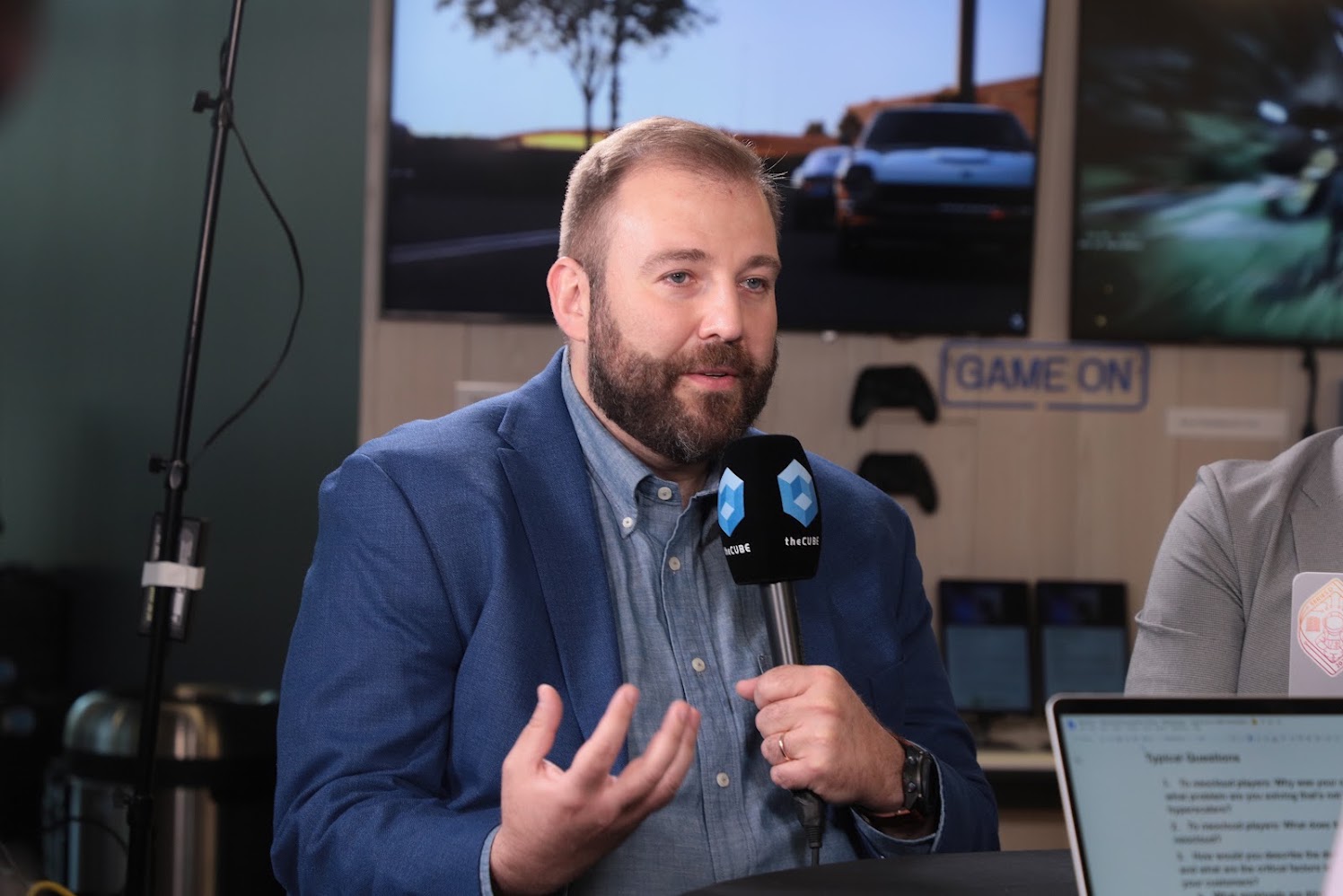
“We’re branching and diverging in a pretty active way,” said Ilya Tabakh (pictured), vice president of innovation at TensorWave Inc. “As folks introduce these new concepts of deep thinking or agentic or things that change the GPU to CPU balance, a lot of it is what are you trying to do? We can talk about tokens, but ultimately people are interested in value creation. At the end of the day, [if] I put a watt or a dollar or whatever in, am I getting the thing that I expected out? This is a new chapter there.”
Tabakh spoke with theCUBE Research’s Dave Vellante for the “Beyond The GPU: The Full-Stack Fight for Enterprise AI” exclusive interview series with theCUBE, SiliconANGLE Media’s livestreaming studio. Executives from Supermicro, AMD, Vast Data, TensorWave and Crusoe discussed the growing importance of storage, networking and open ecosystems, and what it takes to build the next generation of enterprise AI infrastructure. (* Disclosure below.)
Realizing value requires a framework that can integrate various tools and technologies for AI training and inference. To provide that support, TensorWave has introduced ScalarLM, a fully open-source AI platform for training, fine-tuning and serving large language models. ScalarLM operates on a GPU-agnostic architecture, supporting both AMD and Nvidia processors without requiring code changes.
“We’ve done quite a bit of work in helping folks think through how to reduce time to value,” Tabakh told theCUBE. “[ScalarLM] combines inference and training and the whole idea is to get around this conversation of, ‘Hey, let’s build a data center and connect it to the IT network.’ It’s more on focusing on, ‘Can I tune and train an application, a model to my specific use case?’ By minimizing that time to value, organizations are able to wrap their heads around what it is going to take and baseline their workload.”
TensorWave’s embrace of an open-source AI platform highlights how technology companies are working to provide customers with a broader range of options. The different architectures developing around AI require an open ecosystem, according to Linda Yang, director of AI product management at Super Micro Computer Inc.
“When I think about open ecosystem or open architecture, it’s where you have the playground that allows different architectures, different software stacks that can run freely as well as most effectively on that playground,” Yang said. “Look at our partner customers … we work closely together to define what we mean by open ecosystem. We are working closely with each other, we help each other define what’s best for our common customer together.”
The ability to design open systems has also shaped Crusoe’s approach as it seeks to build sustainable AI infrastructure. Umair Piracha, senior director of supply chain and strategic sourcing for Crusoe Cloud at Crusoe Inc., views flexibility and freedom of choice as key ingredients in the next wave of industry-specific AI value.
“The goal isn’t to standardize on one piece of technology,” Piracha said. “The goal is to standardize on outcomes while maintaining the freedom of choice. System design is open. The reason we are with AMD is because of the open architecture. And the systems with Supermicro, which really helps us, they are upgradeable. We can swap things out; we can swap compute out.”
The flexibility described by Piracha has been a key element in the rise of neoclouds, specialized AI-first cloud providers focused on delivering the computing power needed for the next generation of applications and workloads. In addition to gaining access to GPUs, enterprises must also consider CPUs, accelerators, storage, cooling, networking and software portability.
A neocloud ecosystem featuring AMD, Supermicro, Crusoe and TensorWave is working to bring those pieces together within an integrated framework. For AMD, this involves designing architectures that support the needs of neoclouds and their users.
“If you take a look at the transition that we’re making, our current architecture class, state-of-the-art is our MI355X GPUs, and we have eight of those that are tightly connected in a pod,” said Ted Marena, director of market development, GPU AI data center OEM/ODMs at AMD. “As we move to our next generation, MI455X, we’re scaling that up to where you have 72 GPUs now, tightly interconnected. So, the scale-up and scale-out network significantly increased to allow communication to happen more quickly and to deliver the answers and the responses in a more timely manner. It’s more profitable for the neoclouds and for the customers.”
The rise of neoclouds has also given enterprise customers an alternative to the services provided by legacy hyperscalers. This is a byproduct of denser infrastructure, in which interconnected GPUs represent a different model, according to TensorWave’s Tabakh.
“Hyperscalers have a lot of applications, they have software, they have different types of loads, and they’re very good generalists,” Tabakh said. “The neocloud and a dense AI data center are a new type of ask. The basic physics of this is that you need more GPUs, more closely connected. Being a generalist doesn’t serve you well because you have an existing fleet. You have a pretty wide mix of expertise, and many of those things are not applicable in this high density, more industrial type setting.”
The introduction of new technologies can also create new bottlenecks. AI accelerators can deliver value only when they receive data at an effective speed, placing more pressure on networks and the system input-output path.
A combination of AMD’s EPYC processor, Supermicro’s H14 server and Vast Data’s AI Operating System is designed to provide a balanced and efficient framework for storage in the AI era.
“Storage is this unique workload in the world of computer science because it has to balance directionally from pulling data, reading data off of a collection of solid state drives but also pushing it out over the wire,” said John Mao, VP of global business development at Vast Data Inc. “You see this constant back and forth. You squeeze the balloon on the SSD side, then it’s the network that becomes swollen and bottlenecked. You do the other side with the network, and then the SSDs become the bottleneck. It’s a constant balancing act that we see, which makes this all fun.”
To avoid bursting that balloon, the three companies have focused on enabling CPUs to orchestrate the flow of data to GPUs. This work has involved new generations of AMD CPUs that leverage PCIe architecture to improve bandwidth, according to Penny Tseng, who helps lead product marketing development at AMD.
“Around the November timeframe, AMD is launching in the market the first PCIe Gen 6 CPU from x86,” Tseng told theCUBE. “That can help the GPU access the right data. The CPU gives extra memory bandwidth that moves data faster compared with generation to generation. The AMD CPU can keep on increasing performance, giving double bandwidth to catch up with what the GPU needed.”
AMD’s work in the CPU market has become more urgent with the rise of agentic AI. As enterprises increasingly deploy agents to perform autonomous tasks, they need the right data infrastructure to support those workloads.
“With more agentic AI happening now, it’s proved that SSD is much needed for this data ingestion, data tier platforms,” explained Ben Lee, director of solution management at Supermicro. “But then because you have fast SSD, that’s why you definitely need a high-speed CPU. The CPU can really not just be the bridge for all of these PCIe lanes for the SSD, but also for the NIC card, and also provide sufficient computational powers to deal with this workload. We try to work very closely with AMD and also Vast to tackle this problem.”
As trusted enterprise systems of record converge with AI-driven applications and agents, it becomes even more critical for the various elements of AI infrastructure to work together.
In May, AMD announced that its next-generation EPYC processor, codenamed “Venice,” was ramping up production in Taiwan. AMD is working to integrate Venice into the Supermicro server family while providing broader rack-scale infrastructure and improvements in performance and efficiency.
“Venice itself, the way I would describe it is it’s the highest performance solution that is going to be on the market on the x86 side,” said Derek Dicker, corporate VP of the Enterprise Business Group at AMD. “Generation over generation, we’ll see a 70% performance increase in the product itself. We’re featuring PCIe Gen 6 time-to-market with an ecosystem that we’re building wrapped around it, again in partnership with Supermicro.”
For Supermicro, the launch of Venice provides several ways to enhance its server product line with the new EPYC processor. These include integration with Supermicro’s slim rackmount computer chassis, known in the industry as a “pizza box,” as well as denser computing systems, according to Vik Malyala, chief business officer of Supermicro.
“When we started looking at Venice, one of the things that we started looking at was what are the environments that it is going to be deployed in besides the traditional way,” Malyala told theCUBE. “For example, we have our standard 1U, 2U pizza boxes with a single or dual socket. Then we extended that into a dense compute, like FlexTwin, which is liquid cooled platforms. Then we have integrated switch into that for those who wanted to have a dense compute, but in a, let’s say, smaller form factor like a SuperBlade. And the product lines extends, one after the other.”
Here’s the “Beyond The GPU: The Full-Stack Fight for Enterprise AI” exclusive video series playlist:
(* Disclosure: TheCUBE is a paid media partner for the “Beyond the GPU: The Full-Stack Fight for Enterprise AI” video series. Neither Supermicro, the sponsor of theCUBE’s event coverage, nor other sponsors have editorial control over content on theCUBE or SiliconANGLE.)
Support our mission to keep content open and free by engaging with theCUBE community. Join theCUBE’s Alumni Trust Network, where technology leaders connect, share intelligence and create opportunities.
Founded by tech visionaries John Furrier and Dave Vellante, SiliconANGLE Media has built a dynamic ecosystem of industry-leading digital media brands that reach 15+ million elite tech professionals. Our new proprietary theCUBE AI Video Cloud is breaking ground in audience interaction, leveraging theCUBEai.com neural network to help technology companies make data-driven decisions and stay at the forefront of industry conversations.