 AI
AI
AI
AI









AI

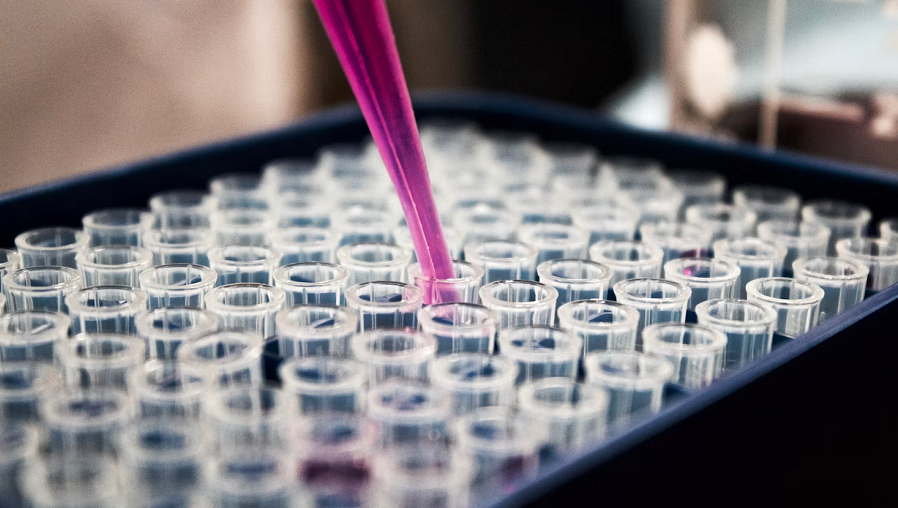
Anthropic PBC has opened a wet lab, a facility dedicated to biology research, in the San Francisco Bay Area.
Reuters reported today that the company will use robots to automate certain scientific tasks at the hub. The robots will be powered by Anthropic’s Claude series of large language models.
It’s unclear what research projects the lab will pursue. In June, Anthropic launched an effort to develop drugs for diseases that the pharmaceutical sector isn’t prioritizing. A company spokesperson told Reuters that the new Bay Area lab is “not for drug discovery specifically.” That suggests the facility will also pursue research in other subfields of biology.
Many drugs neutralize disease cells by disabling one of their constituent proteins. The prerequisite to disabling a harmful protein is to find a way of attaching medicine to it. Usually, that task is performed by molecules called high-affinity binders.
Anthropic evaluated Claude Mythos 5.1’s ability to develop high-affinity binders ahead of its release earlier this month. The model generated 12 candidate molecules during the test. Anthropic says that the molecules’ hit rate, a measure of their therapeutic potential, was 50%. Protein design projects usually achieve a hit rate of 10% to 15%.
The fact that Anthropic will use Claude to control robots at its new lab hints the facility will make use of the Model Hardware Standard, or MHS. It’s a protocol that enables Claude to control lab equipment. AI models can also use MHS to spot experiment errors, fix them and write hardware automation scripts.
Mapping out a new biological phenomenon often requires researchers to analyze it with several different lab instruments. Those machines must carry out their work in a specific order. Usually, researchers manually write scripts to coordinate which instrument should perform what action and when. MHS simplifies that task to the point it can be performed reliably by Claude.
According to Reuters, Anthropic plans to entrust some lab work to external partners. The company developed its MHS protocol in partnership with a Virginia-based medical research center called HHMI. In August, Anthropic stated that the institute is one of several organizations that are testing ways of using MHS-powered Claude workflows to control lab equipment.
The AI developer told Reuters that it’s not “competing with pharma and biotech companies.” That suggests Anthropic may be planning to license Claude’s discoveries to pharmaceutical companies instead of bringing them to market on its own. Developing a new drug takes billions of dollars and more than a decade of work. Offloading some of that work to external partners could simplify Anthropic’s life sciences push.
Support our mission to keep content open and free by engaging with theCUBE community. Join theCUBE’s Alumni Trust Network, where technology leaders connect, share intelligence and create opportunities.
Founded by tech visionaries John Furrier and Dave Vellante, SiliconANGLE Media has built a dynamic ecosystem of industry-leading digital media brands that reach 15+ million elite tech professionals. Our new proprietary theCUBE AI Video Cloud is breaking ground in audience interaction, leveraging theCUBEai.com neural network to help technology companies make data-driven decisions and stay at the forefront of industry conversations.