 AI
AI
AI
AI



AI

Physical AI needs context about its surroundings to adapt beyond a fixed set of instructions.
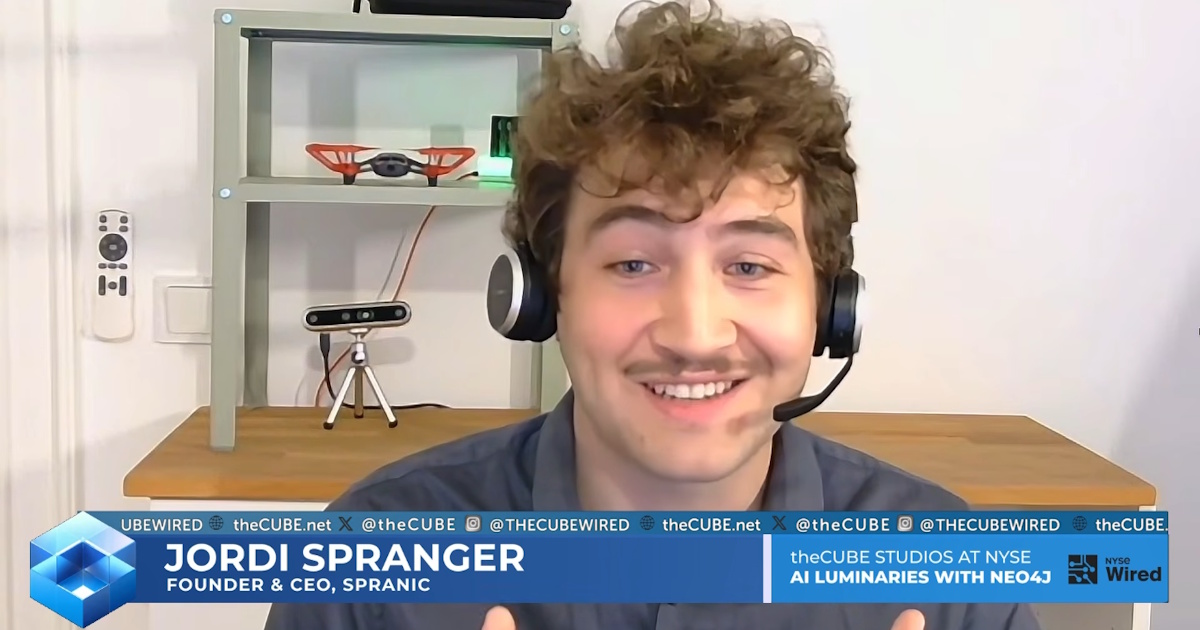
Munich-based Spranic is building a spatial memory layer that records physical spaces and how they change. Connecting that information with knowledge graphs could help robots interpret their environments across different tasks, according to Jordi Spranger (pictured), founder and chief executive officer of Spranic.
“Robots deserve the right context at the right time across domains,” he said. “This is the problem we’re tackling. We can see that this works really well for digital agents already. Now we’re bringing this to the physical world.”
Spranger spoke with theCUBE Research’s John Furrier for theCUBE + NYSE Wired: AI Luminaries interview series on theCUBE, SiliconANGLE Media’s livestreaming studio. They discussed how knowledge graphs could help robots adapt tasks and make their decisions auditable. (* Disclosure below.)
Adapting machines to changing environments remains a challenge for physical AI. Reusable spatial context can reduce the task-specific planning required for robot deployments, according to Spranger.
“But for robots, maps are a really big part,” he said. [Robots] need Google Maps on steroids to be really free from a statically planned task [so they] can replan across a lot of tasks that a humanoid could do.”
Flexibility also requires knowing where a robot’s information comes from, according to Spranger. Knowledge graphs can connect relevant sources while preserving provenance — the origin of the data used to inform an action.
“At the end of the day, a lot of domains have to come together and graphs are really good at connecting domains,” he said. “Robots … act in a huge variety of different scenarios. They need to have the right information sources, provenance as well, and work in an auditable way, in a safe way. Graphs provide the flexibility to connect data sources that are needed and remove data sources that are not needed.”
Here’s the complete video interview, part of SiliconANGLE’s and theCUBE’s coverage of theCUBE + NYSE Wired: AI Luminaries interview series:
(* Disclosure: TheCUBE is a paid media partner for theCUBE + NYSE Wired: AI Luminaries interview series. Neither Neo4j, the sponsor of theCUBE’s event coverage, nor other sponsors have editorial control over content on theCUBE or SiliconANGLE.)
Support our mission to keep content open and free by engaging with theCUBE community. Join theCUBE’s Alumni Trust Network, where technology leaders connect, share intelligence and create opportunities.
Founded by tech visionaries John Furrier and Dave Vellante, SiliconANGLE Media has built a dynamic ecosystem of industry-leading digital media brands that reach 15+ million elite tech professionals. Our new proprietary theCUBE AI Video Cloud is breaking ground in audience interaction, leveraging theCUBEai.com neural network to help technology companies make data-driven decisions and stay at the forefront of industry conversations.