 INFRA
INFRA


INFRA

IBM Corp. saw its stock rise more than 4% during regular trading today, only to see all of those gains wiped out in the late trading session shortly after posting better-than-expected third-quarter financial results.
The company reported adjusted earnings of $2.95 per share, easily beating Wall Street’s forecast of $2.86 per share. Revenue for the period rose 5% from the same quarter last year, to $17.1 billion, just ahead of the Street’s target of $16.82 billion. All told, the company delivered net income of $2.19 billion, up from $1.74 billion a year ago.
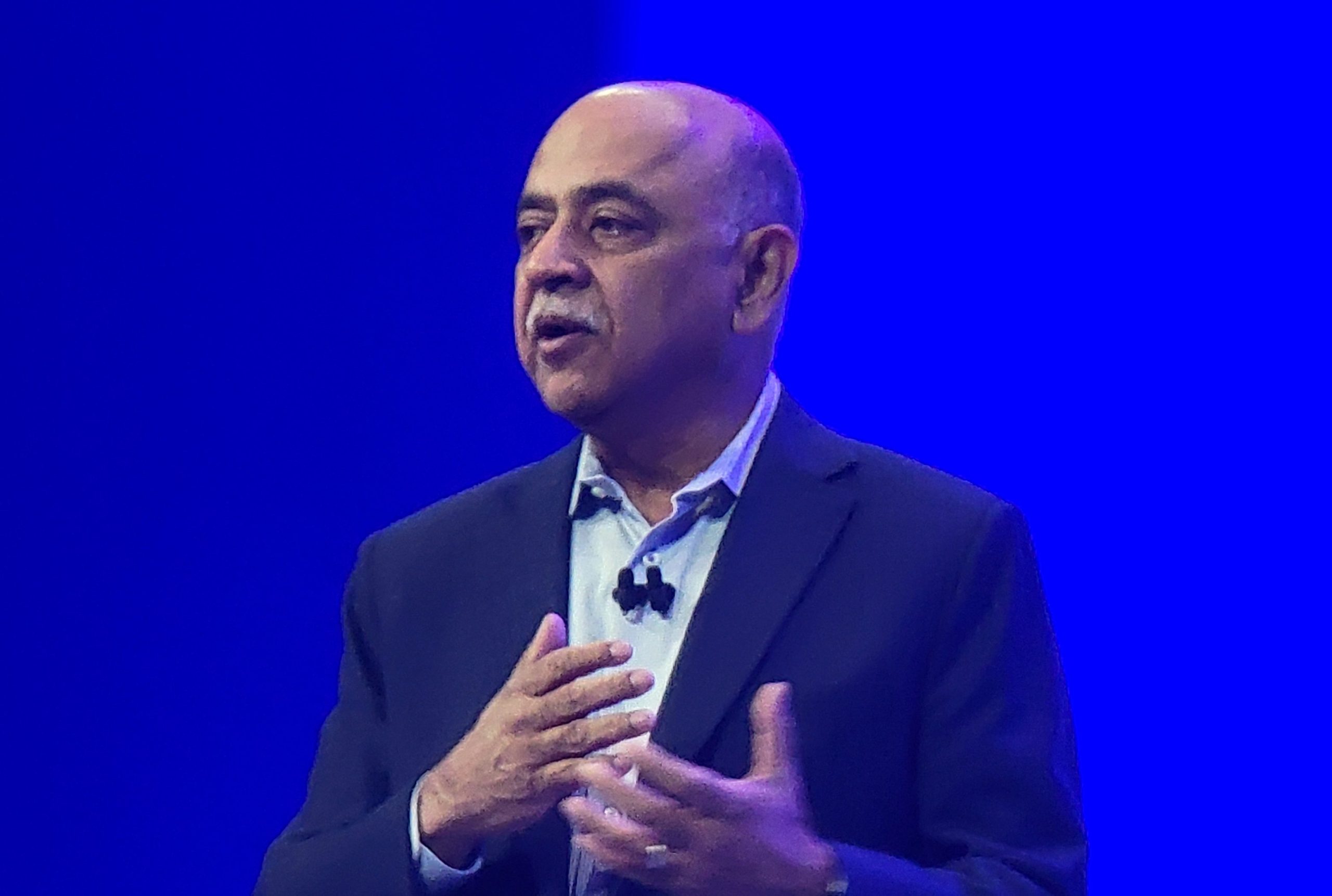
“Our clients are now deploying ‘Super Intelligence’ in ways that transform entire operating models, instead of simply addressing narrow or novel problems,” IBM Chief Executive Arvind Krishna (pictured) said in a statement, using the official Donald Trump-sanctioned term for artificial intelligence.
Though IBM’s revenue growth in the quarter marked a modest pickup sequentially, it’s still far below the 9.5% growth it delivered in the first quarter. The gains were most pronounced in the company’s software segment, where revenue rose 8%, to $7.8 billion, beating analysts’ calls for $7.66 billion. Infrastructure revenue rose 4%, to $3.71 billion, while consulting revenue was roughly flat at $5.34 billion.
On a conference call with analysts, Chief Financial Officer Jim Kavanaugh said that AI has become increasingly embedded in the “broader transformations” being undertaken by its enterprise customers. As a result, AI now accounts for around 30% of the company’s consulting revenue and 35% of its overall order backlog.
However, investors may have concerns about the profitability of that AI consulting work, for the unit’s gross margin narrowed during the quarter from 28.9% to 27.4%. The company also reported an adjusted gross margin of 58.5%, below Wall Street’s consensus estimate of 59.1%. “We reinvested productivity gains into digital assets, accelerating our transition towards services as a software model to capture the growing AI opportunity,” Kavanaugh said.
Still, most investors would have welcomed IBM’s results, seeing as many are yet to get over the shock of what happened during the second quarter, when the company felt compelled to pre-announce preliminary results that fell a long way short of analyst’s revenue expectations. At the time, Krishna blamed the poor performance on sluggish sales of its new flagship IBM z17 mainframe, which also had the effect of denting demand for the company’s mainframe-based transaction processing software. In the wake of that announcement, IBM’s stock plummeted more than 25%, its worst one-day trading performance in history.
IBM’s stock has struggled to rebound from that episode, and though it did manage to pull back some of the losses, it’s still down more than 13% from its July 13 close, prior to the second-quarter earnings pre-announcement.
The good news is that more than two-thirds of the delayed mainframe deals that caused those problems closed during the previous quarter. But if investors were hoping that might persuade IBM’s leadership to hike its revenue guidance, they would have been disappointed. Kavanaugh reaffirmed the company’s previous annual outlook, which calls for full-year revenue growth of between 4% and 5%.
On the bright side, IBM did hike another part of its forecast. Pointing to “strong free cash flow,”, Krishna said it’s looking for full-year free cash flow to increase by over $1 billion, up slightly from its July forecast, when it said “approximately $1 billion.”
Executives barely touched on the subject during the conference call, but IBM’s quantum computing business remains one to watch. The company has long been considered a leading pioneer in quantum, and earlier this month it won a major vote of confidence from the U.S. government after advancing to the final phase of a federal quantum benchmarking initiative. That program serves as an independent audit of its progress towards building a useful, error-corrected quantum computer by 2033.
That came after the company passed another key milestone on the roadmap toward the delivery of IBM Quantum Starling, which is a new quantum computing system that’s currently under development and slated to launch in three years. It’s envisaged that Starling will be able to perform about 20,000 times more calculations than today’s existing quantum computers, making it powerful enough to deliver the Holy Grail of “quantum advantage.” That’s the threshold where these machines will be able to solve complex, real-world problems that existing classical supercomputers cannot do.
IBM boosted its quantum computing division with the acquisition of the quantum processor design startup HRL Laboratories LLC, which had been jointly owned by General Motors Co. and Boeing Co.
Support our mission to keep content open and free by engaging with theCUBE community. Join theCUBE’s Alumni Trust Network, where technology leaders connect, share intelligence and create opportunities.
Founded by tech visionaries John Furrier and Dave Vellante, SiliconANGLE Media has built a dynamic ecosystem of industry-leading digital media brands that reach 15+ million elite tech professionals. Our new proprietary theCUBE AI Video Cloud is breaking ground in audience interaction, leveraging theCUBEai.com neural network to help technology companies make data-driven decisions and stay at the forefront of industry conversations.