 INFRA
INFRA



INFRA

Moving enterprise AI applications into production requires more than increasingly capable models. Enterprises need secure access to business data, reliable infrastructure and greater control over autonomous agents as organizations look to turn AI experimentation into measurable business results.
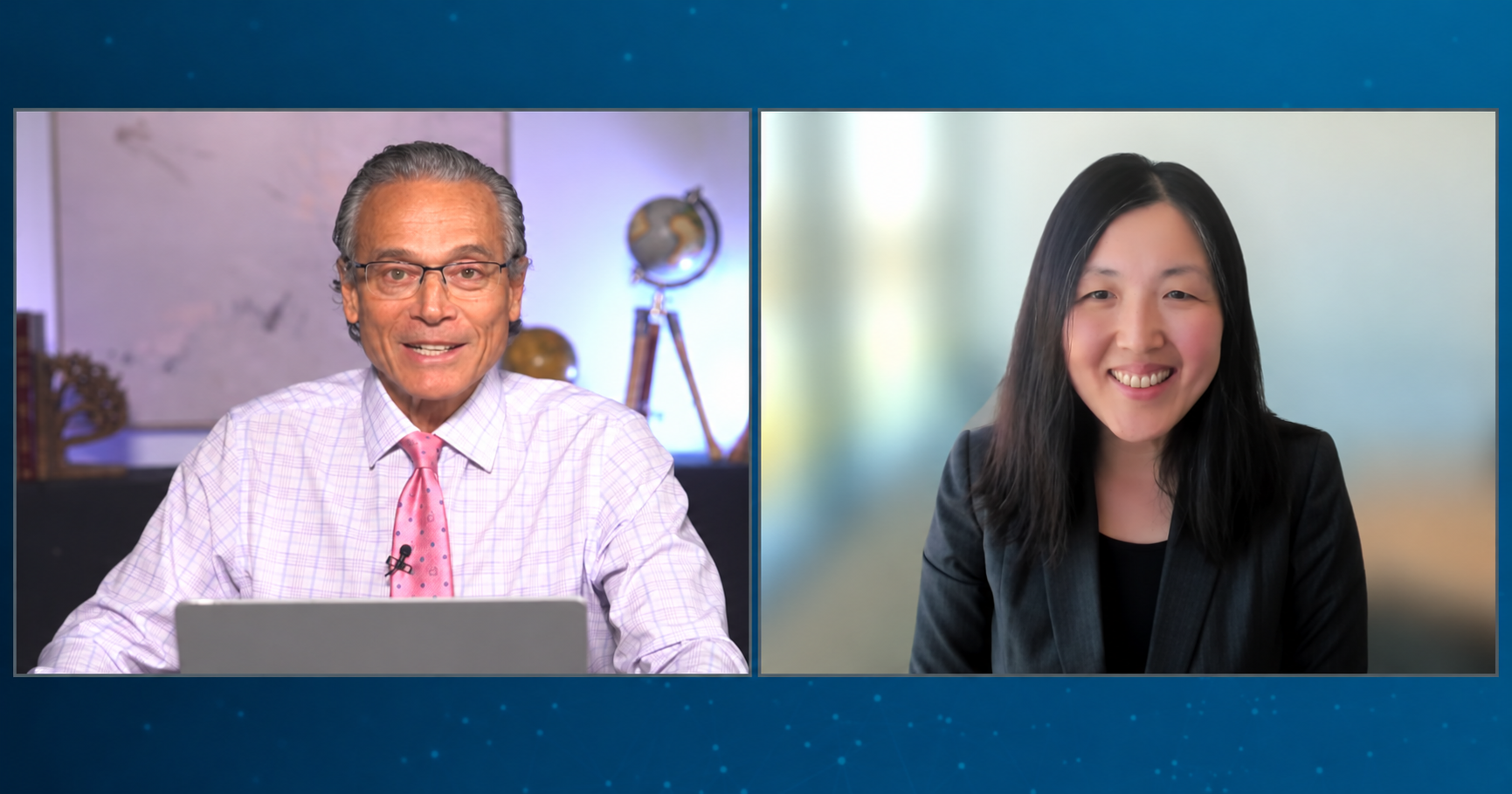
“AI is moving fast. Threats are moving just as fast, and the race is on to build enterprise AI that’s not just intelligent, but trusted, secure and, of course, ready for production,” said Dave Vellante (pictured, left), chief analyst at theCUBE Research. “One of the biggest conversations at Oracle AI World will be about what it takes to move enterprise AI from experimentation to production and how to secure it against an entirely new generation of AI-driven threats.”
Ahead of Oracle AI World 2026, taking place Oct. 25–28 in Las Vegas, Oracle Corp. executives joined Vellante for nine pre-event interviews previewing the conference’s “Data Deep Dive” programming. Their conversations highlight Oracle’s approach to trusted agentic AI, database modernization, cybersecurity and application development, along with the technical innovations intended to help enterprises deploy AI at scale.
The interviews also preview Oracle’s upcoming product spotlight sessions, technical demonstrations and hands-on activities, including a hackathon combining OpenAI Codex with Oracle AI Database. TheCUBE will extend these conversations with on-site coverage of Oracle AI World on Oct. 28, featuring additional insights into enterprise AI strategies and the technologies shaping their adoption. (* Disclosure below.)
Here are nine key insights from Oracle executives ahead of Oracle AI World 2026:
Enterprise adoption of agentic AI depends on whether organizations can trust systems to make decisions and take actions involving critical business processes, according to Juan Loaiza, executive vice president of Oracle Database Technologies. Speaking with theCUBE, Loaiza explained why adding security guardrails to existing architectures is insufficient when AI applications require consistent protection and reliability. His upcoming Oracle AI World session will address how integrating AI, data management and application development into a unified architecture can provide security and control throughout the technology stack. The discussion establishes a central theme of Oracle’s Data Deep Dive programming: Trust must be engineered into the underlying architecture rather than delegated to individual AI models.
Don’t miss the full interview on theCUBE.
Making AI useful to businesses requires connecting intelligent applications with the enterprise data that gives their responses meaning, according to Hasan Rizvi, EVP of product and research, database engineering, at Oracle. His upcoming session will cover Oracle AI Database advancements designed to simplify complex data architectures, support flexible deployment choices and protect sensitive information. Rizvi also previewed capabilities for working with structured and unstructured data, building AI agents without transferring information to separate platforms and supporting AI-generated application development. Security remains a major priority, with Oracle focusing on protecting data at its source, responding rapidly to threats and maintaining resilience when incidents occur.
Find out more in the full interview on theCUBE.
AI agents accessing sensitive enterprise information must operate within enforceable security and business rules, even when applications or agents are compromised, according to Tirthankar Lahiri, senior vice president of mission-critical data and artificial intelligence engines, Oracle Database, and Sara Narayan, VP of product management, mission-critical data and AI engines, Oracle Database. Their upcoming session will demonstrate Oracle’s approach to trust across four areas: data, access, knowledge and execution. The executives previewed capabilities including Trusted Answer Search, which connects natural-language requests to validated responses, and JSON Duality Views, which help restrict agent-initiated database changes through controlled APIs. Their discussion also introduces Oracle Database’s Deep Trust Architecture, emphasizing database-enforced protections that apply regardless of whether requests originate with users, applications or autonomous agents.
Don’t miss the full discussion on theCUBE.
AI-assisted cyberattacks are changing how quickly enterprises must identify vulnerabilities and deploy security updates, according to Vipin Samar, SVP of software engineering, database security, at Oracle. Samar explained that attackers can increasingly reverse-engineer software patches to identify vulnerabilities, making traditional maintenance schedules inadequate for today’s threat environment. His Oracle AI World session will focus on improving risk visibility across entire database fleets and accelerating the deployment of security patches before vulnerabilities can be exploited. Oracle’s strategy centers on securing data at its source, responding at machine speed and strengthening resilience against increasingly sophisticated attacks.
Hear more in the full interview on theCUBE.
The gap between promising AI prototypes and production-ready applications often comes down to the strength of the underlying data infrastructure, according to Çetin Özbütün, EVP of product and research, data warehouse and autonomous database, at Oracle. Özbütün emphasized that modern AI workloads place greater demands on automated security, mission-critical availability and elastic scalability while increasing pressure to control operational costs. His upcoming session will demonstrate how Oracle Autonomous AI Database supports enterprise AI workloads through automated administration, security patching and scalable infrastructure. The discussion also addresses the economics of database automation and why organizations need a reliable data foundation to realize meaningful returns on AI investments.
Find out more in the full interview on theCUBE.
Enterprise lakehouses are expanding beyond traditional analytics to become platforms for AI-driven decisions, according to Nipun Agarwal, SVP of software engineering, Oracle Database, at Oracle. Agarwal previewed new Oracle Autonomous AI Lakehouse capabilities intended to help organizations analyze information across distributed data environments without requiring extensive data movement. His event session will address how automatically enriched business context, more selective retrieval of relevant information and expanded Apache Iceberg support can improve AI results while reducing inference costs. Attendees will also get a closer look at centralized security, data lineage and an AI-assisted workspace designed to simplify analytics and AI development.
Don’t miss the full interview on theCUBE.
Running AI workloads alongside mission-critical transactions requires infrastructure capable of delivering high performance without compromising availability, according to Jia Shi (pictured, right), group VP of data systems software engineering at Oracle. Shi highlighted Exadata Live Migration, which enables active database virtual machines using Remote Direct Memory Access to move between servers while preserving their connections and avoiding application downtime. Her upcoming session will also cover how Exadata accelerates AI vector searches and supports deployment across Oracle Cloud Infrastructure, other major cloud platforms and on-premises environments. Another focus is the use of agentic AI to diagnose and address database input/output performance problems through automated tools.
Get the details in the full interview on theCUBE.
AI coding agents are making software development more accessible, but enterprises still need applications they can understand, maintain and secure, according to Mike Hichwa, SVP of software engineering at Oracle. Hichwa previewed APEXlang, a formal application-definition language that allows AI coding agents to generate low-code applications using a structured, compilable format. The approach enables tools such as OpenAI Codex and Claude to generate application configurations while relying on the Oracle APEX engine to handle underlying execution requirements. His upcoming session will address how this abstraction can reduce technical debt, preserve human understanding of AI-generated applications and support enterprise requirements for governance and scalability.
Find out more in the full interview on theCUBE.
Oracle AI World attendees will have opportunities to move beyond discussions of AI strategy and work directly with technologies for building production-ready applications, according to Arpan Shah, SVP of database product marketing at Oracle. Shah outlined the Data Deep Dive program, which combines executive product spotlight sessions with technical demonstrations, hands-on labs and discussions about database security and agent development. A major attraction is the Oct. 28 hackathon bringing together OpenAI Codex and Oracle AI Database, where participants can build applications with guidance from Oracle and OpenAI experts. The event is designed for professional developers and other technically curious attendees, offering a practical introduction to developing AI applications using enterprise database infrastructure.
Don’t miss the full interview on theCUBE.
The conversations set the stage for theCUBE’s on-site coverage of Oracle AI World 2026 on Oct. 28 in Las Vegas. Through interviews with Oracle executives and industry experts, theCUBE will provide additional perspectives on the latest developments in enterprise AI, database innovation and cybersecurity, with a focus on how organizations are putting these technologies to work. The coverage will also highlight key announcements and practical takeaways from the event.
(* Disclosure: TheCUBE is a paid media partner for Oracle AI World. Neither Oracle, the sponsor of theCUBE’s event coverage, nor other sponsors have editorial control over content on theCUBE or SiliconANGLE.)
Support our mission to keep content open and free by engaging with theCUBE community. Join theCUBE’s Alumni Trust Network, where technology leaders connect, share intelligence and create opportunities.
Founded by tech visionaries John Furrier and Dave Vellante, SiliconANGLE Media has built a dynamic ecosystem of industry-leading digital media brands that reach 15+ million elite tech professionals. Our new proprietary theCUBE AI Video Cloud is breaking ground in audience interaction, leveraging theCUBEai.com neural network to help technology companies make data-driven decisions and stay at the forefront of industry conversations.