 IOT
IOT


IOT

All too often, manufacturing defects seem to slip past human eyes, with the result that high-speed production lines turn into expensive scrapheaps. Computer vision startup Tristar AI Inc. has just raised $12.4 million in early-stage funding in order to try to put an end to these costly mistakes.
Today’s Series A round was led by Isogon Ventures and saw participation from Blackhorn Ventures, Ford Street Ventures, NextView Ventures, TenOneTen and Capgemini’s ISAI Cap Venture Fund.
Tristar AI is gearing up to transform quality assurance in manufacturing at a critical moment for the industry. Manufacturers have found themselves squeezed by a combination of rising raw material costs and growing labor shortages, and these problems have been made even more acute by the U.S. government’s insistence on bringing more manufacturing back home.
According to data from the Capgemini Research Institute, 48% of U.S. companies have invested in reshoring projects this year. But 83% say they’re worried about the lack of skilled industrial workers needed to fulfill those initiatives.
One of the major challenges for manufacturers is that they’re still encumbered by inefficient inspection protocols that rely on either manual checks, or in a best-case scenario, rigid, rule-based machine vision systems. Quality control is essential for any manufacturing operation, but the inefficiency of these protocols makes it a significant roadblock too.
It forces companies to take skilled workers off production lines and sometimes even bring their entire operations screeching to a halt. Yet there are many occasions where they still miss subtle flaws in their products, resulting in wasted materials, downtime, missed deadlines and sometimes even very expensive customer claims.
Founder and Chief Executive Salem Karani is all too familiar with the inefficiency of manual inspection. He told SiliconANGLE that while growing up, he would often accompany his father to his family’s plastic film manufacturing plant in Houston, turning up at all hours of the day and night in order to troubleshoot production issues that could spring up at any moment. Because the company’s margins were so tight, any period of extended downtime could threaten its profitability, so he would spend hours with his dad frantically troubleshooting line errors.
It was this experience that ultimately inspired Karani, who studied computer vision at Harvard and MIT, to develop an automated quality inspection system that can operate continuously without slowing down production. “The problem was never that people didn’t care about quality,” Karani said. “It’s that people catch problems after the fact, once they’ve already cost time, materials and customers. Tristar gives every production line a live record so teams can act when it matters most.”
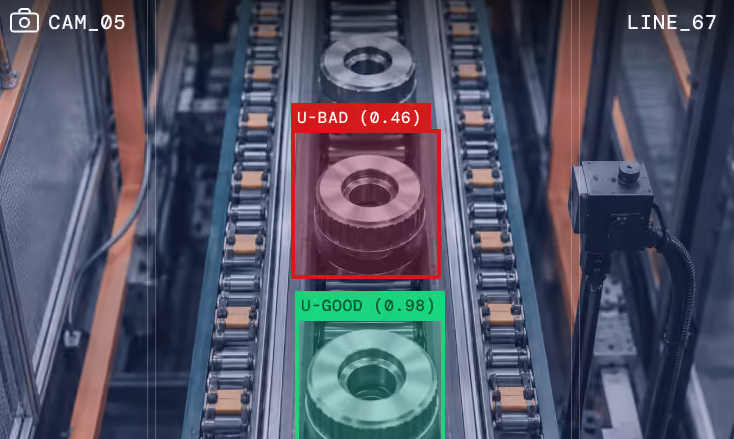
Computer vision in manufacturing operations is not a new concept, but where Tristar differs is through its use of more sophisticated artificial intelligence models that can adapt to changing conditions, materials and defect types. The startup’s platform looks at machine telemetry, the quality of the products coming off the line and the activity of human operators, allowing it to uncover issues the moment they emerge and immediately understand where the problem is, and why it occurred.
Best of all, the system can integrate with factories’ existing systems, such as cameras, sensors, programmable logic controllers, enterprise resource planning systems and so on That enables them to get up and running without an expensive overhaul.
Isagon Ventures General Partner Paco Riberas said he’s backing Tristar because manufacturers are losing far too much money to avoidable defects. “In today’s industry, precision isn’t optional, and Tristar makes it possible,” he said. “Its AI vision catches defects in real time, directly on existing production lines. Salem and his team are building the quality standard for modern manufacturing.”
Tristar’s early traction has been encouraging. Its system already monitors more than 500 production lines across North America and Europe.
Customers include global packaging giants such as Amcor, DuPont and Klöckner Pentaplast, and also some of the biggest suppliers to automakers such as Toyota, Honda and Mercedes, Karani said. Those customers report defect detection accuracy rates of between 95% and 99%, and say the platform pays for itself in an average of just four months.
Karani said the goal now is to expand Tristar’s platform into new manufacturing sectors and enhance the capabilities of its computer vision AI to try and improve its accuracy even further. Ultimately, he sees the company as the operational system of record for factory floors, giving manufacturers more visibility into everything about their production operations, from the raw materials to the finished product.
“Physical AI will play a critical role in the future of manufacturing,” said Capgemini Ventures’ Matthieu Eyriès. “Tristar combines advanced AI capabilities with a strong understanding of industrial environments, addressing concrete manufacturing challenges with measurable impact.”
Support our mission to keep content open and free by engaging with theCUBE community. Join theCUBE’s Alumni Trust Network, where technology leaders connect, share intelligence and create opportunities.
Founded by tech visionaries John Furrier and Dave Vellante, SiliconANGLE Media has built a dynamic ecosystem of industry-leading digital media brands that reach 15+ million elite tech professionals. Our new proprietary theCUBE AI Video Cloud is breaking ground in audience interaction, leveraging theCUBEai.com neural network to help technology companies make data-driven decisions and stay at the forefront of industry conversations.