 AI
AI



AI

High-performance computing and artificial intelligence are converging, driven by advances in exascale computing, accelerated systems, data storage and high-speed networking.
The convergence of these technologies is a prime topic for discussion during SC26 in Chicago this month. Major industry players, such as Dell Technologies Inc., Google LLC and Nvidia Corp., have pursued a set of initiatives in the HPC arena, and SC26 will be an occasion to learn more about how AI and HPC workloads are evolving to write supercomputing’s next chapter.
“SC26 provides an important opportunity to examine how the convergence of AI, high-performance computing and application development are reshaping enterprise infrastructure priorities,” said theCUBE Research’s Paul Nashawaty. “Organizations must connect high-performance infrastructure, accessible data and modern application development to move beyond experimentation and accelerate production-ready AI deployments. For Dell and the broader HPC ecosystem, SC26 offers a platform to demonstrate how integrated compute, storage and AI infrastructure can address these challenges.”
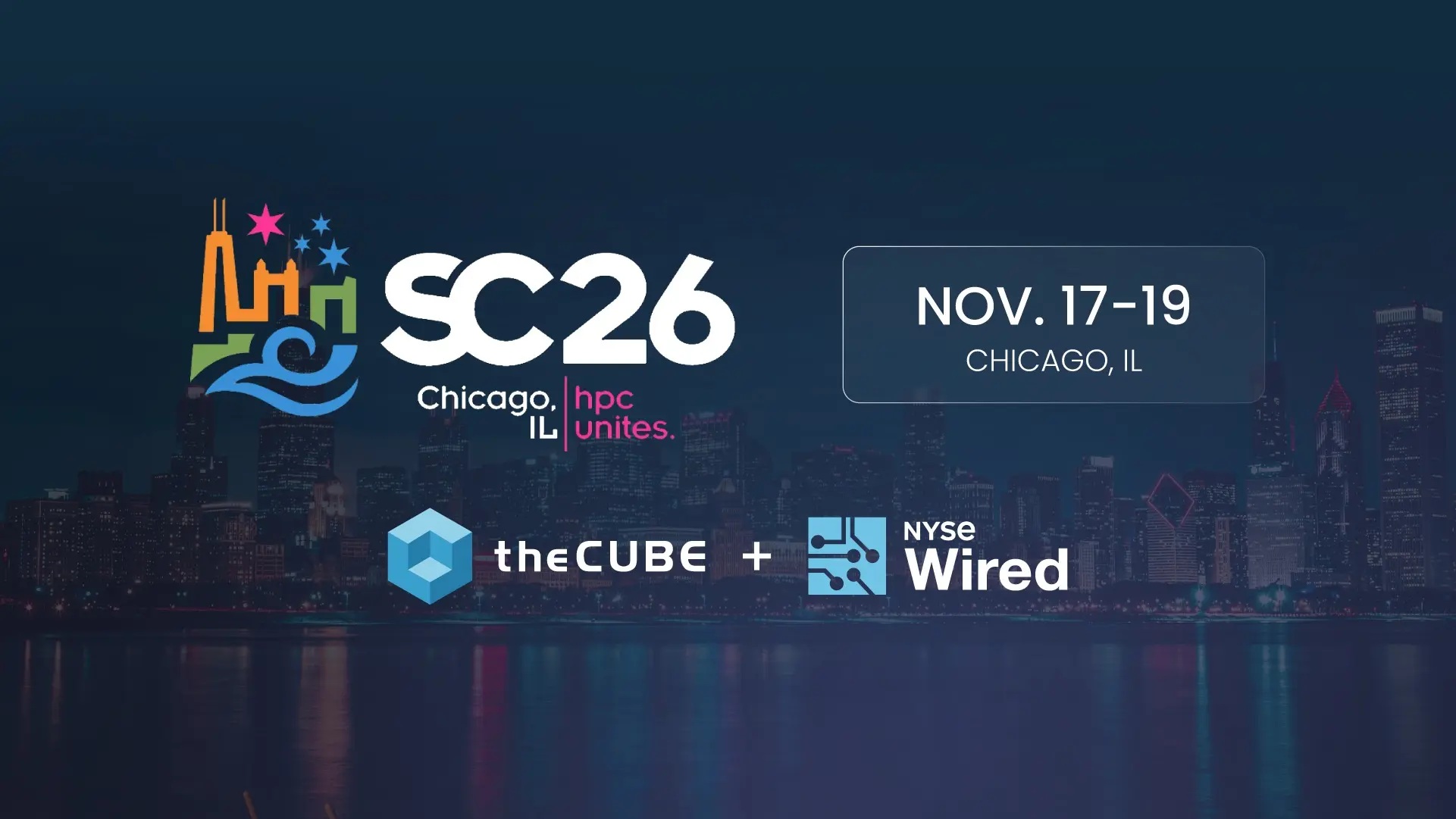
TheCUBE, SiliconANGLE Media’s livestreaming studio, will be covering the latest HPC news and announcements from SC26 in Chicago, Nov. 17–19. Coverage will feature on-site reporting and exclusive interviews with industry leaders and analysts as theCUBE explores how supercomputing’s future is being shaped at the intersection of exascale systems and AI infrastructure. Discussion will focus on ways that accelerated computing is transforming research environments, while quantum-HPC integration and agentic AI push scientific discovery toward greater autonomy. (* Disclosure below.)
Dell’s ongoing collaboration with Nvidia and other organizations has yielded several new developments in the HPC arena over the past year, particularly in the area of quantum computing.
The two companies have been working with the U.S. Department of Energy to build and deliver the Doudna supercomputer at Lawrence Berkeley National Laboratory. The system will use Nvidia’s Vera Rubin CPU-GPU platform and Quantum-X800 InfiniBand networking inside Dell’s integrated rack systems and PowerEdge servers to support large-scale scientific computing and data-intensive research.
In September, Dell announced a collaboration with silicon-spin qubit developer Diraq to integrate quantum processing units with HPC and AI server infrastructure. The joint effort is designed to integrate quantum processors with classical computing infrastructure in commercial data centers.
Moves such as these point toward a convergence of AI and quantum technologies, which will likely propel both forward as new platforms are built and deployed.
“The market for high-performance computing is meeting the AI factory at the point of innovation,” said theCUBE Research’s Dave Vellante. “HPC has always led the most challenging data problems, so this trend makes perfect sense. Quantum will be the next big inflection point and we’re seeing that new technologies are often complementary to existing infrastructure. We expect that to be the case between accelerated computing and quantum, particularly in the area of error correction.”
Hyperscaler Google Cloud is also building systems to support HPC demands for industries like manufacturing, health care and life sciences, weather forecasting and electronic design automation.
At the forefront of Google’s HPC initiative is the H4D VM, the company’s high-performance computing virtual machine. Introduced last year, the H4D VM is powered by fifth-generation AMD EPYC processors and offers whole-node VM performance of more than 12,000 GFLOPS and memory bandwidth exceeding 950 GB/s.
An example of how HPC is making inroads in daily life can be seen in the use of H4D VMs by the National Oceanic and Atmospheric Administration. In July, Google Cloud announced that it had been selected as the primary provider of high-performance computing infrastructure for the Weather and Climate Operational Supercomputing System.
The adoption of HPC to enable meteorologists and researchers to develop future forecasting models is an example of how systems technology will play a critical role in both supercomputing and AI infrastructure moving forward.
“Systems are the key in supercomputing advances,” said theCUBE Research’s John Furrier. “Different architectures. Different bets. Same underlying problem: How do you keep the multiplication engines doing useful work instead of waiting for data? That’s why I think the next era of AI infrastructure won’t be defined by the ‘best chip.’ It will be defined by the best system architecture.”
While the field of HPC is being defined by major players such as Dell and Google, other firms are making contributions as well in areas such as cloud infrastructure and analytics.
Vultr Inc. is building high-performance cloud computing infrastructure for AI, risk management, compliance and fraud prevention. The company is developing its platform across 33 global regions by leveraging CPUs, GPUs and open, composable architectures to position itself as a cloud infrastructure specialist in the agentic AI era.
High-performance computing is also generating a need for consistent data sharing and access across platforms. Omni Analytics Inc. is building a data collaboration solution that can connect directly to cloud data warehouses without needing to preload or duplicate data.
SC26 will offer an opportunity to not only assess the progress of HPC in the enterprise but also examine how AI is continuing to transform the compute stack to generate meaningful business results.
“As organizations invest in increasingly sophisticated AI environments, the competitive differentiator will be the ability to optimize the entire technology stack from data movement and storage performance to application development and deployment,” Nashawaty said. “The central SC26 narrative is that the future of AI supercomputing will be defined not simply by how much compute organizations deploy, but by how effectively they translate that investment into measurable business and scientific outcomes.”
Don’t miss theCUBE’s coverage of SC26, Nov. 17–19. Plus, you can access theCUBE’s exclusive content on demand after the event.
We offer various ways for you to watch theCUBE’s coverage of SC26, including theCUBE’s dedicated website and YouTube channel. You can also get all the coverage from this year’s events on SiliconANGLE.
SiliconANGLE’s “theCUBE Pod” is available on Apple Podcasts, Spotify and YouTube, which you can enjoy while on the go. During each podcast, SiliconANGLE’s John Furrier and Dave Vellante discuss the biggest trends in enterprise tech, including AI, cloud, cybersecurity and infrastructure, with context and analysis.
SiliconANGLE also produces our weekly “Breaking Analysis” program, where Vellante examines major developments in enterprise tech, combining insights from theCUBE with spending data from Enterprise Technology Research, available on Apple Podcasts, Spotify and YouTube.
At SC26, theCUBE will speak with tech leaders and industry analysts about ways that accelerated computing is transforming research environments, while quantum-HPC integration and agentic AI push scientific discovery toward greater autonomy.
(* Disclosure: TheCUBE is a paid media partner for SC26. Sponsors of theCUBE’s event coverage do not have editorial control over content on theCUBE or SiliconANGLE.)
Support our mission to keep content open and free by engaging with theCUBE community. Join theCUBE’s Alumni Trust Network, where technology leaders connect, share intelligence and create opportunities.
Founded by tech visionaries John Furrier and Dave Vellante, SiliconANGLE Media has built a dynamic ecosystem of industry-leading digital media brands that reach 15+ million elite tech professionals. Our new proprietary theCUBE AI Video Cloud is breaking ground in audience interaction, leveraging theCUBEai.com neural network to help technology companies make data-driven decisions and stay at the forefront of industry conversations.