 CLOUD
CLOUD


CLOUD

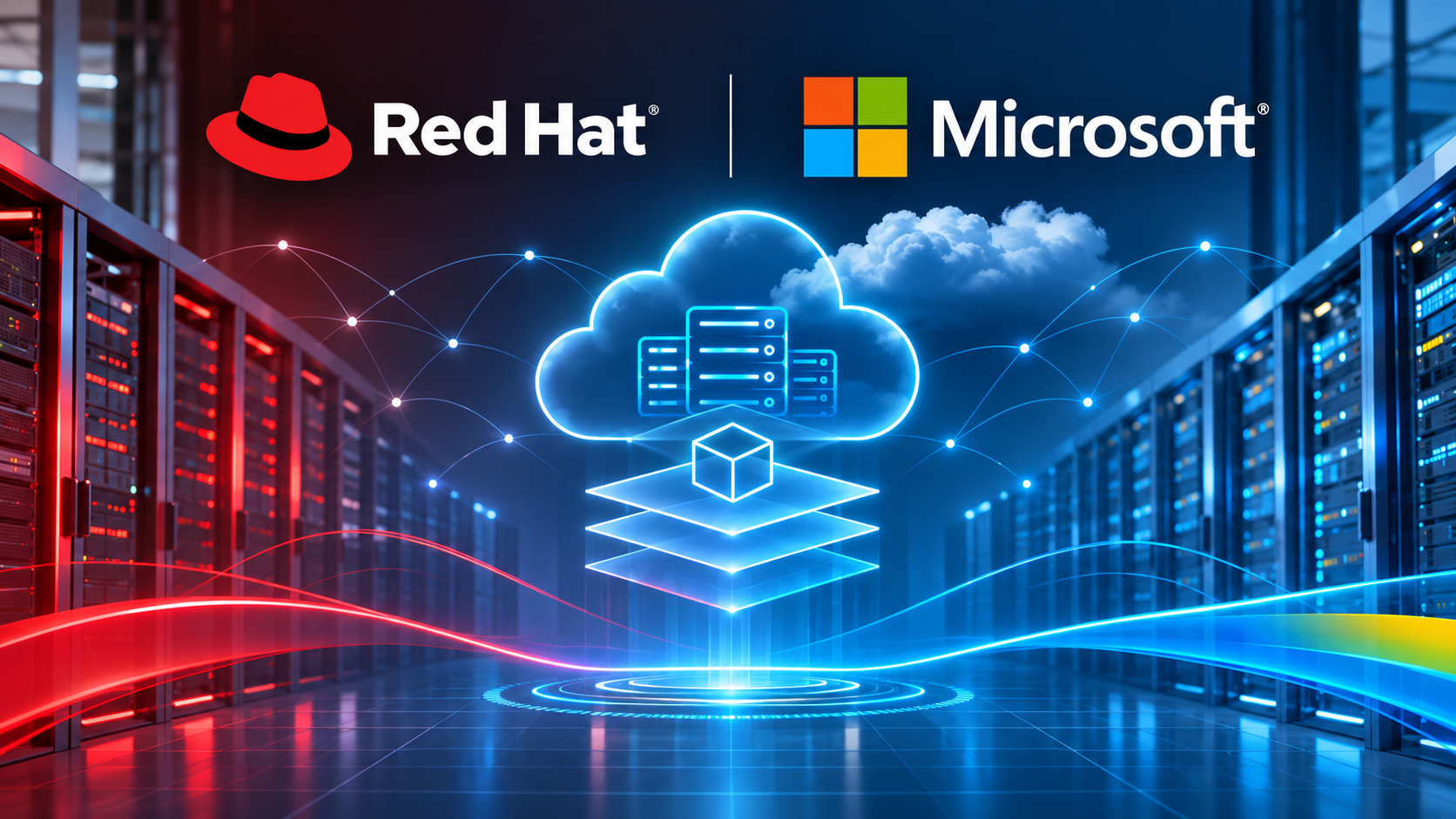
IBM Corp. subsidiary Red Hat and Microsoft Corp. are expanding their longtime engineering partnership to enable enterprises to run virtual machines on Microsoft Azure using Red Hat’s OpenShift Virtualization platform, providing an alternative to traditional hypervisors and what Red Hat called a path to modernizing legacy applications.
The collaboration, announced today, involves changes to Azure’s underlying computing architecture to connect it natively with Linux through Microsoft direct virtualization. That’s an Azure feature that gives performance-sensitive workloads near-bare-metal access to underlying hardware components.
Red Hat said this provides a direct pipeline between key hardware such as graphics processing units and isolated workloads. The companies are also working to give Linux-based workloads more direct access to Azure’s hardware resources, including graphics processing units.
Separately, Red Hat said it’s making its Lightwell Network vulnerability remediation service available through Microsoft’s Azure Marketplace.
The virtualization initiative addresses growing enterprise concerns about hypervisor licensing costs, hardware availability and the complexity of managing virtual machines alongside newer containerized applications. Red Hat said those pressures have intensified as organizations seek to accommodate AI workloads without abandoning existing applications.
Virtualization market leader Broadcom Inc. recently took aim at the same issue by open-sourcing its software for provisioning and managing virtual machines using the same protocols that the Kubernetes container orchestrator uses. At the center of the effort is Microsoft’s direct virtualization, which lets Linux-based and cloud-native platforms running on Azure virtual machines access the same virtualization and hardware capabilities available to Azure-native services.
Red Hat said it will be the first commercial Microsoft partner to support the technology through OpenShift Virtualization on Azure Red Hat OpenShift, the jointly engineered and managed Kubernetes service offered by the two companies.
The agreement includes collaboration on several upstream open-source projects, including KubeVirt, LibVirt, QEMU and the Linux kernel. KubeVirt enables organizations to manage virtual machines and containers using Kubernetes tools.
Microsoft has extended KubeVirt beyond the Linux Kernel-based Virtual Machine hypervisor by adding support for its own hypervisor. That allows OpenShift Virtualization to run on Azure virtual machines using Microsoft’s direct virtualization technology.
The approach is designed to let organizations consolidate traditional virtual machines, containerized applications and AI workloads on a common platform. Red Hat said its migration toolkit for virtualization will help customers move workloads from existing hypervisors.
The companies said the architecture will also improve resource utilization by supporting CPU and memory overcommitment, enabling more workloads to share available infrastructure. Kernel-level isolation is intended to protect sensitive workloads without compromising performance.
“Enterprises shouldn’t have to choose between managing rising hypervisor costs and accelerating their IT roadmaps,” Chris Wright, Red Hat’s chief technology officer, said in a statement. He said the collaboration would provide a common foundation for modernizing existing virtual machines and running AI workloads.
The companies did not announce a general availability date for the new virtualization capabilities.
Red Hat also said Lightwell Network is immediately available through private offers on Azure Marketplace, allowing customers to obtain remediated versions of vulnerable open-source software dependencies.
Lightwell addresses a persistent application security problem: correcting vulnerabilities in third-party software without forcing upgrades that could disrupt production applications.
The service provides version-specific fixes through secured repositories, accompanied by signed software artifacts and supporting provenance, software bills of materials and vulnerability information where applicable.
Customers can incorporate those fixes into existing development and deployment pipelines without replacing their vulnerability scanners, artifact repositories or build systems. Findings can surface in Microsoft Defender for Cloud, while Azure Policy provides governance controls.
Customers can purchase Lightwell subscriptions through Azure Marketplace and apply eligible spending toward their Microsoft Azure Consumption Commitments.
Support our mission to keep content open and free by engaging with theCUBE community. Join theCUBE’s Alumni Trust Network, where technology leaders connect, share intelligence and create opportunities.
Founded by tech visionaries John Furrier and Dave Vellante, SiliconANGLE Media has built a dynamic ecosystem of industry-leading digital media brands that reach 15+ million elite tech professionals. Our new proprietary theCUBE AI Video Cloud is breaking ground in audience interaction, leveraging theCUBEai.com neural network to help technology companies make data-driven decisions and stay at the forefront of industry conversations.