 AI
AI



AI

Moving enterprise AI workloads into production introduces practical challenges for chief information officers. Those challenges include managing costs, scaling enterprise AI infrastructure and establishing governance models to keep agents in check and data secure.
Cost and control were major themes of discussion at Dell Technologies Inc.’s “AI Leadership Symposium.” Expanding AI workloads can drive up infrastructure and model costs, while deploying autonomous agents introduces new questions about security, oversight and data access.
At the same time, organizations are exploring different ways to run AI, from private cloud environments to models operating directly on devices. That is creating demand for enterprise AI infrastructure and partnerships that can accommodate a wider range of deployment needs.
“No one is asking whether to adopt AI; that’s pretty much a done deal,” said John Furrier, executive analyst at theCUBE Research. “They’re asking who controls it, where it runs and whose law it operates.”
Furrier spoke with industry experts from Dell, Deepgram Inc., Singulr AI Inc., MisaLabs Inc. and Intel Corp., among others, during the AI Leadership Symposium. The interviews covered the infrastructure, partnerships and computing power needed to scale AI. (* Disclosure below.)
Here’s theCUBE’s complete keynote analysis from John Furrier:
Cloud token bills remain a major pressure point on enterprise AI budgets. That’s leading some businesses to look for ways to relieve that pressure, according to Helen O’Sullivan, AI business development manager and solutions specialist at Dell.
“A lot of our customers I support in the Bay Area, they’re dealing with this real immediate struggle of running through their token budget in a matter of weeks that they had allotted for months,” she told theCUBE. “You still use those frontier models, but you use the open source and infrastructure on-prem to at least eliminate some of the token stress and token maxing going on right now.”
Organizations can also make better use of existing data center capacity when evaluating enterprise AI infrastructure investments. Dell and Intel are helping customers evaluate those options, according to Tim Wood, sales director for the Northwest region at Intel, who joined O’Sullivan during the discussion.
“A lot of enterprises already have [central processing units] in their data center,” he said. “There may be existing resources and headroom in the infrastructure they already have that’s capable of doing some of these next-generation apps and workloads.”
Here’s theCUBE’s complete video interview with Helen O’Sullivan and Tim Wood:
As companies deploy more AI agents, they need better ways to monitor what those agents actually do and ensure their actions align with company policies and intentions. That means introducing runtime governance that can assess AI agent behavior during execution, according to Shiv Agarwal, co-founder and chief executive officer of Singulr AI Inc., who spoke alongside Sri Viswanath, founder and chief executive officer of Sycamore Labs Inc., and Victor Jakubiuk, co-founder of MisaLabs Inc.
“[It’s] as simple as an action where it reaches out to the internet to get some data or sends out an email to a private account or something,” Agarwal told theCUBE. “That could be deeply hidden inside an agentic action.”
Good AI governance also means setting boundaries around where models can access data and how they process it. CIOs often prefer virtual private clouds to keep sensitive information within a controlled environment, according to Viswanath.
“They’re also trying to architect in a way that all of the data stays there,” he said. “They don’t trust sending it outside because then we don’t know where it goes.”
The pace of AI development complicates those governance efforts. Companies need to ensure their systems behave as intended even as AI capabilities evolve, according to Jakubiuk.
“AI has no limit to the speed of development, speed of progress,” he said. “As an enterprise, as that AI lead, you want to be able to take the latest and greatest and stay on top.”
Here’s theCUBE’s complete video interview with Victor Jakubiuk, Shiv Agarwal and Sri Viswanath:
Deepgram is working with Dell and Fortanix Inc. to bring its voice AI models beyond the cloud and onto customer devices. Potential applications range from interactive voice response systems for small businesses to AI-enabled laptops for students, according to Nick Mann, staff technical program manager at Deepgram.
“I want our models on those, on the hardware, to run natively,” he told theCUBE. “Air-gapped. That’s where we want to get to. That’s where AI as a whole needs to start meeting people where they are and how they’re going to use it.”
Here’s theCUBE’s complete video interview with Nick Mann:
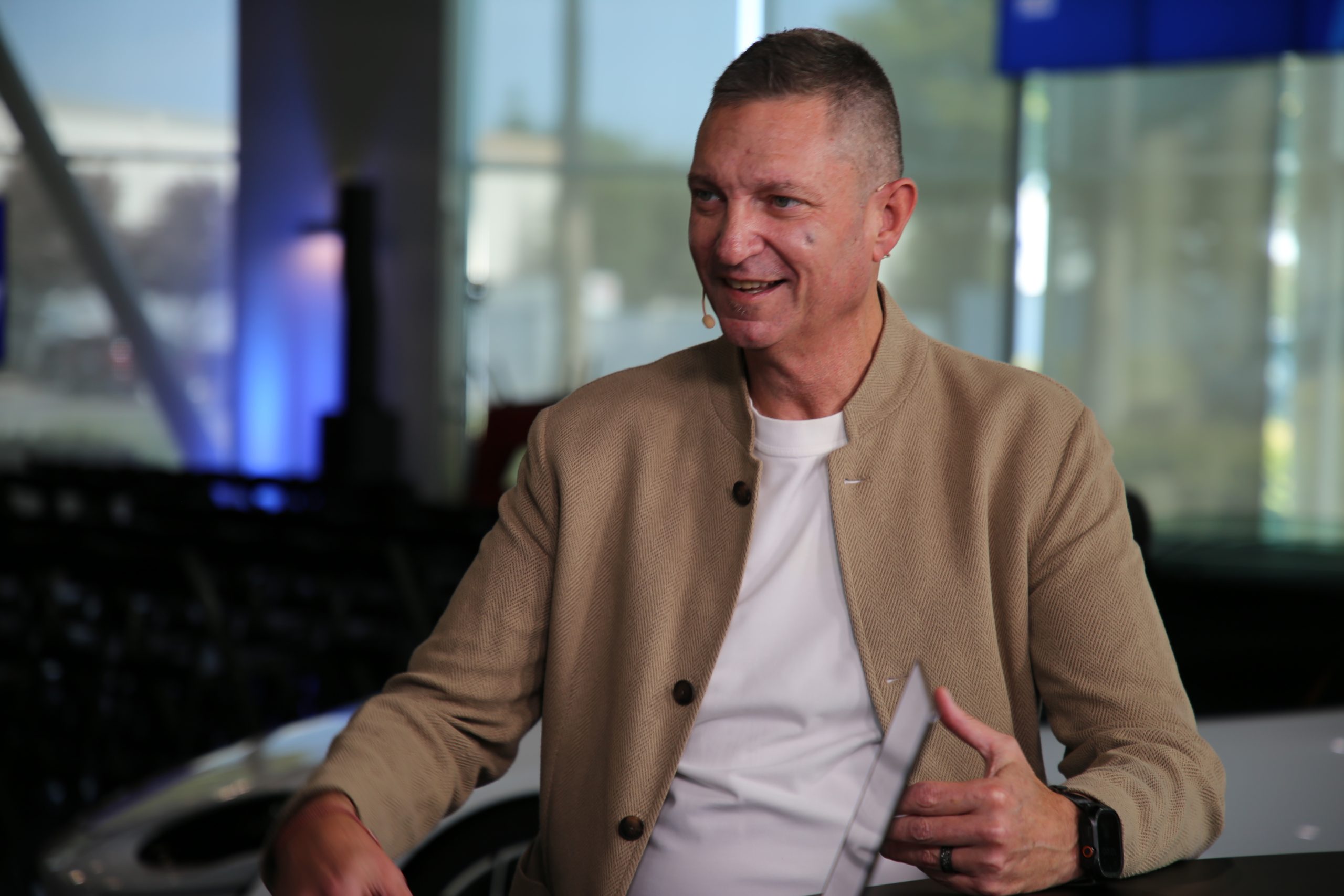
Deepgram’s plans reflect a broader push to develop AI solutions tailored to how customers want to build and deploy the technology. In Silicon Valley, where technically sophisticated buyers often prefer building their own solutions over buying packaged products, Dell is expanding its partner ecosystem to help meet that demand, according to Sean O’Connor (pictured), regional manager of ENT West, large enterprise and acquisition, at Dell.
“For us, that notion of ecosystem is starting to change,” he told theCUBE. “Today we’re here with Intel [Corp.], we’re here with SHI [International Corp.], we’re here with Microsoft [Corp.]. But that ecosystem also now is starting to bleed into private equity and venture capital.”
Here’s theCUBE’s complete video interview with Sean O’Connor:
Catch up on theCUBE’s complete video coverage of Dell’s “AI Leadership Symposium“:
(* Disclosure: TheCUBE is a paid media partner for Dell’s “AI Leadership Symposium.” Neither Dell, the sponsor of theCUBE’s event coverage, nor other sponsors have editorial control over content on theCUBE or SiliconANGLE.)
Support our mission to keep content open and free by engaging with theCUBE community. Join theCUBE’s Alumni Trust Network, where technology leaders connect, share intelligence and create opportunities.
Founded by tech visionaries John Furrier and Dave Vellante, SiliconANGLE Media has built a dynamic ecosystem of industry-leading digital media brands that reach 15+ million elite tech professionals. Our new proprietary theCUBE AI Video Cloud is breaking ground in audience interaction, leveraging theCUBEai.com neural network to help technology companies make data-driven decisions and stay at the forefront of industry conversations.