 INFRA
INFRA



INFRA

The neocloud boom is entering a sorting phase, and global cloud availability is emerging as the line between providers built for enterprise AI and those built to rent out racks of graphics processing units.
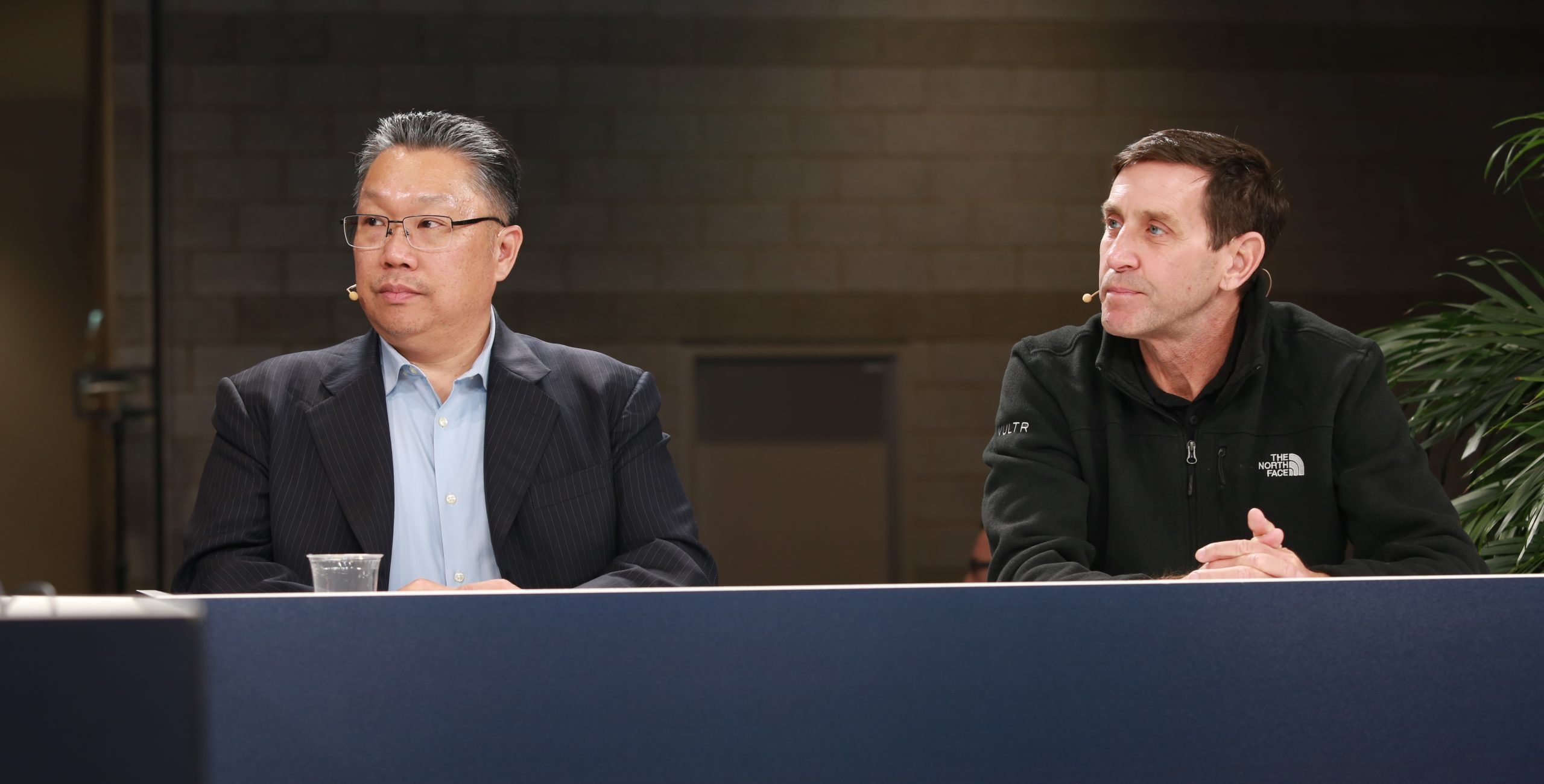
With agentic AI moving from pilots into production, buyers are looking past raw GPU counts toward integrated platforms they can build on. That shift is redrawing the competitive map for cloud AI infrastructure. Enterprise practitioners are now starting ambitious agentic AI agendas, and they need the full stack of services behind AI-native applications rather than standalone clusters, according to Kevin Cochrane (pictured, right), chief marketing officer of Vultr.
“There are those providers that are trusted platforms, that are global cloud platforms that have the totality of services that are required for real agentic AI deployments,” Cochrane said. “We’ll continue to see a separation of the pack and there’ll be those that are trusted platforms that enterprises can rely on and there’ll be those that aren’t.”
Cochrane and Duncan Ng (left), vice president of solutions engineering at Vultr, spoke with theCUBE Research’s John Furrier and Gemma Allen at SC26, during an exclusive broadcast on theCUBE, SiliconANGLE Media’s livestreaming studio. They discussed why agentic AI is reviving demand for central processing units, how Vultr builds data centers as integrated systems and which neocloud providers are likely to survive consolidation. (* Disclosure below.)
Calling a service an enterprise cloud takes more than racking accelerators. Vultr organizes its footprint into data center regions, each of which can control multiple facilities on one network and one application programming interface that developers can hook into a Terraform template, Cochrane explained. Many rivals, by contrast, stood up individual sites quickly to serve bespoke customer contracts.
“In traditional neoclouds, the data centers are actually islands. They’re not connected. It’s not one unified global network. It’s not one unified global platform,” Cochrane said. “These are like individual data centers stood up very quickly for bespoke customer contract. That is not a platform.”
Agentic AI is also reshaping the hardware mix inside those regions. Reasoning models now let agents chain dozens of steps, call tools and validate results in flight — work that leans heavily on CPUs, according to Ng. Vultr ran a cloud for more than a decade before the GPU rush and has used AMD processors as the backbone of its CPU fleet for several years, he added. The company has since extended that partnership to accelerators with a $1.2 billion order for AMD’s Helios rack-scale systems.
“This increased density, this increased usage — these are just new hosting companies,” Ng said. “This is just a new application that is 10 times more compute dense than the last that we’re trying to sell to.”
Enterprises are finally moving those workloads out of pilot and into production, Ng noted. One Big Four global systems integrator uses Vultr as the substrate for a risk management service. Vultr has been rolling out platform upgrades aimed at enterprise agentic AI to support that kind of deployment.
“What they’re doing is something that used to take consulting hours, people poring through spreadsheets and poring through invoices, poring through declarations,” he said. “They now are able to automate significant portions of this to serve a larger number of their customers and do a deeper dive into their risk supply chains.”
Here’s the complete video interview, part of SiliconANGLE’s and theCUBE’s coverage of SC26:
(* Disclosure: Vultr sponsored this segment of theCUBE. Neither Vultr nor other sponsors have editorial control over content on theCUBE or SiliconANGLE.)
Support our mission to keep content open and free by engaging with theCUBE community. Join theCUBE’s Alumni Trust Network, where technology leaders connect, share intelligence and create opportunities.
Founded by tech visionaries John Furrier and Dave Vellante, SiliconANGLE Media has built a dynamic ecosystem of industry-leading digital media brands that reach 15+ million elite tech professionals. Our new proprietary theCUBE AI Video Cloud is breaking ground in audience interaction, leveraging theCUBEai.com neural network to help technology companies make data-driven decisions and stay at the forefront of industry conversations.