








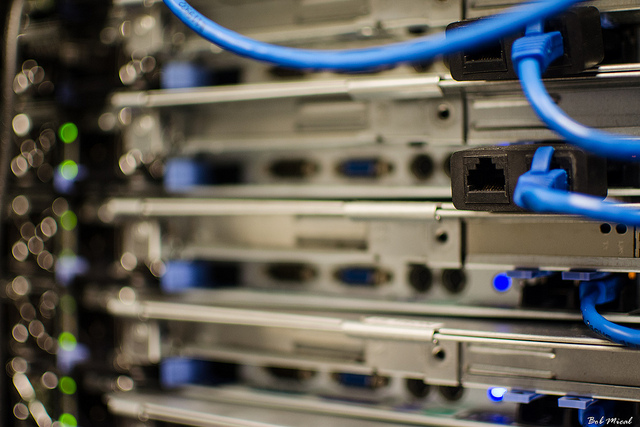
 Google is putting machine learning to use to make its already mighty data centers even more efficient.
With the help of neural networks and data analytics, Google hopes that a new datacenter project will allow the search giant to push power consumption down. The company outlined the project in a whitepaper (PDF) released Wednesday and summarized the endeavor in a blog post.
Google engineer, Jim Gao, came into the idea while examining all the data already generated by data centers. As a data-centric company, Google generates a gigantic amount of data from everything it does, which it puts to use with conventional models to make things work more efficiently.
With a mind to breakthroughs in neural networks and machine learning, Gao sought to use all that data to predict and improve data center energy use. Predictive analysis has long been the holy grail of big data and machine learning. It’s easy to see that applying it to data center efficiency would have real benefits.
Google constantly calculates PUE–or Power Usage Effectiveness–and after some experiments, Gao has gotten his models to almost 99.6 percent accuracy at predicting PUE for a data center over time. It does so by tying together numerous interacting variables that affect power use such as IT load, pump speeds, cooling efficiency, and numerous other data points.
While using machine learning may be a little bit new to data center efficiency, seeking that efficiency is not new. Data centers consume a lot of power. According to a report cited in The New York Times, during 2012 US-based data centers used 2 percent of all electricity generation in the country. And this thirst for power has only grown.
Businesses have long seen the benefit of going green with data centers. IBM has pushed multiple initiatives toward cleaner, more efficient data centers. HP has produced its own technologies leading to less power usage as well. Even Facebook has sought solutions to its own power needs by building a data center at the edge of the arctic circle in Sweden to take advantage of the cooler climate.
Support our mission to keep content open and free by engaging with theCUBE community. Join theCUBE’s Alumni Trust Network, where technology leaders connect, share intelligence and create opportunities.
Founded by tech visionaries John Furrier and Dave Vellante, SiliconANGLE Media has built a dynamic ecosystem of industry-leading digital media brands that reach 15+ million elite tech professionals. Our new proprietary theCUBE AI Video Cloud is breaking ground in audience interaction, leveraging theCUBEai.com neural network to help technology companies make data-driven decisions and stay at the forefront of industry conversations.