 WIKIBON
WIKIBON
WIKIBON











WIKIBON

With the cost of NAND flash storage dropping like a rock, driven by massive demand in consumer electronics, the storage industry is in the midst of major technological disruption. NAND flash is 1,000 times faster than spinning disk in reads and writes. It’s a fraction of the size, uses a fraction of the power and generates a fraction of the heat, allowing multiple spinning disk arrays to be replaced with one all-flash array and flash to be added to the memory bus inside servers. Flash also has huge amounts of IO, allowing companies, for example, to run data analysis, application development and transaction processing on logical copies of a single physical database, rather than making multiple clones.
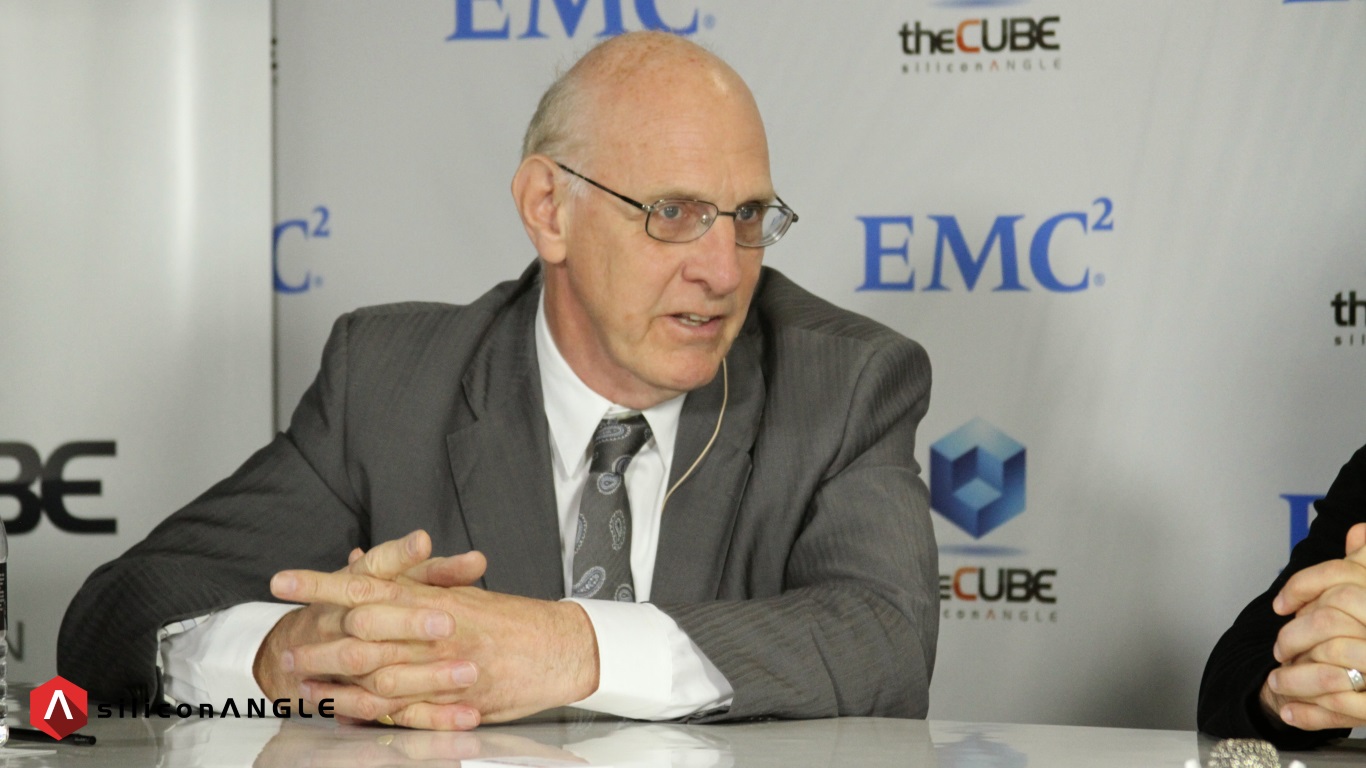
Given all these advantages and the fast-falling price, I asked Wikibon Co-founder and CTO David Floyer (above) if spinning disk is dead. His answer – almost. What condemns disk is not just that flash is faster and is already at price parity at the high end but that flash will drive a total redesign of the data center into what Floyer calls the “Flash as Memory Extension” architecture to minimize the latencies introduced by the network, which now becomes the gating factor in data center performance. Flash arrays will be moved very close to servers and connected by a PCIe bus rather than a storage-area network (SAN). Increasing amounts of flash will move onto the memory bus inside the servers.
This architecture literally leaves no room for spinning disk. The remaining disk market will be focused on write-once-read-seldom data archiving. But even there disk will face tough competition, this time from tape. Disk has faster seek time, but tape can load data faster once the right block is located. Disk is better for archiving small blocks and in use cases in which time-to-first-byte is important. However. tape is better for large blocks and time-to-last-byte performance.
To give an example, Floyer says if a doctor needs to check his patient’s date of birth, disk is better. But if he needs to look at a set of medical images, tape is faster and less expensive.
So the disk array, the revolutionary storage technology of the late 1980s, is heading into the sunset, and the industry knows it. Nobody today is investing in advancing disk technology today, Floyer says. The question is how soon data centers can adapt to something better.
For more discussion on the future of storage watch theCUBE’s coverage of EMC World 2015, starting at 12:00 PT (3:00 PM ET).
Support our mission to keep content open and free by engaging with theCUBE community. Join theCUBE’s Alumni Trust Network, where technology leaders connect, share intelligence and create opportunities.
Founded by tech visionaries John Furrier and Dave Vellante, SiliconANGLE Media has built a dynamic ecosystem of industry-leading digital media brands that reach 15+ million elite tech professionals. Our new proprietary theCUBE AI Video Cloud is breaking ground in audience interaction, leveraging theCUBEai.com neural network to help technology companies make data-driven decisions and stay at the forefront of industry conversations.