 IOT
IOT
IOT
IOT





IOT

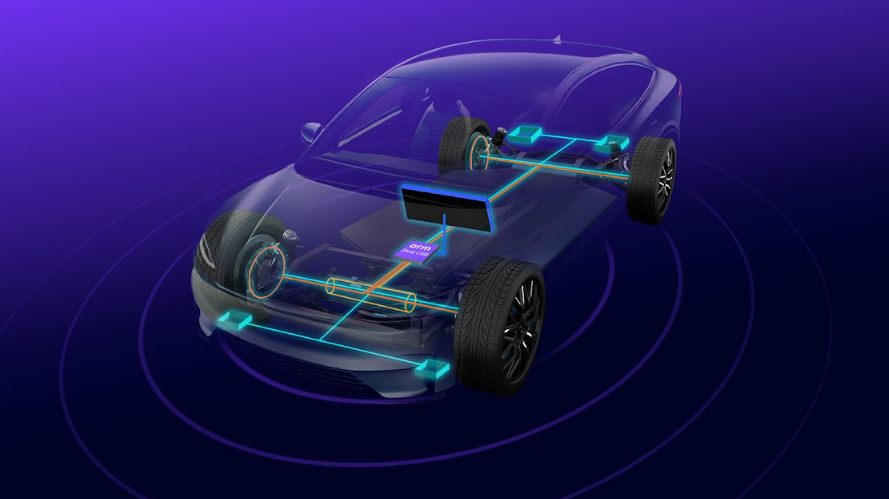
U.K. chip designer Arm Holdings Plc is looking to expand its hold on the automotive chip industry with a new and integrated design platform that promises to increase the time it takes to bring specialist artificial intelligence chips to market by up to 12 months.
The company said the new Arm Zena Compute Subsystems offering will help automakers and chipmakers to build smarter, software-defined AI-powered cars to market faster than ever, helping them eliminate the delays in new vehicle rollouts that result from setbacks in traditional silicon design.
Dipti Vachani, Arm’s senior vice president and general manager of its Automotive Line of Business, claims that Zena CSS will help automakers to launch new, intelligent vehicles “at least one year faster” than previously possible. It provides a standardized, pre-integrated compute platform that helps to reduce development cycles, enabling software teams to get to work on new AI features even before the silicon is available.
The launch of Zena CSS is a big deal, because almost every top carmaker today, including the likes of Tesla Inc., Mercedes-Benz AG, Honda Motors Co. and Rivian Automotive Inc., uses Arm’s technology as the foundation of their automotive chips. Arm-powered chips deliver almost all of the intelligent capabilities found in modern vehicles, such as advanced driver-assist systems and immersive infotainment platforms. With Zena CSS, developers will be able to accelerate the design of new in-car AI capabilities, the company said.
According to Arm, Zena CSS will help to reduce chip engineering effort by around 20% per project, paving the way for more intelligent touch and voice interfaces, more immersive digital cockpit experiences and increased automation for drivers.

Cars need access to highly customized and specialized chips to support these kinds of intelligent features, which is why the company says the pre-integrated and pre-validated Zena CSS platform is so exciting.
It provides access to 16 Armv9-based Cortex-A720AE cores, with performance that’s optimized for ADAS and immersive vehicle infotainment applications, with integrated safety monitoring, fault management, system control and system-on-chip boot controls. The new Runtime Security Engine is said to feature Hardware Root-of-Trust safety mechanisms that leverage Arm’s TrustZone technology to manage security at the chip level. Other features include improved CPU coherency and chip-to-chip communication provided by CMN S3AE, and better-optimized image signal processing to support surround view and driver-monitoring systems.
Mercedes Benz Chief Software Officer Magnus Östberg hailed the new platform, saying he’s convinced it will help to accelerate development timelines while reducing complexity, not only for his company but for competitors too.
“By integrating such solutions early in the development chain, the automotive industry can streamline complexity and establish a stronger foundation for delivering the safe, intelligent and connected experiences that define the next generation of vehicles,” Östberg promised.

One advantage of Zena CSS is that it will enable carmakers and chip providers to reuse the same architectures and software systems more easily in different vehicles, helping to simplify the development and integration of AI features while enhancing safety. Arm said this is critical, because until now vehicle makers have had to develop more customized chips for each type of vehicle they manufacture, which increases both development times and costs, and adds to the burden of validating and certifying new technologies.
“Leading OEMs – including top EV manufacturers – and major silicon providers have already licensed Zena CSS or are in advanced stages of engagement,” Vachani added. “We expect the majority of the industry to build on the Zena CSS family in the coming years.”
Vachani said Arm’s partners can get started with Zena CSS immediately with cloud-based virtual platform support from companies, including Amazon Web Services Inc., Cadence Systems Inc, Siemens AG and Synopsys Inc.