 AI
AI
AI
AI


AI

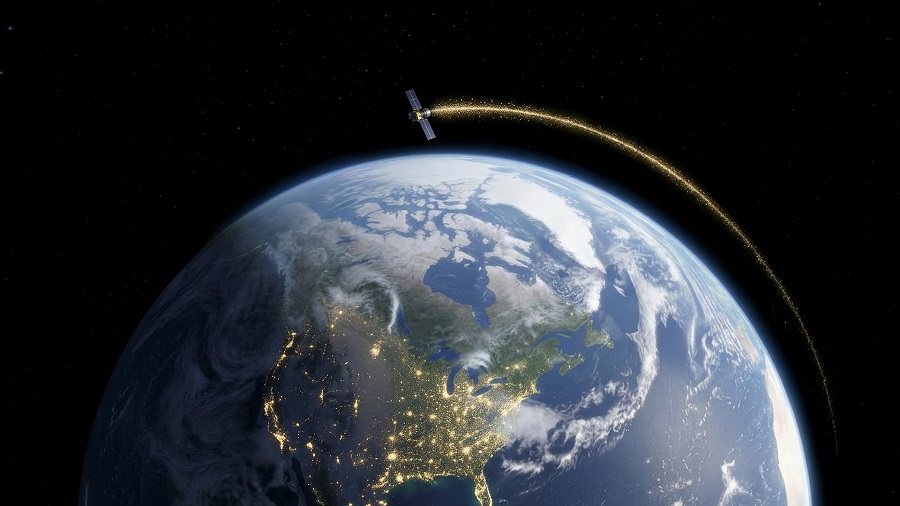
Nvidia Corp. has previewed a computing device called the Vera Rubin Space-1 Module that is designed to power satellites and orbital data centers.
Chief Executive Jensen Huang announced the product today in his GTC keynote.
Nvidia has shared only a limited amount of information about its new space hardware. As the name suggests, the Vera Rubin Space-1 Module is based on the company’s Vera Rubin chip. The chip combines two Rubin graphics processing units with a single Vera central processing unit.
Nvidia announced Vera last year, but didn’t release a detailed technical overview until today. The chip’s 88 cores each feature a neural branch predictor, a module that can complete some calculations before their results are needed. That reduces the need to wait for calculation results and thereby speeds up processing. Vera’s 88 cores are supported by a memory subsystem based on LPDDR5X, a RAM variety most commonly found in consumer devices.
The Rubin graphics card, the other component of the Vera Rubin, features 336 billion transistors made using a three-nanometer node. It can provide 50 petaflops of performance when processing NVFP4 data. Its predecessor managed 10 petaflops.
The press release announcing Vera Rubin Space-1 Module didn’t specify how many processors the device contains. However, a visualization that appeared behind Huang during his GTC keynote appeared to depict a pair of Vera Rubin chips. If the device will indeed ship with two chips, it may support a reliability feature called lockstep processing that is often implemented in spacecraft.
The radiation found in space can interfere with chips and cause computing mistakes. Lockstep processing mitigates such errors by carrying out calculations with two chips instead of one. Each calculation is performed twice, or once in each chip. The processors compare their results to find discrepancies, which usually indicate the presence of an error, and then apply a fix.
Radiation can cause errors in not only processors but also the attached memory. Nvidia ships many of its chips with a feature called ECC, or Error Correction Code, that can automatically fix some RAM-related technical issues. The technology is widely used in both data centers and satellites.
During his keynote, Huang said the Vera Rubin Space-1 Module’s cooling mechanism is still a work in progress.
“In space there’s no conduction, there’s no convection,” Huang said, referring to the two physical phenomena that data centers use to dissipate server heat. “There’s just radiation. And so we have to figure out how to cool these systems out in space. We’ve got lots of great engineers working on it.”
Satellites remove heat from their internal components by radiating it into space as electromagnetic waves. Those waves usually take the form of infrared light. Satellites also transmit thermal energy internally between different components, for example from the onboard processor to parts that can withstand higher temperatures. That task is carried out with specialized heat transfer devices made of materials such as copper.
According to Huang, Nvidia envisions customers using Vera Rubin Space-1 Module to power not only satellites but also orbital data centers.
Several companies have expressed interest in building orbital AI infrastructure. Nvidia said today that one of them, Sophia Space Inc., already uses its silicon. The chipmaker’s customer base also includes space-based solar farm startup Aetherflux Inc., Planet Labs PBC and several other market players.
Support our mission to keep content open and free by engaging with theCUBE community. Join theCUBE’s Alumni Trust Network, where technology leaders connect, share intelligence and create opportunities.
Founded by tech visionaries John Furrier and Dave Vellante, SiliconANGLE Media has built a dynamic ecosystem of industry-leading digital media brands that reach 15+ million elite tech professionals. Our new proprietary theCUBE AI Video Cloud is breaking ground in audience interaction, leveraging theCUBEai.com neural network to help technology companies make data-driven decisions and stay at the forefront of industry conversations.