 AI
AI
AI
AI







AI

AI scaling challenges are intensifying as enterprises continue commiting serious budgets. However, cultural and structural barriers — not technology — are now the biggest obstacle to closing the gap between experimentation and production.
The forces responsible for that gap are converging at once. AI tooling is advancing faster than most organizations can adopt it, legacy technical debt is accumulating at an accelerating rate and change management programs built for slower transitions are struggling to keep pace. It is a phenomenon that PricewaterhouseCoopers LLP’s expanded Google Cloud LLC alliance has positioned itself to address directly, according to Matt Hobbs (pictured, right), U.S. and global head of PwC cloud, engineering, data and AI at PricewaterhouseCoopers.
“I think you’re seeing a shift now where it’s away from, ‘Is the technology ready and is the potential there?'” Hobbs said. “Every boardroom, every CEO, they’re now saying, ‘Well, I know it’s possible. It’s not a technology issue that’s a blocker. It’s an adoption issue. Why when I’m spending money and redirecting resources to go and drive an advancement, am I not seeing the return?'”
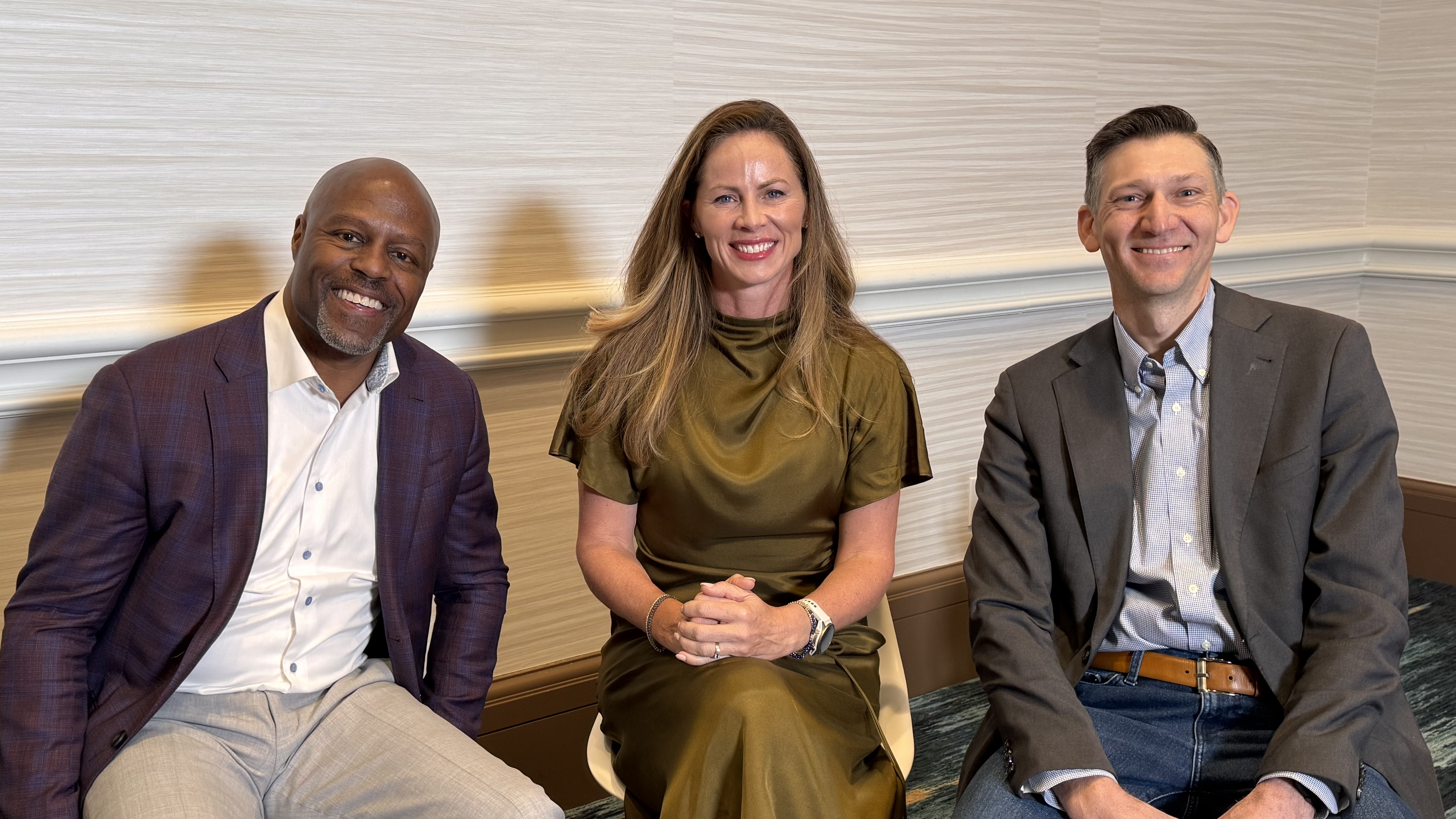
Hobbs spoke with theCUBE’s John Furrier at Google Cloud Next 2026, during an exclusive broadcast on theCUBE, SiliconANGLE Media’s livestreaming studio. They were joined by Gina Fratarcangeli (center), North America Global System Integrators leader and AI ambassador at Google, and Jim Anderson (left), vice president of the North American partner ecosystem and channels at Google Cloud. They discussed enterprise AI scaling challenges, change management, AI-native engineering and the Google Cloud-PwC partnership. (* Disclosure below.)
The symptoms of “innovation paralysis” are familiar to anyone inside a large enterprise right now, Hobbs noted. According to McKinsey’s 2025 State of AI report, nearly two-thirds of organizations have not yet begun scaling AI across the enterprise. Many are trapped instead in pilot purgatory — a key failure mode, Anderson noted.
“Sometimes people make the mistake of saying AI is the product,” Anderson explained. “I like to say, actually, the transformation is the product, not AI. I had a great experience talking to a customer and they said, ‘Hey, Jim, love this stuff, but I’m actually too busy to learn how to make myself more efficient.’ Trying to figure out how we help people on that journey is becoming extremely critical because you can’t get the ROI if you don’t have the adoption.”
The path to overcome AI scaling challenges often runs through lower-risk, high-visibility use cases rather than the biggest possible transformation bets, Fratarcangeli noted. The volume of new tools arriving daily makes it nearly impossible for enterprises to keep up without outside help, with change management partners such as PwC playing an increasingly critical role in the market.
“Unless you have a consulting partner who’s in the weeds daily, I would say it’s almost impossible for companies to learn all they need to do and all the things that are coming out that are going to impact their business,” Fratarcangeli said. “We’re seeing just tremendous value from the likes of PwC really supporting that ongoing change management process.”
One concrete example of how AI-native engineering can unlock previously unsolvable business problems involved a large retailer that used PwC and Google Cloud agents to build dashboards giving store managers real-time insight into inventory, staffing and performance, Hobbs noted. The scale of those managers’ responsibilities had made meaningful oversight impossible before AI. The breakthrough was not a grand transformation, but a focused deployment that drove measurable results, he added.
“Get started, stop debating the tool, focus on the capability build,” Hobbs said. “Gemini — it’s a great tool set to start with, but you got to build the capability. It’s going to continue to advance and adapt. The entry point of what you use today is going to be different. It’s the worst version that you’re going to use today. The meta version’s tomorrow, then the next day, the next day.”
Here’s the complete video interview, part of SiliconANGLE’s and theCUBE’s coverage of Google Cloud Next:
(* Disclosure: TheCUBE is a paid media partner for Google Cloud Next. Sponsors of theCUBE’s event coverage do not have editorial control over content on theCUBE or SiliconANGLE.)
Support our mission to keep content open and free by engaging with theCUBE community. Join theCUBE’s Alumni Trust Network, where technology leaders connect, share intelligence and create opportunities.
Founded by tech visionaries John Furrier and Dave Vellante, SiliconANGLE Media has built a dynamic ecosystem of industry-leading digital media brands that reach 15+ million elite tech professionals. Our new proprietary theCUBE AI Video Cloud is breaking ground in audience interaction, leveraging theCUBEai.com neural network to help technology companies make data-driven decisions and stay at the forefront of industry conversations.