




 AI
AI
AI
AI
AI

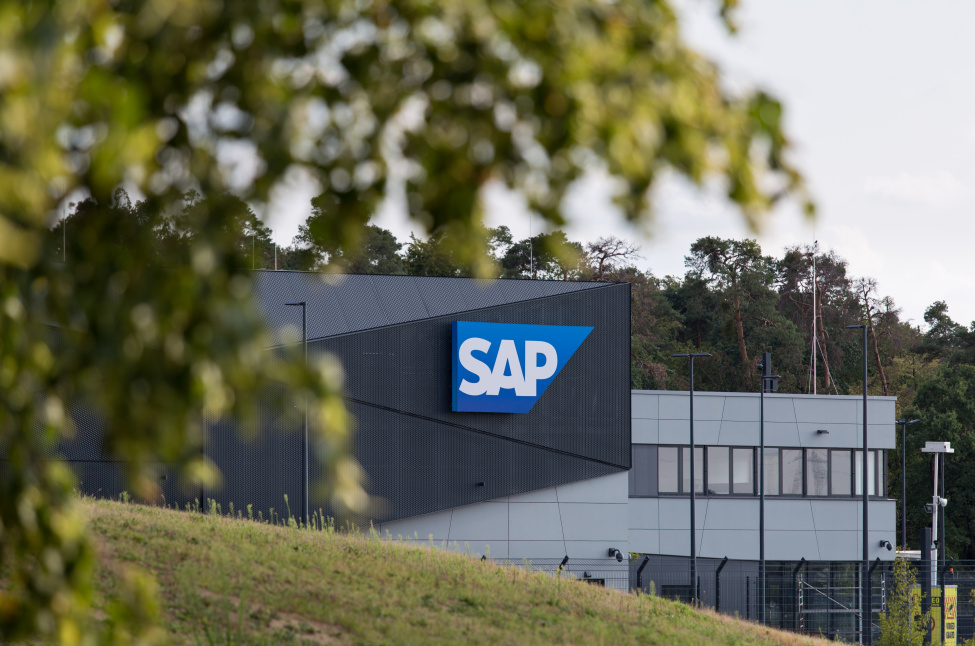
SAP SE today introduced at Sapphire 2026, the company’s annual conference, what it calls Autonomous Enterprise, a suite of artificial intelligence tools and agents designed to enhance how humans and AI work together.
The announcements are built on SAP Business AI Platform, a new governed foundation for building and deploying enterprise AI grounded in business context. The company said the platform unifies its Business Technology Platform, Business Data Cloud and Business AI into a single environment designed to give agents access to the data, processes and controls needed to operate inside large companies.
“We are completely reimagining [Joule] from a natural language chat client interface towards a new engagement layer,” Manoj Swaminathan, general manager and chief product officer for business suite, finance and spend, told SiliconANGLE in an interview.
Swaminathan said SAP is pitching what it calls the “autonomous enterprise” — not simply a collection of AI assistants, but a reworking of how business users and developers interact with SAP applications.
Joule, SAP’s generative AI assistant, debuted in 2023 and now touches every part of the company’s platform. Since then, it has gained numerous upgrades, making it a powerful automation, productivity and development tool for customers, enterprise business users and information technology teams.
The company’s strategy puts Joule at the center of the user experience, wraps agents and assistants around core business domains such as finance, supply chain and human capital management, and backs it with a platform designed to let customers build, extend, reason over and govern AI-powered business workflows.
At its core, SAP uses the Knowledge Graph, which provides AI agents with a structured map of every part of a business. It is populated with curated information about every business entity, unit, process and relationship.
Business users will get access to more than 50 domain-specific Joule assistants, Swaminathan said, built within what is known as the SAP Autonomous Suite. They will be organized around five horizontal business domains: finance, supply chain management, spend management, human capital management and customer engagement.
Each domain is augmented by assistants and agents, enhanced with industry-specific AI capabilities layered on top for specialized workflows, localizations and vertical requirements. Users can call agents from anywhere by opening an AI chat window and simply asking for help.
“[Joule] is intelligent enough to be able to pick up the context and put the right assistant to use with the right disambiguation needs,” Swaminathan said.
For power users who want to be absolutely certain a specific agent is being called to task, he said individual agents can be summoned using an @mention-style command. Ideally, Swaminathan said, users will not need to browse through a catalog of agents in most circumstances. They will simply be ready when users need them and in the context where they are appropriate.
Some agents will run in the background, triggered by events or schedules, while others will wait for users to trigger them through Joule’s routing.
With Joule Studio, a new tool, customers can quickly build and shape their own agentic AI experiences. Developers can build in the language and framework of their choice, including Python or TypeScript, or use tools such as Claude Code or Cursor, and deploy agents into a managed space without the need to worry about infrastructure.
Swaminathan said Studio will be useful for both professional coders and what he called “citizen developers,” people with less technical experience.
“This capability gives you a very simplified conversational experience so that you can describe your intent… [and] the system [can] generate the actual code,” he explained.
According to Swaminathan, Joule studio doesn’t simply generate snippets or components; business users can use it to produce entire apps and experiences. It produces requirements, technical specifications, code and tests within its own software development lifecycle.
Looking at the numbers, SAP sees agentic automation coming, but it’s a marathon, not a sprint. A recent report from International Data Corp. suggests agentic adoption is accelerating, with AI agent deployments expected to expand tenfold by 2027 and reach 40 times today’s level by 2029. Much of this adoption is being driven by bespoke agents built with low-code and no-code editors, such as Joule Studio.
Swaminathan said many SAP customers are looking to bring agents into the enterprise, but they want to be sure they can deploy them safely and control them. The slow pace is governed by caution about how agents interact with company resources as more agents are integrated into back-office work.
SAP’s push into autonomous agents builds on years of deterministic automation, but the company now sees an opportunity to handle less predictable business processes. Traditional work and routines are designed around fixed pathways, Swaminathan said, while AI agents can help users respond to exceptions, disruptions and business shocks that do not always fit neatly into predefined rules.
“We want to embed trusted AI directly into business, put [Joule] as the front and center as a very robust platform… without compromising the security, compliance and governance,” he added.
Support our mission to keep content open and free by engaging with theCUBE community. Join theCUBE’s Alumni Trust Network, where technology leaders connect, share intelligence and create opportunities.
Founded by tech visionaries John Furrier and Dave Vellante, SiliconANGLE Media has built a dynamic ecosystem of industry-leading digital media brands that reach 15+ million elite tech professionals. Our new proprietary theCUBE AI Video Cloud is breaking ground in audience interaction, leveraging theCUBEai.com neural network to help technology companies make data-driven decisions and stay at the forefront of industry conversations.