 AI
AI
AI
AI











AI

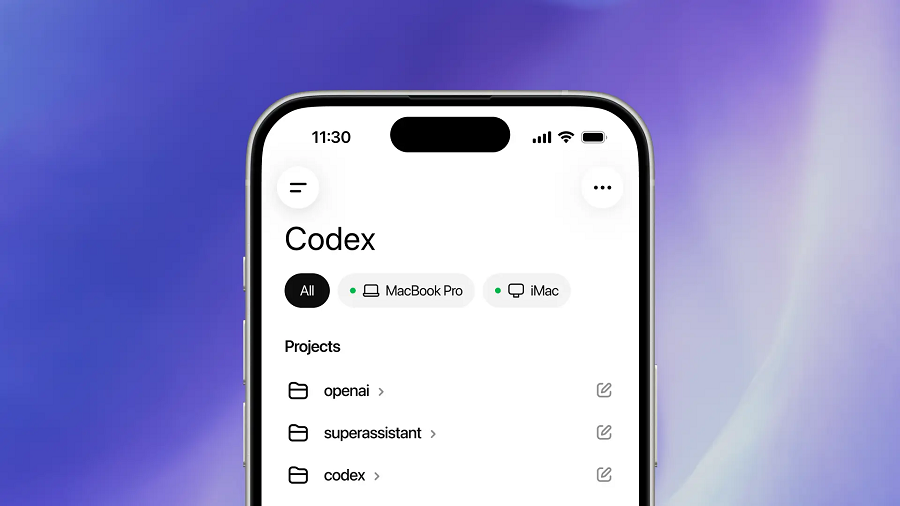
OpenAI Group PBC today made its Codex programming assistant available on mobile devices.
The service is accessible through ChatGPT’s iOS and Android clients. It’s rolling out about eight months after Anthropic PBC made Claude Code, its competing programming assistant, available on handsets.
OpenAI says that the newly added mobile access can significantly speed up some software development tasks. Furthermore, it reduces inference costs in the process.
GPT-5.5, the large language model that powers Codex, can complete hours-long programming tasks. Such workflows occasionally require developers to provide the AI with guidance. If Codex identifies two different ways to rewrite a piece of legacy code, it might ask the user to specify which method should be applied. Developer input is also needed when the service requires permission to make a high-stake project change.
Until now, users who launched a long-running task and stepped away from their computers had no way of giving Codex guidance. That meant a task could be held up for hours. The new mobile support removes the need for Codex to wait until the user regains access to their desktop, which avoids unnecessary project delays.
There are situations where Codex doesn’t strictly require user guidance to proceed with a task, but could still benefit from technical pointers. For example, developers might wish to interrupt the service if it starts implementing a software module in a non-optimal manner.
Now that Codex is available via mobile devices, users can interrupt it even if they don’t have access to their desktops. That avoids the unnecessary token usage associated with erroneously completed programming workflows. Reducing token usage, in turn, lowers software teams’ ChatGPT bills.
OpenAI is rolling out the mobile support alongside two other new Codex capabilities called Hooks and Remote SSH.
Hooks enables customers to customize the programming assistant with scripts. A cybersecurity professional, for example, could write a script that blocks developers’ Codex prompts if they contain sensitive company information. The legal team, in turn, might use Hooks to log Codex messages for regulatory compliance purposes.
Scripts created using the tool can process not only prompts but also the programming assistant’s responses. In particular, developers can use the feature to customize Codex’s output for each project.
Software teams often write, test and store code in cloud-based environments rather than on their local machines. That arrangement makes it easier for administrators to manage cybersecurity settings. Remote SSH, the feature that is rolling out alongside Hooks, enables Codex to connect to remote development environments via an encrypted network link.
OpenAI also made two smaller enhancements to the service as part of today’s product update. Software teams can now generate programmatic access tokens, access credentials that enable third-party developer tools to use Codex. Additionally, OpenAI has added HIPAA compliance support to the standalone Codex client and the versions of the service that developers can embed in their coding tools.
Support our mission to keep content open and free by engaging with theCUBE community. Join theCUBE’s Alumni Trust Network, where technology leaders connect, share intelligence and create opportunities.
Founded by tech visionaries John Furrier and Dave Vellante, SiliconANGLE Media has built a dynamic ecosystem of industry-leading digital media brands that reach 15+ million elite tech professionals. Our new proprietary theCUBE AI Video Cloud is breaking ground in audience interaction, leveraging theCUBEai.com neural network to help technology companies make data-driven decisions and stay at the forefront of industry conversations.