 IOT
IOT
IOT
IOT


IOT

Meta Platforms Inc. and Ray-Ban will finally have some competition on their hands. At Google I/O 2026 today, Google LLC provided a quick look at its first upcoming “intelligent eyewear” products, which are set to launch in the fall.
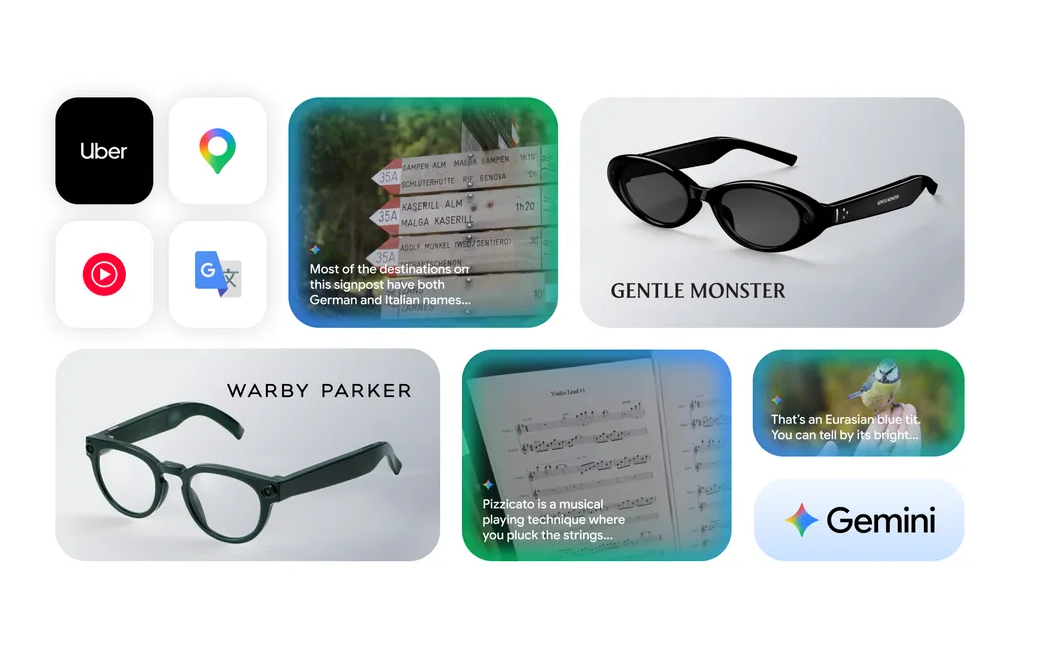
The new smart glasses were jointly developed between Google and Samsung Electronics Co. Ltd., with the smartphone giant building the actual intelligent hardware that goes into them and Google providing the software expertise. When the first intelligent specs launch, they’ll work with both Android and iOS smartphones, Google said. No prices were announced, but the company did reveal a couple of designs for the first time, showing off two new frames designed by Warby Parker and Gentle Monster.
According to Google, both of those companies plan to launch “full collections” later this year, so there should be a pretty extensive range of suave and sophisticated intelligent eyewear products to choose from.
At the event, Google showed a quick video that demonstrated some of the display-style glasses’ capabilities, which mostly focused on the audio, camera and artificial intelligence elements within them. One seemingly useful application is the ability to ask Gemini for turn-by-turn directions, and this function will apparently work while driving or walking.
Users will also be able to launch and use third-party software applications such as Doordash using voice commands, and take and edit photos. They’ll then be able to view the photos they’ve taken on a Google Watch, if they’re going full wearable, or else send them to their connected smartphone.
Naturally, Gemini is fully integrated into every aspect of Google’s intelligent eyewear. To wake it up, users can simply say “Hey Google,” or else just tap the side of the frame and then start issuing commands. It can do quite a bit. For instance, users can ask Gemini for information about whatever it is that’s in their field of view, such as the name of a cloud formation or details on how to navigate a confusing car park. They could also ask for a review of whatever restaurant they happen to be looking at.

The specs can also help to manage the user’s calls, send texts and summarize messages, listen to music and capture and edit images using Google’s Nano Banana image editing model. Other uses include real-time translation of text and speech, and completing multistep tasks like ordering coffee through DoorDash.
Google’s intelligent eyewear runs on the Android XR operating system, which is the same software that powers devices such as Samsung’s Galaxy XR headset that launched last year, as well as the upcoming XREAL Project Aura that was teased separately at I/O. Android XR was developed in collaboration with Samsung and Qualcomm Inc. and is designed for a broad range of extended-reality devices, including more advanced virtual reality headsets. As with the original Android platform, Google’s strategy is based on one platform and multiple hardware partners with a full scope of price points.
“Intelligent eyewear represents a powerful step forward in our shared vision with Samsung to make AI more helpful and accessible in everyday life,” said Google Vice President and General Manager of Android XR Shahram Izadi. “Combining the best of Google’s AI and the Android ecosystem together with Samsung’s leadership in mobile hardware and Gentle Monster and Warby Parker’s premium design, we are helping users stay connected and fashionable in a more natural, hands-free way.”
Support our mission to keep content open and free by engaging with theCUBE community. Join theCUBE’s Alumni Trust Network, where technology leaders connect, share intelligence and create opportunities.
Founded by tech visionaries John Furrier and Dave Vellante, SiliconANGLE Media has built a dynamic ecosystem of industry-leading digital media brands that reach 15+ million elite tech professionals. Our new proprietary theCUBE AI Video Cloud is breaking ground in audience interaction, leveraging theCUBEai.com neural network to help technology companies make data-driven decisions and stay at the forefront of industry conversations.