 POLICY
POLICY
POLICY








POLICY

California is trying to prepare itself for artificial intelligence job disruption ahead of time. Governor Gavin Newsom today ordered state officials to begin exploring a massive overhaul of its labor policies in an effort to stave off the prospect of mass unemployment from AI.
The executive order, the first of its kind signed by any U.S. official, orders state agencies to collaborate with labor groups, academics and the AI industry to look at possible subsidies for companies that retain workers instead of replacing them with autonomous machines.
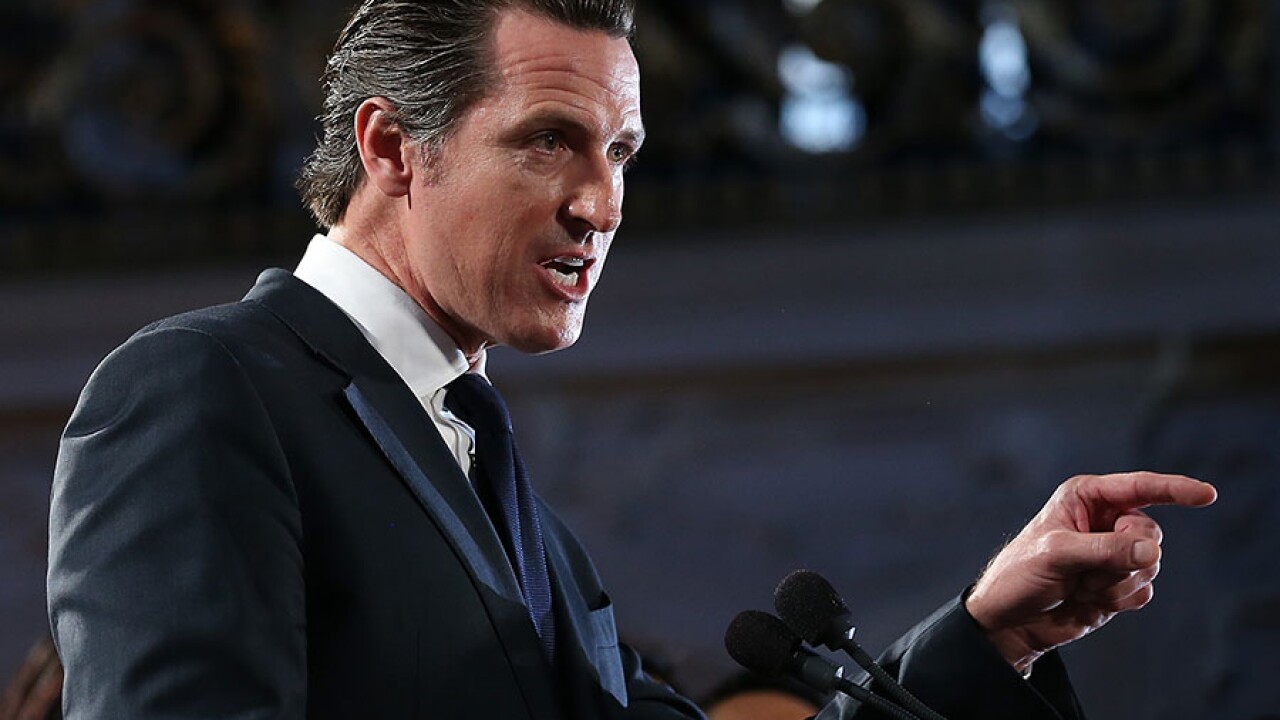
Newsom (pictured) also wants to see expanded retraining programs, especially for workers in areas such as customer service, marketing and sales, and software development roles, which are forecast to be among the hardest hit by AI automation. In addition, the governor ordered a study into the feasibility of universal basic income, as well as the possibility of every Californian resident being given stakes in assets such as corporate stocks, bonds and wealth funds.
According to Newsom, things like unemployment insurance and redundancy pay increases are not enough to make up for the enormous labor market disruption AI is expected to create — especially when entire job categories are facing extinction.
“California has never sat back and watched as the future happened to us — and we won’t start now,” Newsom said in a statement. “But we must think bigger. This moment demands that we reimagine the entire system — how we work, how we govern, how we prepare people for the future.”
I just signed a first-of-its-kind executive order to empower workers impacted by AI.
California will pursue new policies that make sure working Californians — not just Big Tech — benefit from the wealth and breakthroughs coming out of this space. https://t.co/Cmzlypqh1K
— Governor Gavin Newsom (@CAgovernor) May 21, 2026
The order comes at a time of increasing anxiety about AI. In recent years, a fierce debate has emerged over the best way to help individuals who may lose their livelihoods to automation. Fears of potential mass unemployment have been fueled by the growing number of job losses in Silicon Valley this year.
On Wednesday, Meta Platforms Inc. laid off 10% of its workforce, or about 8,000 people, as part of a strategy to focus more resources on AI. Others, including the chipmaker Intel Corp., cloud computing and e-commerce giant Amazon.com Inc., and the networking company Cisco Systems Inc. have also let go of thousands of workers this year. In many cases, executives say they can accommodate the layoffs thanks to the massive efficiency gains AI enables for employees not affected by the cuts.
Some AI executives have also fanned the flames of disruption. Anthropic PBC Chief Executive Dario Amodei believes that as many as half of all white-collar jobs could disappear in the next five years, and though many disagree with that gloomy forecast, most believe AI is inevitably going to disrupt some occupations.
The U.S. isn’t the only country that’s worried about this. In the U.K., Japan and South Korea, governments are studying whether to provide universal basic income, or regular cash payments to their citizens, as a way to cope with growing unemployment. Some U.S. Democrats have also made similar suggestions.
One of the biggest proponents of universal basic incomes is Tesla Inc. and SpaceX Corp. CEO Elon Musk, who believes that AI productivity enhancements will make more money available to governments that can then be distributed to those who lose their jobs.
Universal HIGH INCOME via checks issued by the Federal government is the best way to deal with unemployment caused by AI.
AI/robotics will produce goods & services far in excess of the increase in the money supply, so there will not be inflation.
— Elon Musk (@elonmusk) April 17, 2026
While universal basic income has a lot of proponents, there are many who believe that the fears of massive unemployment are likely alarmist. Holger Mueller of Constellation Research said there are definitely tensions around the labor market, and welcomed the proactive policy thinking, but said the real opportunity lies in AI’s potential to reshape how people work, rather than replace them. “Instead of just trying to protect existing jobs, we should focus on augmenting human capabilities by using AI agents to handle repetitive and administrative tasks so people can take on higher-value, more creative and strategic roles,” he said.
Mueller believes that we’re a long way away from mass replacement of humans. Rather, what we’re seeing now is transformation, with companies embedding AI into their work processes and layering in domain-specific automation that frees employees to focus on innovation and growth. “Done right, this won’t eliminate jobs, but it will elevate the nature of work itself,” he said. “On the flip side, governments should play a role in helping to reskill people who are not going to be able to find employment in the upcoming AI economy. That should begin with an accelerated review of school curriculums. The responsibility of the government is to educate for the future.”
Newsom’s order doesn’t prescribe any direct action at this time, but it aims to get the ball rolling toward some kind of concrete policy. It’s not surprising to see California at the forefront of this push, considering it’s home to many of America’s biggest technology firms and is also one of the leading states in terms of AI regulation. It was the first U.S. state to pass a bill relating to AI model safety, and Newsom recently issued another executive order to vet companies with AI contracts.
California’s approach contrasts to that of the federal government, which has largely allowed U.S. AI firms to proceed as they wish out of fear that the country may be overtaken by China. However, Anthropic’s creation of Mythos, a powerful new AI model that excels in finding software vulnerabilities, has prompted White House officials to rethink their approach. President Donald Trump was expected to issue an executive order that mandates safety testing for new models, though today he postponed it on unspecified concerns.
Support our mission to keep content open and free by engaging with theCUBE community. Join theCUBE’s Alumni Trust Network, where technology leaders connect, share intelligence and create opportunities.
Founded by tech visionaries John Furrier and Dave Vellante, SiliconANGLE Media has built a dynamic ecosystem of industry-leading digital media brands that reach 15+ million elite tech professionals. Our new proprietary theCUBE AI Video Cloud is breaking ground in audience interaction, leveraging theCUBEai.com neural network to help technology companies make data-driven decisions and stay at the forefront of industry conversations.