 SECURITY
SECURITY
SECURITY











SECURITY

Dream Security Ltd., a developer of artificial intelligence and cybersecurity software for governments, today announced that it has raised $260 million in funding.
Bicycle Capital and Group 11 jointly led the investment. They were joined by several other institutional backers including Bain Capital Ventures. Dream is now valued at $3 billion.
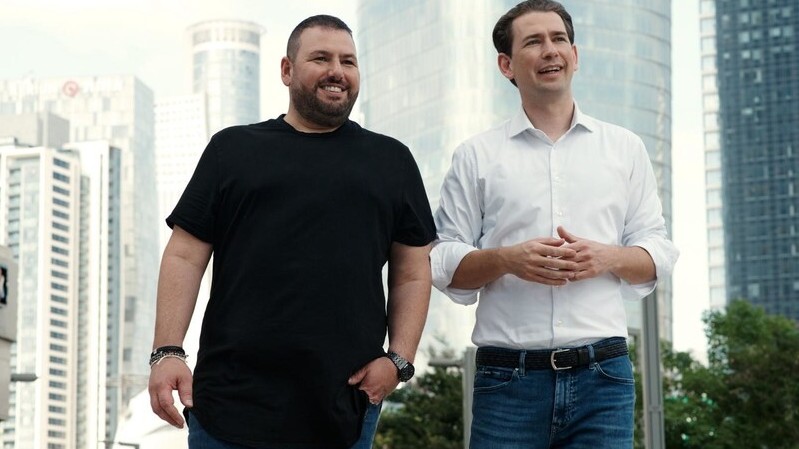
Tel Aviv-based Dream is led by Shalev Hulio (pictured, left), the former chief executive of spyware maker NSO Group, and former Austrian Chancellor Sebastian Kurz (right). The company offers a trio of software products geared towards government agencies and critical infrastructure operators. The products can be deployed in air-gapped environments, server clusters that are isolated from the web for cybersecurity reasons.
Dream’s first product is a platform called Atlas that is designed to power on-premises AI environments. The company provides customers with a set of neural networks tailored to their requirements. The algorithms, which are geared toward use cases such as data analysis and visualization, are accessible through a ChatGPT-like chatbot interface.
Dream offers Atlas alongside two cybersecurity tools called Sphere and Hero. Both products are designed to help organizations fix vulnerabilities in their infrastructure, but they approach the task differently.
Sphere can analyze a government agency’s infrastructure for cybersecurity flaws and identify potential attack paths. An attack path is the specific sequence of steps that hackers can take to exploit a vulnerability. For added measure, Sphere enriches its findings with threat intelligence about hacker activity. Such information is useful for tasks such as finding vulnerabilities that should be fixed urgently because they’re being actively targeted.
Hero, Dream’s other cybersecurity product, uses an ensemble of AI agents to find vulnerabilities. The company says that it can find zero-day flaws not known to cybersecurity researchers. Similarly to Sphere, Hero automates some of the work involved in studying attack paths.
Dream’s technology also covers other cybersecurity use cases. In April, the company detailed an internally developed AI tool called RFC Analyzer. It’s designed to help cybersecurity researchers find flaws in the open-source network protocols that underpin the web.
Developers implement many key network protocols using open-source technical guides called RFCs. According to Dream, RFC Analyzer can scan such documents for clues about potential vulnerabilities. For example, it can detect when a guide fails to inform developers about a cybersecurity risk they should mitigate while implementing a certain protocol. Researchers can use that information to find weak points in protocol implementations.
Dream disclosed today that it has secured customers contracts worth nearly $300 million. The company will use the proceeds from its funding round to accelerate the adoption of its products.
Support our mission to keep content open and free by engaging with theCUBE community. Join theCUBE’s Alumni Trust Network, where technology leaders connect, share intelligence and create opportunities.
Founded by tech visionaries John Furrier and Dave Vellante, SiliconANGLE Media has built a dynamic ecosystem of industry-leading digital media brands that reach 15+ million elite tech professionals. Our new proprietary theCUBE AI Video Cloud is breaking ground in audience interaction, leveraging theCUBEai.com neural network to help technology companies make data-driven decisions and stay at the forefront of industry conversations.