 EMERGING TECH
EMERGING TECH
EMERGING TECH


EMERGING TECH

Defense technology startup Mara Inc. said today it has closed on a $7 million pre-seed round of funding led by Khosla Ventures to speed up the development and production of its low-cost, autonomous counter-unmanned aircraft system, Spike.
Other backers included a16z Speedrun, Night Capital, Palmdrive, Protagonist, Freedom Fund and Indicator Fund, as well as a number of angel investors. The startup said it will use the funding to move from field testing to real-world deployments and start countering the threat of first-person-view drones on the battlefield and at key infrastructure facilities around the world.
Russia’s invasion of Ukraine has forever changed the face of war. Small FPV drones that cost only a few hundred dollars to build have become the single deadliest threat on the modern battlefield. These cheap, extremely fast and nimble unmanned aerial systems are capable of destroying armored vehicles and disabling key infrastructure that costs many millions of dollars. They’re also the leading cause of combat casualties globally.
Moreover, they’re becoming more sophisticated by the day. For example, recent events have shown that small UAS that use fiber-optic links or onboard artificial intelligence systems have been able to bypass the standard electronic jamming devices used to prevent their attacks. This means they can strike targets thousands of kilometers behind front lines.
Traditional C-UAS systems were designed to target much larger, high-altitude aircraft that operate along more predictable flight paths. Moreover, conventional weapons such as guns and human-operated drone interceptors find themselves overwhelmed when faced with massive swarms of low-altitude FPV drones that launch coordinated, simultaneous attacks from multiple directions.
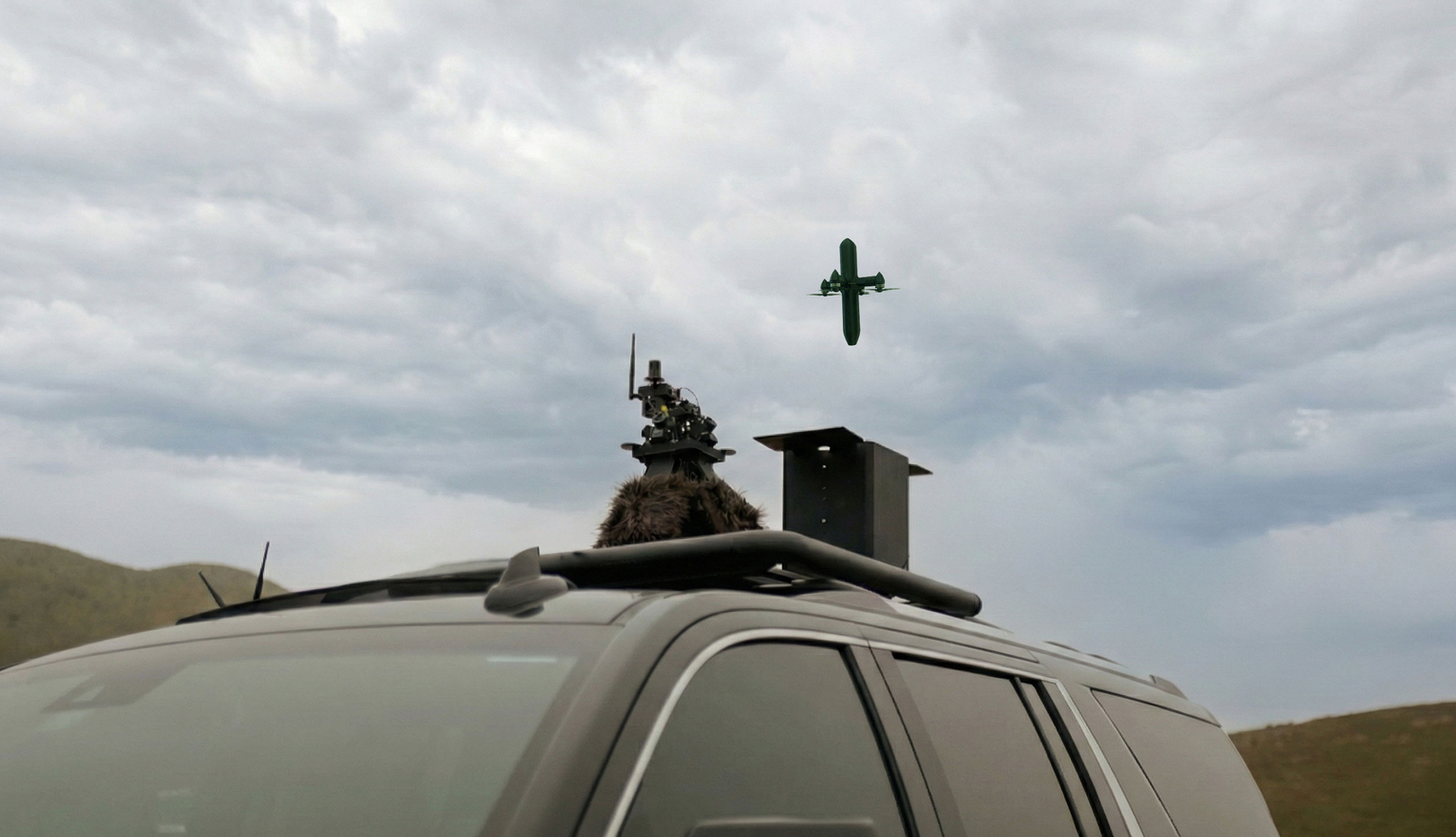
Mara’s response is to fight fire with fire, and it has created an automated counter-swarm platform called Spike that can provide a 360-degree defense against UAS at a small fraction of the cost of traditional systems. Spike consists of two components: Spotter is the targeting unit that’s fitted with visual, acoustic and optional radar sensors and operated by an onboard AI system. Seeker is a small, 250-gram kinetic interceptor drone that’s launched from a tube and capable of reaching speeds of 200 km/h. Spotter spots enemy drones and then provides the exact coordinates to Seeker, launches it, and then Seeker’s on-board AI can take over if necessary to ensure the target is intercepted. Although the system is automated, humans are kept in the loop to abort launches and establish rules of engagement.
Mara co-founder and Chief Executive Daniel Kofman said small UASes changed the game on the battlefield because they made precise attacks so incredibly cheap and easy to launch, and existing defenses are ineffective. “Most defenses still concentrate on both replacement cost and line of fire,” he said. “Spike instead creates a distributed mesh of small, cheap nodes that can each aim and shoot in multiple directions at once.”
The startup has already made a huge impression with Spike in field testing with military partners including the U.S. Army and the Ukrainian armed forces. It has successfully completed intercept trials cued by Army software at an exercise in Texas, and it has also been operated hands-free on armored vehicles during a second exercise in Europe.
Moreover, it has been tested by Ukrainian forces and used to track multiple sUSA threats from 40 kilometers behind the front lines. In addition, Mara joined the North Atlantic Treaty Organization’s DIANA accelerator program, and has deployed Spike at a commercial port as part of a pilot program in South Korea.
Nicole Fraenkel, a partner at Khosla Ventures, said Mara has been able to move rapidly from proof-of-concept to field testing. “What caught my eye is that they’re building counter-drone autonomy with a system cost that’s orders of magnitude lower than anything else we’ve seen,” she said.
The next step for Mara is to build and deploy ground-mounted versions of the Spike platform with initial defense customers by the end of the year, followed by vehicle-mounted and portable rucksack configurations in 2027.
Support our mission to keep content open and free by engaging with theCUBE community. Join theCUBE’s Alumni Trust Network, where technology leaders connect, share intelligence and create opportunities.
Founded by tech visionaries John Furrier and Dave Vellante, SiliconANGLE Media has built a dynamic ecosystem of industry-leading digital media brands that reach 15+ million elite tech professionals. Our new proprietary theCUBE AI Video Cloud is breaking ground in audience interaction, leveraging theCUBEai.com neural network to help technology companies make data-driven decisions and stay at the forefront of industry conversations.