 CLOUD
CLOUD
CLOUD
CLOUD



CLOUD

VMware cloud migration is gaining another path as Amazon Web Services Inc. expands the reach and capabilities of Amazon Elastic VMware Service. The service allows companies to run VMware Cloud Foundation directly within an Amazon Virtual Private Cloud while retaining their existing VMware tools and operating practices.
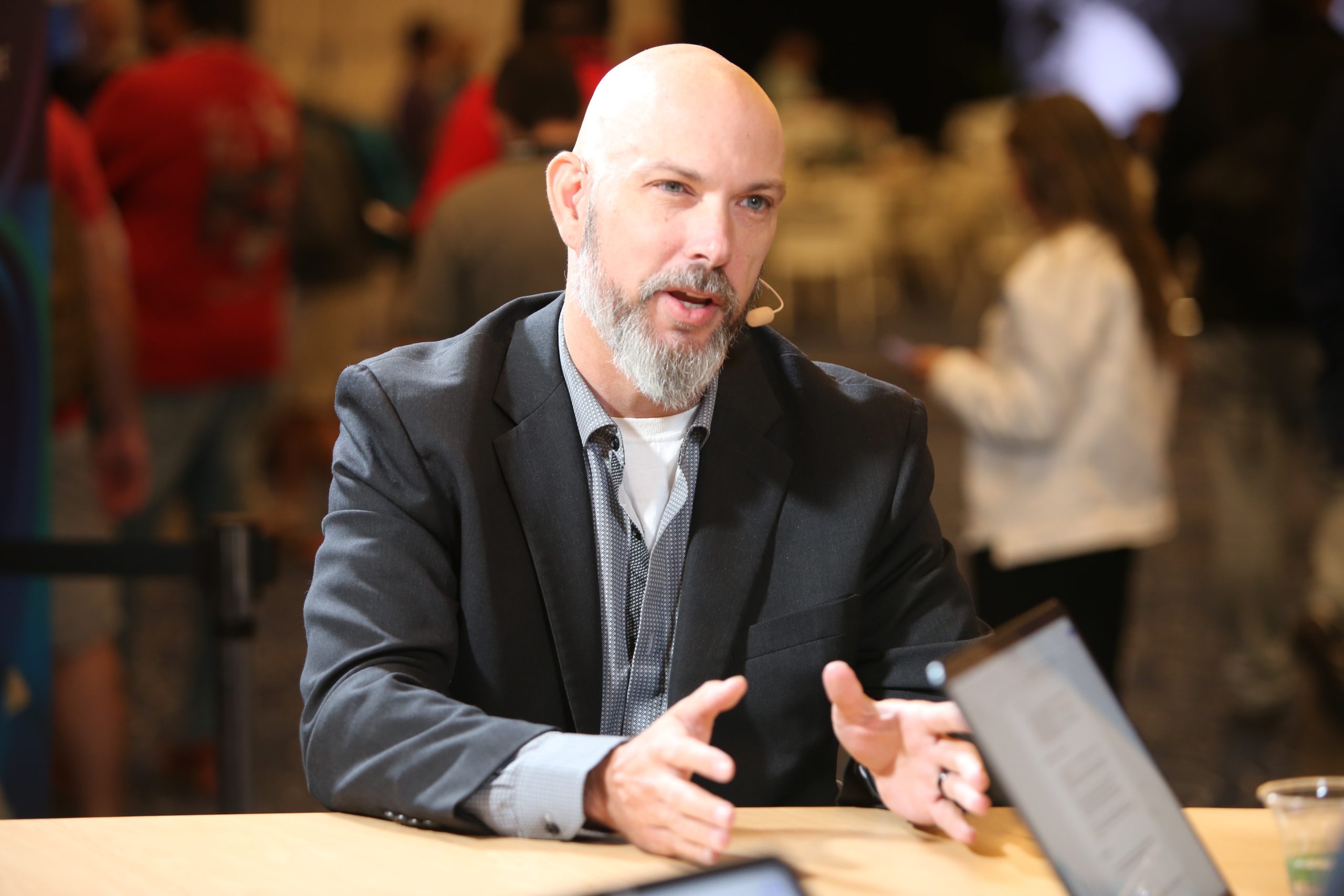
A year after its general availability, Amazon EVS now spans 22 AWS Regions and supports VCF 9.0 and 9.1 on Amazon Elastic Compute Cloud bare-metal infrastructure. Adoption is being driven by data center exits, disaster recovery requirements and limited access to new on-premises hardware, according to Andy Reedy (pictured), senior manager of EC2 product management at AWS.
“The number one use case we hear from customers is data center evacuation,” he said. “Almost weekly we get a call, ‘My data center contract is expiring in six months. I need to be out of the data center.’ We’ve seen the lift-and-shift VCF-to-VCF model being the fastest path to get out of a data center and to get into a cloud environment.”
Reedy spoke with theCUBE Research’s Christophe Bertrand and co-host Alison Kosik at VMware Explore, during an exclusive broadcast on theCUBE, SiliconANGLE Media’s livestreaming studio. They discussed Amazon EVS adoption, hybrid-cloud capacity and maintaining operational control during infrastructure modernization. (* Disclosure below.)
Unlike the fully managed VMware Cloud on AWS offering, Amazon EVS gives customers direct control over their VCF environments. That approach allows companies to retain familiar skills and processes while gaining access to scalable AWS infrastructure, according to Reedy.
“EVS is a self-managed solution. It’s wildly different than the VMware Cloud offering,” he said. “The customer literally logs in and controls the VCF environment. They deploy the VCF environment just as they would in their on-prem data center, but they’re using AWS cloud infrastructure.”
As hardware constraints complicate VCF adoption, Amazon EVS can also extend on-premises environments when additional capacity is required. Customers can determine separately whether each application should remain unchanged, move to the cloud or undergo deeper modernization, according to Reedy.
“It’s really a menu of options, and it’s almost on an application-by-application basis as to what works best for that workload,” he said. “For VMware workloads in particular, what we’re seeing is you don’t necessarily have to refactor these applications or change these workloads. It is possible to get the benefits and the advantages of the cloud infrastructure without having to change the applications themselves.”
Here’s the complete video interview, part of theCUBE’s coverage of VMware Explore 2026:
(* Disclosure: TheCUBE is a paid media partner for the VMware Explore event. Sponsors of theCUBE’s event coverage do not have editorial control over content on theCUBE or SiliconANGLE.)
Support our mission to keep content open and free by engaging with theCUBE community. Join theCUBE’s Alumni Trust Network, where technology leaders connect, share intelligence and create opportunities.
Founded by tech visionaries John Furrier and Dave Vellante, SiliconANGLE Media has built a dynamic ecosystem of industry-leading digital media brands that reach 15+ million elite tech professionals. Our new proprietary theCUBE AI Video Cloud is breaking ground in audience interaction, leveraging theCUBEai.com neural network to help technology companies make data-driven decisions and stay at the forefront of industry conversations.