 AI
AI
AI
AI





AI

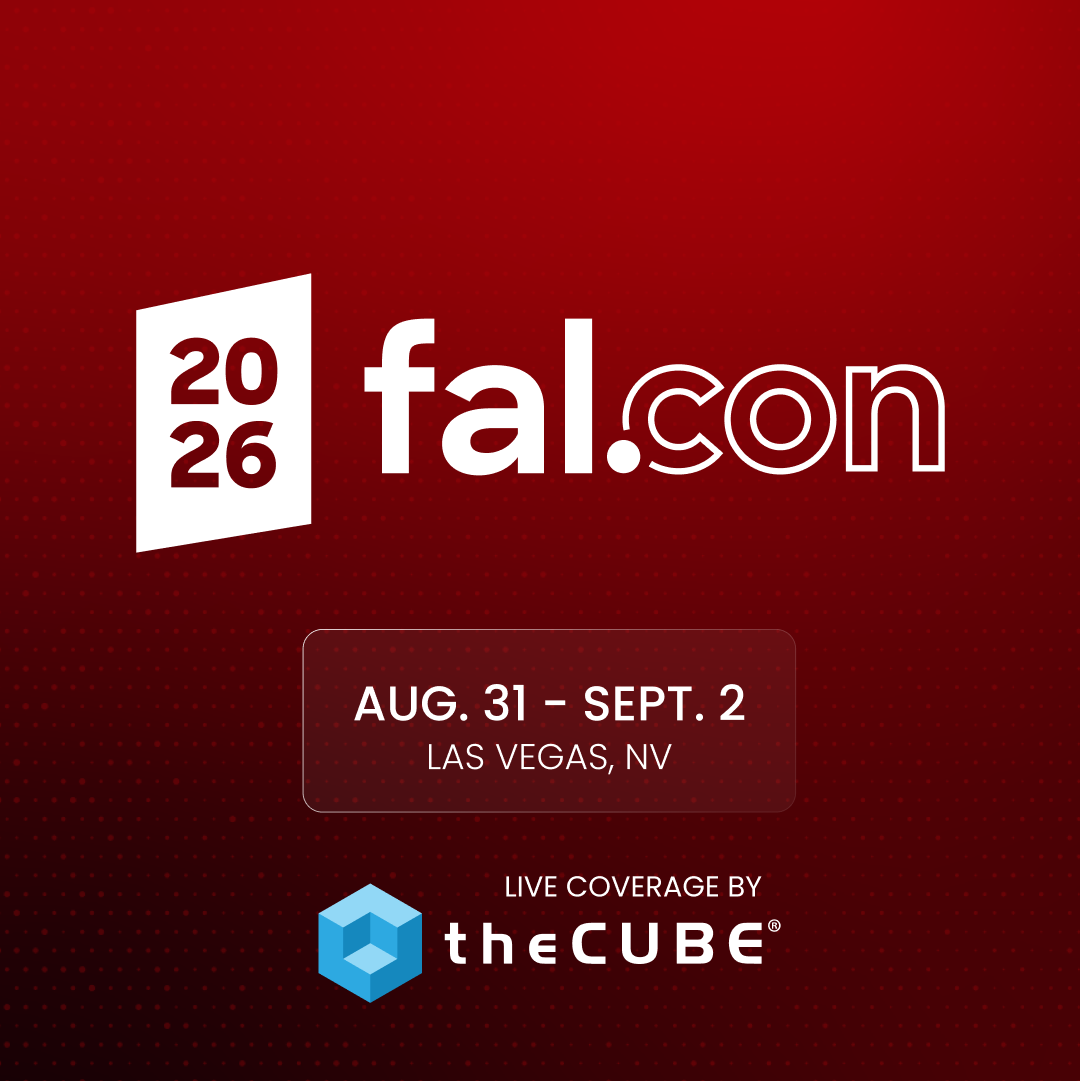
At this past week’s AGNTCon + MCPCon Europe 2026 conference in Amsterdam, the buzz around agentic artificial intelligence was palpable – but nobody was particularly worried that AI was going to kill us all.
The frontier model vendors – none of which appeared on the show floor – may have spent the week frantically positioning their growth challenges as global magnanimity, but for the startups touting their wares in the exhibit hall, the common theme was agentic AI getting down to business.
Though the pace of innovation in the emerging agentic AI marketplace is certainly outrunning the pace of adoption, there were plenty of bona fide paying customer stories as well.
That being said, this market is unquestionably nascent. Rapid innovation drives new business models on a weekly basis, and sometimes it’s hard to tell the real products from the hand-waving.
I spoke with most of the exhibitors and settled on the following seven companies as representative of the turbulent balance between customer traction and rapid innovation:
Why do I discount the wild proclamations that AI will grow out of control? Because of all the effort and innovation going into controlling it.
Governance may be the root canal of information technology – you know you need it, but everybody hates it – but many vendors are rapidly innovating their governance offerings nevertheless.
Traefik Labs SAS is leveraging its deep expertise with its cloud native proxy and ingress controller technology to offer a combination application programming interface or API, AI and Model Context Protocol or MCP gateway – essentially three separate gateway products that share a common binary.
By monitoring and controlling all the ways AI agents can interact with their environment, Traefik is able to deliver a sovereign trust plane. It’s essentially a unified control plane that delivers evidence of agentic behavior with sufficient detail and trust to meet the most stringent of regulatory, auditing and even forensic requirements.
Bluerock Security Inc. also leverages its pre-AI expertise, as the company developed a military-grade microkernel hypervisor that guaranteed data isolation on bare metal.
Building on this technology, the company now offers a governed AI workspace for AI-native builders – developers as well as business users working with AI coding agents on their desktops. Bluerock’s workspace acts as an “AI jail” that controls access to models, manages token usage and integrates with enterprise identity management systems.
Bluerock also offers agentic code scanning capabilities, extending traditional static application security testing or SAST to MCP servers and AI agent skills.
Taken individually, AI agents can be enormously powerful – or dangerous. But the real power and commensurate risk appears when organizations string agents together, a process we call orchestration.
Two vendors at AGNTCon stood out for their agentic orchestration capabilities. Born out of Netflix Inc., Orkes Inc. leverages its history as a massively scalable cloud native orchestration platform to bring controlled orchestration to the agentic era.
Orkes enables organizations to build deterministic orchestrations (thus less likely to go off the rails), while leveraging the scalability and durability that the underlying cloud native platform provides. The platform also offers explainability, giving operators the ability to inspect and track agentic interactions.
Grape Up Sp. Z o.o. has also thrown its hat into the agentic orchestration ring with Aiboostr, its AI orchestration and governance platform.
Grape Up is perhaps best known for its Europe-based cloud and data management platforms. The company leverages this expertise in Aiboostr to provide orchestrations that comply with the rigorous EU Artificial Intelligence Act.
This act requires organizations maintain inventories of AI capabilities and track each agent’s owner, purpose and users – tasks that Aiboostr’s built-in catalog provides.
Both Orkes and Grape Up illustrate the fact that the key to offering powerful, innovative capabilities requires a commensurate focus on control and governance – hence delivering business value without all the mayhem.
We’re all used to frontier large language models or LLMs returning text, images or videos to our prompts. But with LLM plugins, ChatGPT from OpenAI Group PBC, Gemini from Google LLC and their brethren can return plugins as well.
LLM plugins are distributable workflow packages that leverage MCP and can contain reusable skills and apps. Plugins can connect to external data and actions, making capabilities discoverable and easy to install, either on the user’s desktop or as part of an agentic orchestration.
Two vendors at AGNTCon touted their LLM plugin capabilities. Manufact Inc. offers a cloud-based MCP platform that enables developers to build and run components that agents interact with via MCP, including LLM plugins.
The Manufact platform provides the analytics, testing and compliance organizations require to deploy MCP-based applications, including agents and plugins, into production.
Alpic SAS leverages LLM plugins to support the requirements of its business-to-consumer or B2C customer base. On the desktop, plugins can support functional user interface widgets, similar to the portlets that portal vendors offered over 20 years ago – only now, users find them through their AI chat interface of choice.
For example, say a consumer asks ChatGPT for a particular travel itinerary with specific requirements (for example, a hotel room with a king-size bed).
Leveraging Alpic, ChatGPT returns a functional mini-application that provides the information the user requested and also gives them the ability to complete the reservation – showing the power of an agentic orchestration essentially running on a user’s desktop.
Everybody and their sister can now leverage AI coding agents to pound out working applications, where the AI generates all the code you need to run in production.
Despite its appeal, this “vibe coding” suffers from some fundamental challenges: It generates code that humans must review, understand and test before any organization should be comfortable running it in production.
And the more code AI generates, the harder it becomes to control – until, you know, it kills us all.
Reboot Inc. elegantly solves this problem by providing a framework that raises the level of abstraction from the code to the architecture.
In Reboot’s dashboard, developers work only with domains and behaviors. Domains represent entities relevant to the business purpose of each application or agent, for example, “customer” or “invoice.” Behaviors, in turn, represent what users or agents can do with such entities – or what they can do by themselves.
Reboot also provides the backend for each application, delivering durable state, transactionality and reactive front ends, all at cloud-native scale. Superficially, the Reboot dashboard looks like an earlier generation architectural modeling tool. The difference, however, is profound: With Reboot, the architectural abstractions in the dashboard are a live, working representation of the application code itself.
In other words, Reboot offers developers a new paradigm for vibe coding: Let the AI generate the code, but humans must always remain in control of the architecture and behavior of the software.
Otherwise, you know, it will kill us all.
The best thing about hype bubbles are how fun they are to pop, and the current “AI will kill us all” bubble gives off a thoroughly pleasurable sound as I let the air out.
What’s left after the gases escape, of course, are real vendors building products that solve real business problems – vendors like the ones I spoke to at AGNTCon.
There’s no question that we’re still early in the evolution of the agentic AI market, and as such, innovation continues to proceed apace as vendors furiously work to mature their offerings. And yet, despite the forecasts of Armageddon, enterprises are moving forward with their agentic AI strategies, as the business value agents promise is unarguable.
In the final analysis, it is this business demand that will drive the market to address the risks of the technology – before it has the opportunity to kill us all.
Jason Bloomberg is founder and managing director of Intellyx, which advises business leaders and technology vendors on their digital transformation strategies. He wrote this article for SiliconANGLE. A human wrote every word of this article. Meet with many of the vendors in this article at AGNTCon + MCPCon North America in San Jose, California, Oct. 22-23.
Support our mission to keep content open and free by engaging with theCUBE community. Join theCUBE’s Alumni Trust Network, where technology leaders connect, share intelligence and create opportunities.
Founded by tech visionaries John Furrier and Dave Vellante, SiliconANGLE Media has built a dynamic ecosystem of industry-leading digital media brands that reach 15+ million elite tech professionals. Our new proprietary theCUBE AI Video Cloud is breaking ground in audience interaction, leveraging theCUBEai.com neural network to help technology companies make data-driven decisions and stay at the forefront of industry conversations.