 AI
AI
AI
AI











AI

Utah has become the first state in the U.S. to give an artificial intelligence startup permission to automate the approval of prescription refills with only minimal oversight from human physicians.
In a blog post today, Nolla Health said it has been granted approval by the state to launch a pilot project that will enable acne sufferers to talk to an AI agent, upload a photo of their face, and then automatically receive a prescription without speaking to a doctor. “This makes Nolla the first ever end-to-end AI doctor,” Nolla Health founder Luis Wenus said in a post on X today.
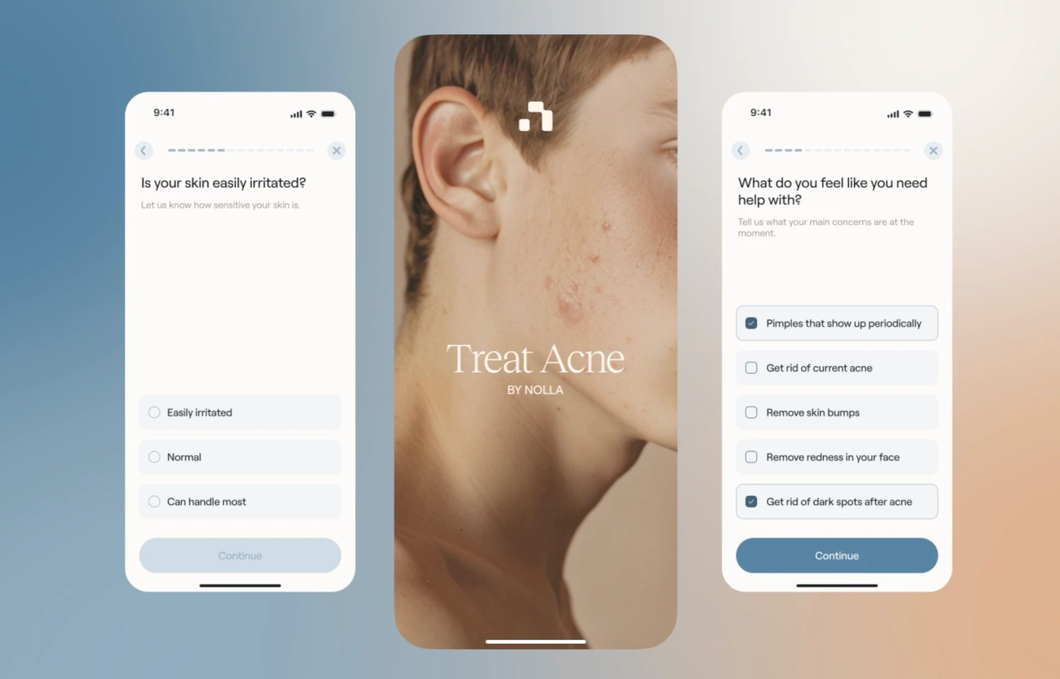
Through the Nolla Derm app available on iOS devices, an AI model can select which medicine to prescribe each user from a shortlist of physician-approved topical treatments, the company said. Any requests from patients that fall outside of its strict limits will be forwarded to a real, licensed human physician.
When users first download the app, they’ll have to go through an intake process before they can actually speak to the AI doctor. Once they’ve been approved, they can tell the app about their acne condition, upload a facial scan that shows how bad their acne really is, and the AI will then decide on an appropriate treatment plan.
The prescription can then be picked up at the user’s local pharmacy or sent directly to their home. The app also tracks patient’s progress through a daily skin scan, and updates their treatment plans monthly, based on how well it’s working.
“Until now, a licensed clinician signed every single prescription before it went out,” Wenus explained in a video introducing the app.” Our AI can now make that prescribing decision itself.”
Today, Nolla Health became the first organization in the U.S. (and possibly the world) to receive regulatory approval for an AI to issue initial prescriptions.
This makes Nolla the first ever actual end-to-end AI doctor. pic.twitter.com/xn6rvb8IyW
— Luis Wenus (@luiswenus) October 5, 2026
The service is being made available as a pilot after being granted approval from the Utah Office of Artificial Intelligence Policy, the Utah Division of Professional Licensing, the Utah Medical Association and the American Academy of Dermatology. Under the agreement, the company’s AI system is permitted to write prescriptions only for creams designed to treat topical acne. It’s barred from prescribing isotretinoin and oral medications.
The pilot program has three stages. In the first phase, two physicians will approve every AI-generated prescription before it’s sent to the user. Once this has been done for at least 100 patients, and if there are no serious problems, it will then progress to stage two, where the AI issues the prescriptions directly without any human approval, and physicians review them after the fact. This stage will cover 500 patients, Nolla Health said.
Finally, in stage three, human physicians will simply review at least 10% of all automated prescriptions made by Nolla on a monthly basis. The pilot project is being launched as part of Utah’s AI Learning Lab sandbox program, which provides AI firms with relief from state laws to test new products under supervision. “Taking part in our AI sandbox does not mean the State of Utah has approved, endorsed, certified, or vouched for the product,” the Utah Office of Artificial Intelligence Policy states on its authorized-pilots page.
In an interview with Inc.com, Nolla Health Chief Medical Adviser Zaid Fadul said that acne treatment is only the starting point. The startup has much bigger ambitions in future, he said. If the pilot is successful, it will then look at bringing automated prescription services to other common conditions that are well-understood by doctors, simple to assess remotely and can be treated using medications with strong safety profiles.
“Beyond dermatology, I think conditions like the flu and uncomplicated urinary tract infections are worth exploring, particularly because testing can provide objective information that can be considered alongside a patient’s symptoms and medical history,” Fadul said. “The key is having very clear guardrails.”
Ten years from now, Fadul said, he expects that AI will be able to manage a large part of routine human healthcare checks, including diagnostics, treatments, prescription refills and routine testing. But he doesn’t foresee AI being used when it comes to more serious medical conditions and life-changing diagnoses, or with major procedures and high-risk medications.
Some medications, such as stimulants, opioids and benzodiazepines are too risky for AI to prescribe, he said, given the risk that some humans might try to manipulate the models doing the assessments. “Frankly, it may take a long time before we have enough evidence and the appropriate safeguards to support autonomous prescribing of some of these drugs,” Fadul said.
Support our mission to keep content open and free by engaging with theCUBE community. Join theCUBE’s Alumni Trust Network, where technology leaders connect, share intelligence and create opportunities.
Founded by tech visionaries John Furrier and Dave Vellante, SiliconANGLE Media has built a dynamic ecosystem of industry-leading digital media brands that reach 15+ million elite tech professionals. Our new proprietary theCUBE AI Video Cloud is breaking ground in audience interaction, leveraging theCUBEai.com neural network to help technology companies make data-driven decisions and stay at the forefront of industry conversations.