 AI
AI
AI
AI











AI

Vinci4D Inc. today announced that it has closed a $250 million funding round at a $1.5 billion valuation.
Advent, Temasek and Xora jointly led the Series B deal. They were joined by several startup funds including AMD Ventures.
Hardware engineers use simulations to find issues in their product designs. For example, a car designer might simulate fog to evaluate the impact of adverse weather on a vehicle sensor. Historically, setting up simulations required highly specialized skills and a significant amount of time. As a result, many hardware teams only use the technology intermittently.
Palo Alto, California-based Vinci is looking to change that. Its namesake software platform can run simulations after every major change to a product blueprint. If engineers run a simulation the day after a design change rather than two weeks later, they can detect issues that much faster. That lowers product development times.
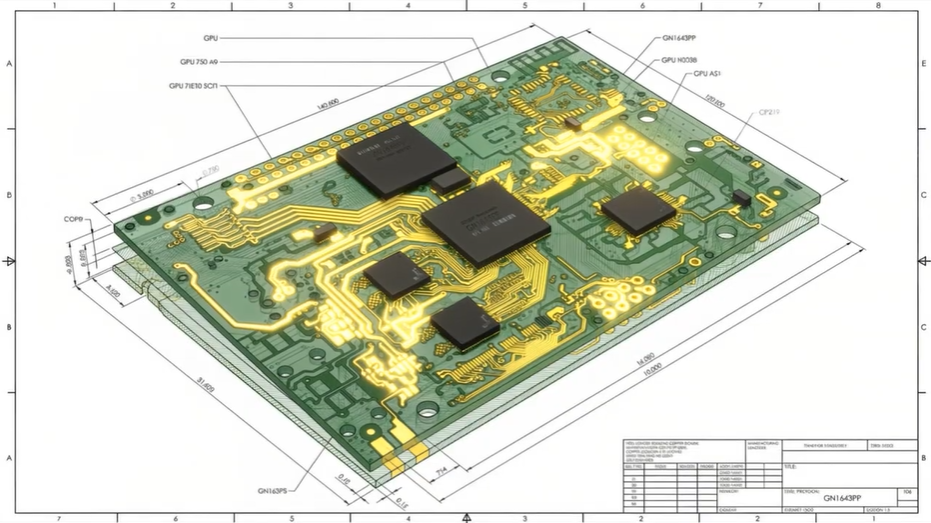
Vinci’s initial focus is speeding up chip projects. In particular, the platform helps engineers simulate the thermal properties of processors, memory modules and interconnects. A chip team could, for example, study whether a graphics card might overheat when it operates near its peak frequency.
Vinci is powered by a physics-focused artificial intelligence model. Developers can upload a CAD drawing of a chip, input certain related data and have the AI automatically turn it into a simulation.
One of the most time-consuming tasks involved in simulation projects is meshing. That’s the process of breaking up a product blueprint into numerous small, three-dimensional shapes. That step is necessary because a large array of small shapes can be processed much faster than a continuous surface such as a chip.
Vinci performs meshing automatically. From there, it uses custom graphics card kernels to speed up convergence, which is the process of finalizing simulation calculations. Kernels are the low-level software modules that make up an AI model.
A simulation’s complexity can be measured in terms of how many degrees of freedom, or DOFs, it contains. A DOF is a data point that describes a narrow physical observation such as how well a single transistor conducts heat. Vinci says that its platform can complete simulations that contain hundreds of millions of DOFs in a few minutes. Such workloads usually run for several hours or days.
“Vinci is starting by giving engineers the ability to understand physical behavior while they are still designing,” said Vinci co-founder and Chief Executive Hardik Kabaria. “From there, we are building toward systems that can identify what should change, bring together increasingly complex engineering domains, and ultimately help engineers create what they could not create before.”
Vinci also plans to extend its platform’s simulation capabilities beyond chips to vehicles, aircraft and satellites.
Support our mission to keep content open and free by engaging with theCUBE community. Join theCUBE’s Alumni Trust Network, where technology leaders connect, share intelligence and create opportunities.
Founded by tech visionaries John Furrier and Dave Vellante, SiliconANGLE Media has built a dynamic ecosystem of industry-leading digital media brands that reach 15+ million elite tech professionals. Our new proprietary theCUBE AI Video Cloud is breaking ground in audience interaction, leveraging theCUBEai.com neural network to help technology companies make data-driven decisions and stay at the forefront of industry conversations.