 INFRA
INFRA
INFRA
INFRA







INFRA

For as long as Cisco Systems Inc. has held its WebexOne event, the show has aimed to drive thought leadership in the collaboration industry. This year, with artificial intelligence on tap, it had its fair share of unified communications and contact center.
But more importantly, it was somewhat of a coming-out party for the “new Cisco,” which consolidated much of its historically sprawling portfolio into a single AI platform, with Webex as the place where people and agents meet.
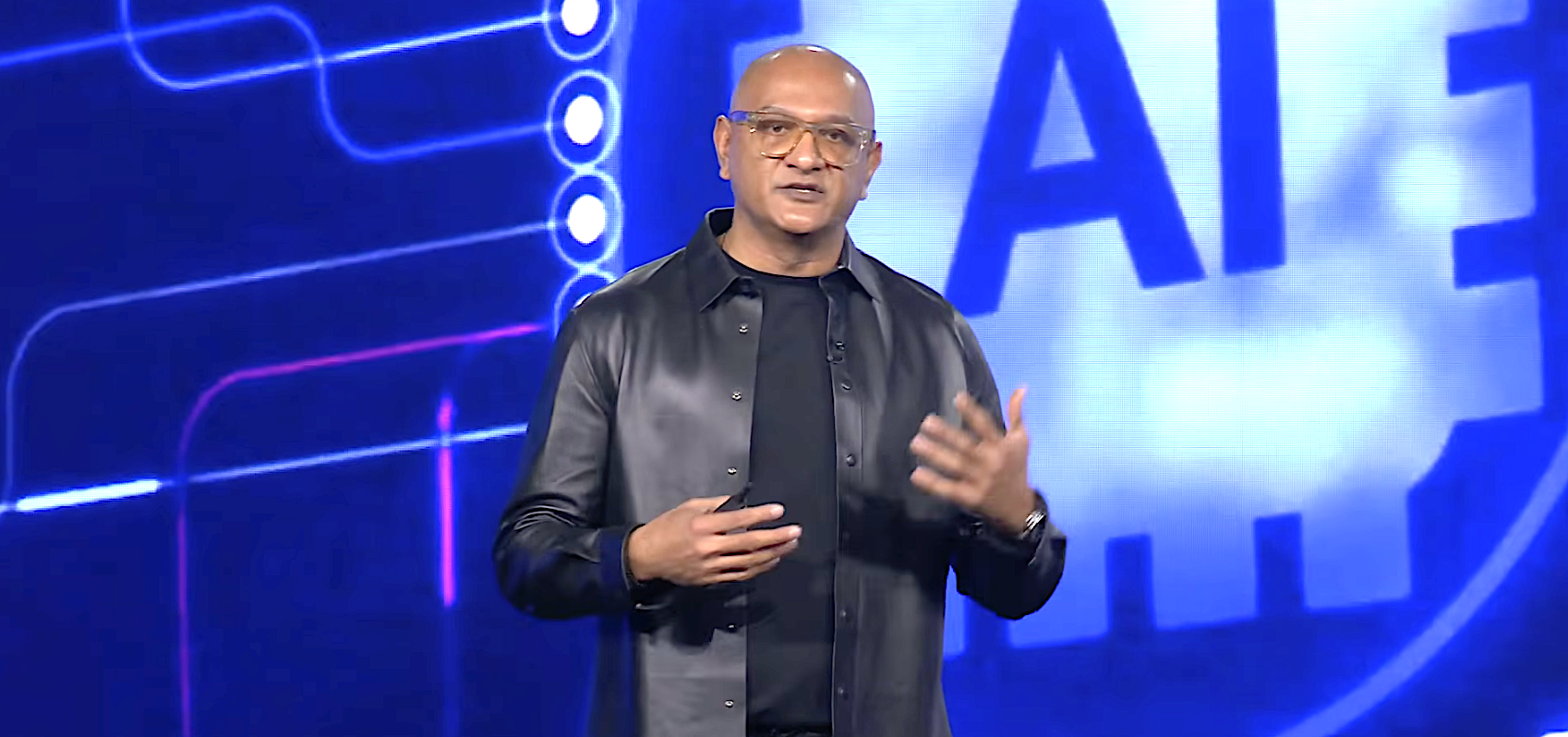
The “One Cisco” story has been shared at Cisco Live and other events over the past year, but for many Webex buyers, this is their first exposure to it at this depth. President and Chief Product Officer Jeetu Patel opened his keynote by framing the market around five forces: Agents are the new workforce, inference is the new workload, tokens are the new currency, trust is the new catalyst and control is the new moat. The underlying message was consistent with other presentations from Patel: If agents run everywhere, someone has to build and secure the infrastructure beneath them.
“We have moved from the age of chatbots, where we just asked questions of a model and got back answers, to agents that are now conducting tasks and jobs for us almost fully autonomously,” Patel said. “These agents act more like digital workers than like just a software tool.”
In many ways, the more interesting commentary came during the post-keynote analyst Q&A, when Patel explained how Cisco got here. Six years ago, he said, Cisco “looked much more like a holding company than a platform company,” with roughly 250 acquisitions and siloed general managers. Webex Control Hub was the first platform experiment. Cisco Cloud Control, which he said came together in nine months, is now the management plane for everything Cisco sells, alongside Cisco Data Fabric for data and Silicon One for silicon.
“Over time, Meraki as a brand will be gone. Over time, Catalyst as a brand will be gone,” Patel said. “We will all be feature managers, not product managers, because all we’re doing is building features for the platform.” I’ve heard Cisco talk about platforms for years, but this is the first time the org chart, sales compensation and roadmap point in the same direction.
The platform discussion laid the foundation for the following takeaways from the keynote:
Every vendor has the same frontier models. What makes an agent useful is context: who’s on the team and what was decided last week. Glean CEO Arvind Jain, who joined Patel onstage, explained that without that knowledge, agents “work like a day-one employee.”
He estimated that 80% of enterprise knowledge is buried in meetings, making Webex more strategic than “meetings software” suggests. That’s why the most important Webex announcements focused on integrations. Claude in Webex, built on Anthropic’s Claude Managed Agents, will let teams analyze data, generate content and act on shared context. A Model Context Protocol integration brings Webex context into OpenAI’s dots personal agent. Users can also invite agents into spaces, meetings and calls. Cisco isn’t trying to own the model. It’s trying to own where the work happens.
While all the collaboration vendors espouse the value of data, Cisco has a unique asset, namely data from Splunk, security and networking, which provides an additional dimension into what users are doing and where they are located.
Citing OpenRouter data, Patel said agent token consumption surpassed human consumption in February and is now five times higher. He also said that an agent consumes 450% more network bandwidth than a human performing the same task and that 60% of global compute this year will be used for inference rather than training.
“The costs of tokens coming down are nowhere near the demand going up,” he said. “So all of us are going to have a human budget as well as a token budget.” Patel told the audience that by the end of this month, every Cisco manager will know their token budget.
Jain called out how unusual that is. “Technology is always supposed to be a fraction of the cost of your labor,” he said. “It cannot be like this forever.” Until that changes, agents that run around the clock reshape information technology cost models and network capacity planning, areas where Cisco has a clear interest.
“Historically, in everything we’ve seen in tech, trust has never been a catalyst,” Patel said. “It’s always been an impediment to adoption.” Agents deliver value only when granted access to calendars, email, and credit cards, which requires trust. He compared agents to teenagers: “They’re supremely intelligent. They have no fear of consequences.”
More important is his argument that security and observability are converging because both prompt injection and agent drift appear in telemetry. “You cannot be doing security enforcement through static policy at design time,” he told analysts. “They’re dynamic policies that are enforced at runtime.”
He went further: “He who wins agent security is going to win the security stack.” The proof point is that Webex AI Agents run within Cisco AI Defense guardrails, with live telemetry and observability from Splunk. Cisco can do this natively, while other collaboration vendors will need to partner, which always adds complexity.
One interesting question in the analyst Q&A asked why a company should invest in offices if agents eventually outnumber people in meetings. During the event, Cisco took several press and analysts to its newly redesigned Austin office to showcase what modern workspaces should look like. Patel said, “Humans are social creatures.”
He noted that 1.4 billion square feet of commercial real estate is up for renewal and that Cisco’s campus and branch business, historically tied to GDP growth, has grown by more than 20% over the past couple of quarters as companies re-equip offices.
If the refresh is done right, the office itself becomes a data source, as at Cisco Austin. “We see the workplace as an intelligent ecosystem, where the office is an active participant in work,” explained Wayne Andrew of Asahi Beverages.
Intelligent Workplace Experiences combines networking, devices, experience assurance, and space data under Cloud Control, with Workplace Designer, Experience Metrics, and Workplace Insights as new components. RoomOS 27 adds an AI Assistant in 32 languages, and the Ceiling Speaker Pro delivers IP-connected audio over a single Ethernet cable.
Openness is almost a new muscle for Cisco. Through a new partnership with Google, Cisco devices now run fully featured Google Meet natively alongside Webex, Microsoft Teams, and Zoom. “If you’ve invested in a competitor of ours, we owe it to you to make sure that you can actually get the most out of that investment,” Patel said. That’s a smart hedge in a platform war Cisco doesn’t need to win. Historically, Cisco wanted the whole pie, which cost it some deals. Under Patel, Cisco understands that a slice of the pie is fine and often better for the customer.
Patel said fewer than 2% of people use agents as power users today and predicted that number could reach 30% to 40% within 12 to 15 months. Then consumers send their agents to deal with brands. “Not only does your website need to be dexterous at going out and influencing humans,” he said, “they also have to be dexterous in influencing agents.”
Brands will see far more inbound agent traffic and will need their own agents to maintain direct customer relationships. Patel described the goal as “a relationship concierge for every single one of your customers.” Anurag Dhingra, who leads Cisco’s intelligent workplace efforts, described today’s problem: “Every time a customer engages with you, it feels like they’re starting over.”
Dialog, the new agentic harness for the Webex AI Agent platform, is Cisco’s response. Its agents continue working after the conversation ends, carry context across channels, and learn from human agent judgment. It’s the right shift; execution will depend on how well Dialog integrates with the back-end systems where outcomes are finalized.
Patel told analysts that “the turnaround is complete” and that Cisco’s innovation pace will only accelerate. The platform work supports both claims. The risk is that customers struggle to absorb it all, a challenge Patel acknowledged. Cisco’s financial performance appears to support Patel’s claim, with Cisco’s stock price up over 50% year-to-date and over 70% since WebexOne 2025. The growth in valuation has come on the backs of product innovation, which Cisco has accelerated despite the massive breadth of its offerings.
For IT leaders, I’d focus on four things. First, track token consumption by team now, before agent spend becomes a surprise. Second, treat agents as identities: Inventory them, assign owners and enforce policy at runtime. Third, bring networking, collaboration and facilities to the same table for workplace refreshes, since their budgets are converging. Finally, ask your CX team how the business will respond when a customer’s agent, not the customer, calls in.
That day is closer than most companies think.
Zeus Kerravala is a principal analyst at ZK Research, a division of Kerravala Consulting. He wrote this article for SiliconANGLE.
Support our mission to keep content open and free by engaging with theCUBE community. Join theCUBE’s Alumni Trust Network, where technology leaders connect, share intelligence and create opportunities.
Founded by tech visionaries John Furrier and Dave Vellante, SiliconANGLE Media has built a dynamic ecosystem of industry-leading digital media brands that reach 15+ million elite tech professionals. Our new proprietary theCUBE AI Video Cloud is breaking ground in audience interaction, leveraging theCUBEai.com neural network to help technology companies make data-driven decisions and stay at the forefront of industry conversations.