 CLOUD
CLOUD


CLOUD

Shares of Amazon.com Inc. fell more than 7% in late trading today after the company missed expectations on earnings and revenue and reported rising negative free cash flow as it continues to throw billions of dollars at its cloud infrastructure build out.
The company reported third-quarter earnings before certain costs such as stock compensation of just $1.89 per share, trailing Wall Street’s target of $1.96 per share by a fair distance. Revenue for the period came to $201.94 billion, up 12% from a year earlier but below the analyst consensus estimate of $202.31 billion.
Amazon’s results looked even worse as its net income dropped to $20.69 billion, down from $21.19 billion in the same period one year earlier. However, that decrease was primarily due to last year’s $9.5 billion pretax gain from its investment in the artificial intelligence startup Anthropic PBC, which was recorded in last year’s quarter.
The company did better in terms of operating income, which is a more direct indicator of its financial health because it excludes profits and losses from investments unrelated to business performance. Operating income for the quarter came to $28.1 billion, above the Street’s forecast of $26.2 billion.
In a conference call with analysts, Amazon Chief Financial Officer Brian Olsavsky reiterated the company’s capital expenditure forecast, saying the company expects spending to reach $220 billion this year.
Technology giants have been spending money at a blistering pace as they strive to build out their data center networks to meet the surging demand for AI infrastructure, but in recent weeks signs have begun to emerge that the capital expenditure splurge may be peaking. This week, Microsoft Corp. said it’s reducing its capex forecast for the year to $170 billion, down from an earlier target of $175 billion, while Alphabet Inc. maintained its forecast of between $195 billion and $205 billion.
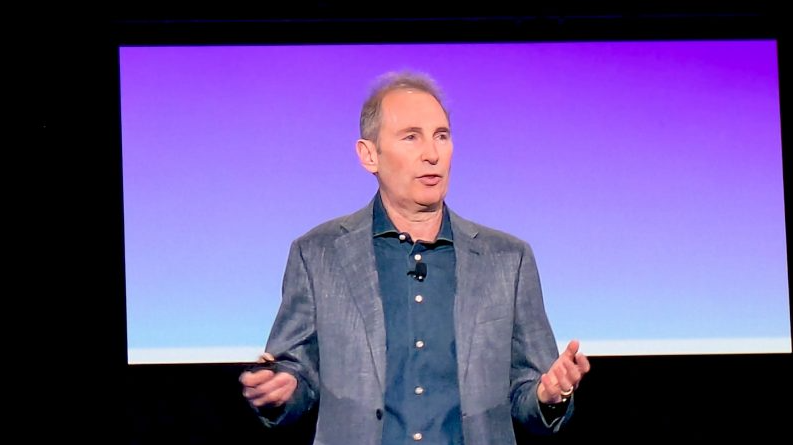
However, Amazon’s decision to reiterate its annual capex target obscured the fact that it spent far more during the previous quarter than anyone had expected — or anyone else. Its third-quarter capex bill reached $77.3 billion, well ahead of the Street’s $58.7 billion estimate, and up from $35.1 billion in the same period last year. On the conference call, Amazon Chief Executive Andy Jassy (pictured) told analysts that the company plans to “spend more meaningfully in 2027,” adding that it has a “clear line of sight to attractive financial returns.”
But investors appeared to be more concerned with how the spending has been eating into the company’s cash flow than any future opportunities it might lead to. The company reported negative free cash flow of $42.4 billion in the quarter, which came after it posted a deficit in the previous quarter too. Olsavsky said the company spent more in the last quarter because it had to purchase more property and equipment for its AI investments.
Amazon had further disappointment for investors when it offered its guidance for the current quarter. It said it’s targeting between $240 billion and $247 billion in fourth quarter revenue, with the midpoint of that range trailing the Street’s forecast of $244.5 billion. The fourth quarter is traditionally Amazon’s biggest because its retail business benefits from holiday shopping season sales revenue.
The more important business is Amazon Web Services, the company’s cloud computing infrastructure unit. It was a bright spot during the quarter, with sales growing 39% from a year earlier to $45..98 billion, just ahead of the Street’s target of $45.9 billion. Jassy told analysts that he’s expecting sales growth to accelerate to “over 40%” in the next year and in fiscal 2028 as a result of the company’s ongoing investments in its AI buildout. “Our AWS investment in functionality and infrastructure is working,” he insisted.
According to Jassy, AWS is on track to generate more than $1 trillion in annual revenue within the next five to 10 years.
Despite that boast, the company remains under pressure to start showing more substantial returns from its ballooning capex spending. Jassy responded, pointing to the growing traction in Amazon Bedrock, which is the company’s AI model marketplace, and increased revenue from its Graviton and Trainium AI chips. Indeed, the chips business “continues to grow triple-digit percentages year-over-year,” Jassy said. He added that the company has plans to make the Trainium chips available to external customers toward the end of next year.
Forrester analyst Tracy Woo told SiliconANGLE that AWS’s results stood out, with the unit continuing to drive strong profitability even as it funds one of the largest of all the AI infrastructure buildouts, with Amazon spending significantly more capital than either Google or Microsoft. “That investment profile suggests Amazon sees future capacity constraints rather than demand constraints,” she said. “For enterprise customers, this demonstrates that cloud competition is increasingly shifting from price to access, with GPUs, foundation models and AI capacity becoming strategic differentiators. AWS’s margin performance suggests customers are currently prioritizing access to these scarce resources over cost optimization.”
The strong showing from AWS was sorely needed because Amazon’s other main business segments struggled to generate much enthusiasm, as both the retail and the advertising units fell short of Wall Street’s expectations. Online sales rose 2% from a year earlier, to $68.47 billion, shy of the $69.68 billion analyst target. That marked a dramatic slowdown from the year-ago quarter, when retail sales grew by almost 10%.
In the advertising segment, revenue rose 11%, to $19.64 billion, trailing the Street’s forecast of $20.82 billion. Jassy said the disappointing performance in both segments was partly the result of the company’s decision to bring its annual Prime Day sale forward in several countries this year. It typically takes place during the third quarter, but it was held during the second quarter instead to avoid conflicting with the FIFA World Cup in July.
Support our mission to keep content open and free by engaging with theCUBE community. Join theCUBE’s Alumni Trust Network, where technology leaders connect, share intelligence and create opportunities.
Founded by tech visionaries John Furrier and Dave Vellante, SiliconANGLE Media has built a dynamic ecosystem of industry-leading digital media brands that reach 15+ million elite tech professionals. Our new proprietary theCUBE AI Video Cloud is breaking ground in audience interaction, leveraging theCUBEai.com neural network to help technology companies make data-driven decisions and stay at the forefront of industry conversations.