 EMERGING TECH


EMERGING TECH

IBM Corp. today announced the Quantum Nighthawk r3, its next-generation processor designed to tackle larger, more complex computations at high speed while maintaining quality.
The company also said that in 2027, IBM plans to link two r3 quantum processors into a single system capable of running up to 10,000 quantum operations, scaling to more than 1,000 qubits between them.
“Useful quantum computing hinges on whether results can be delivered with accuracy and speed, both are fundamental,” said Director of IBM Research Jay Gambetta. “IBM Nighthawk is already showing us what that looks like today.”
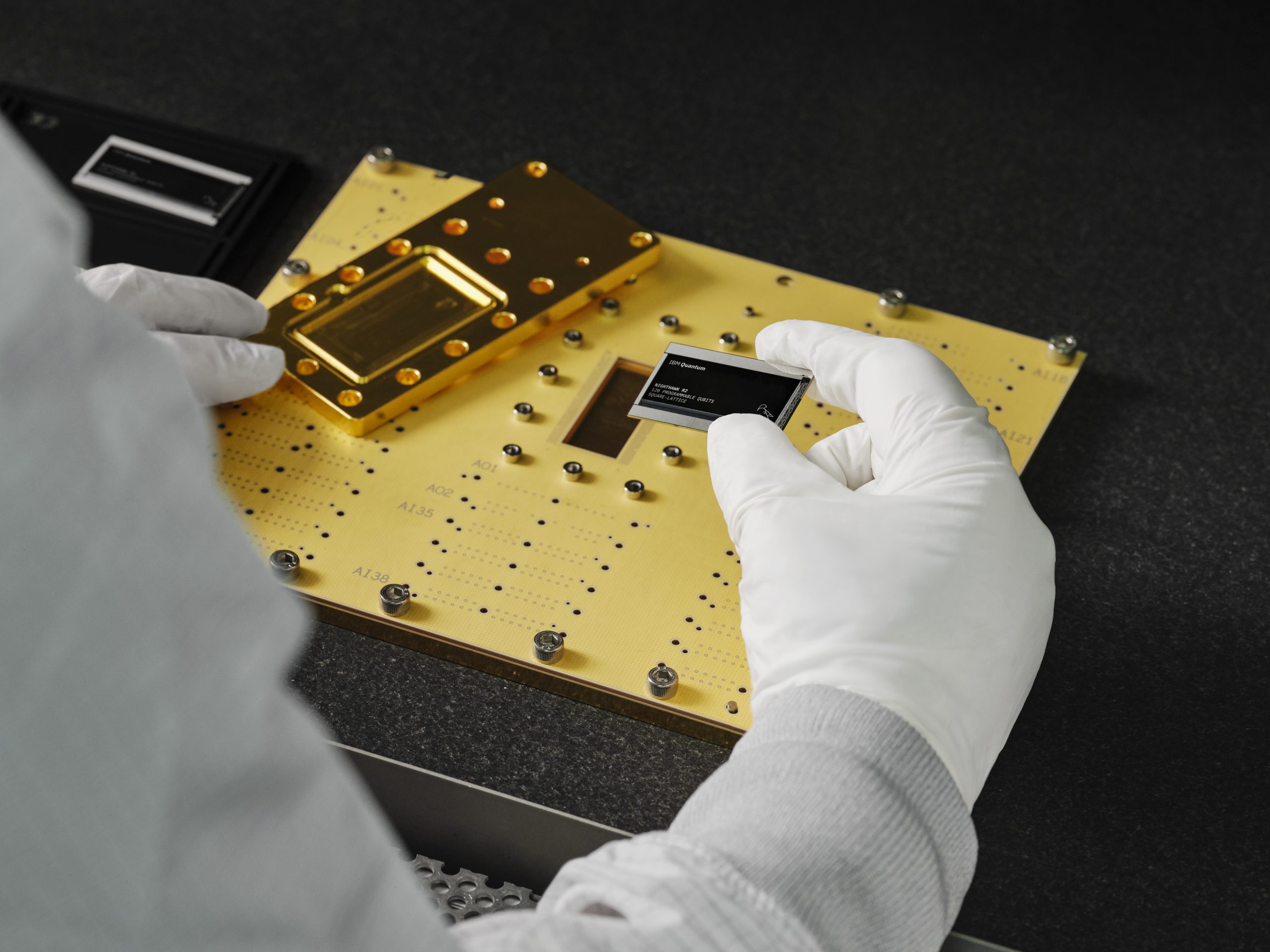
The new r3 chip follows the introduction of Nighthawk r2 in September, which supports more than 7,500 quantum operations on 120 qubits.
Qubits are the fundamental unit of logical information in a quantum computer, similar to a classical computer’s bit. Unlike classical bits, which can be a 0 or 1, qubits can be 0, 1 or a “superposition” of both at the same time. Using this property, quantum processors such as IBM’s Nighthawk can do rapid, complex parallel calculations.
The r2 chip introduced a groundbreaking high-speed qubit reset architecture that lets developers and researchers quickly prime qubits after measurements. Under normal circumstances, after a quantum circuit runs and the result is measured, the qubits must return to the ground state before the next program can run; this process can take hundreds of milliseconds, meaning the chip remains idle during that time. With the new technology, this wait period can be reduced from about 200 milliseconds down to roughly 25 nanoseconds without disturbing neighboring qubits.
Building on lessons learned from Nighthawk r2 and the technology built into it, IBM said r3 will extend the same high-speed architecture to larger quantum systems to support 10,000 operations on 520 programmable qubits with 2,034 physical quantum components.
A physical qubit is the actual, hardware-level quantum device that stores the quantum information. In Nighthawk, the qubits are superconducting and arranged in a square lattice. The programmable qubits are the measurable, active quantum data units, while additional quantum components support them, including couplers and reset elements.
IBM said it has already demonstrated two critical technologies that will make combining two r3 chips. This year, the company connected two Nighthawk r1 processors using four l-couplers, or “long-range” quantum interconnects. These act as a physical bridge between separate processors to create a larger machine.
In the demonstration, the couplers achieved a 99.4% transfer fidelity, progressing towards the target of 99.9% fidelity. The company also connected cryogenic modules into a single system.
In 2027, IBM intends to progress using these modularity advances to scale Nighthawk into a larger quantum system. By connecting two Nighthawk r3 processors into a single 1,040 system, IBM will extend this high-performance architecture to tackle larger and more complex computations.
“As we scale this architecture to larger and more powerful quantum computers, the capabilities of quantum computation will reach new levels as we integrate more closely with classical resources and march ahead to fault tolerance,” added Gambetta.
IBM also announced that its cloud-based service for researchers and developers, IBM Quantum Platform, will bring high-performance classical and quantum computing together in a single managed environment.
Users can now integrate quantum workflows directly with HPC and classical resources on the platform, or with classical compute on their laptop or any number of the world’s most powerful supercomputers.
Integrating quantum and classical computing permits traditional computers to orchestrate algorithms and computations on specialized central processing units and graphics processing units, while the quantum computer runs parallel computations. Users are already seeing promising results, including Cleveland Clinic using the platform to process 2.6 million samples up to three times faster to model biological structures.
Direct integration of quantum and classical systems will also help drive breakthroughs in quantum error correction. Error correction is fundamental to handling the noise that can destabilize individual qubits, creating a high chance of errors rising out of computations. Quantum Platform is launching pulse-level access to give researchers precise control over how they can detect, understand and correct errors within quantum and classical architectures.
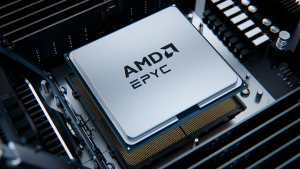
IBM recently launched a new quantum error-correction platform that addresses this, in collaboration with Advanced Micro Devices Inc. and the Quantum Science Center at Oak Ridge National Laboratory. The build physically colocates Nighthawk processors with next-generation AMD GPUs and CPUs.
Support our mission to keep content open and free by engaging with theCUBE community. Join theCUBE’s Alumni Trust Network, where technology leaders connect, share intelligence and create opportunities.
Founded by tech visionaries John Furrier and Dave Vellante, SiliconANGLE Media has built a dynamic ecosystem of industry-leading digital media brands that reach 15+ million elite tech professionals. Our new proprietary theCUBE AI Video Cloud is breaking ground in audience interaction, leveraging theCUBEai.com neural network to help technology companies make data-driven decisions and stay at the forefront of industry conversations.