








R. Danes
Latest from R. Danes
Can an orchestration layer contain the container sprawl at enterprises? | #KubeCon

It’s well and good to say that a container can simplify the running of an application — singular. But what about when we’re talking about hundreds or thousands of applications? Many enterprises have so many applications to manage now that even with containers, it can be difficult to hold the reins. Some say an orchestration ...
Nutanix wants to be #1 in hyper-converged: Can their ‘coopetiton’ handle it? | #NEXTConf

Nutanix Inc. wrapped its conference in Vienna, Austria, this week on the heels of its successful IPO. Valued at over $3 billion, the hyper-converged infrastructure company is poised to become the leader in its market. However, stiff competition from other players, as well as friction with partners, threaten to throw a wrench in its plans. ...
A look under the hood: Do you know how your IT service provider works? | #NEXTConf

Industry analysts warn that revenue is moving from hard assets to services, and companies (especially technology companies) better take note. IT service providers are cropping up offering companies ways to outsource processes to them. But before businesses pay for these services, they may want to take a look under the hood to see how they ...
Are containers and distributed systems the engine for self-driving infrastructure? | #KubeCon

Virtualization and automation are spreading through the entire IT environment. The cloud is allowing companies to get out of the data center business, and focus on applications and software higher up the stack. And then, of course, containers are making application development and deployment easier than ever before. What will they think of next? How ...
Outside the box: hyperconverged infrastructure and the economy of innovation | #NEXTConf

While the digital transformation holds promise for companies to increase profits and deliver value to customers, these are still early days. Businesses may feel rushed to implement unproven technologies that dig deep into their budgets. In this new era, they must find new test and development avenues that put less skin in the game, according ...
Is there a chink in Amazon’s armor that could give smaller cloud providers an edge? | #NEXTConf

What is it about Amazon? First it disrupted retail worldwide with its online mega merchandise emporium. Now with Amazon Web Services, it has legacy technology behemoths like Oracle on the watch for deep cuts into their markets. It’s enough to have smaller, more modest cloud service providers shaking in their boots — unless they can find the ...
The ‘Insight Economy’: What will the world look like when ads have conversations? | #ibmwow
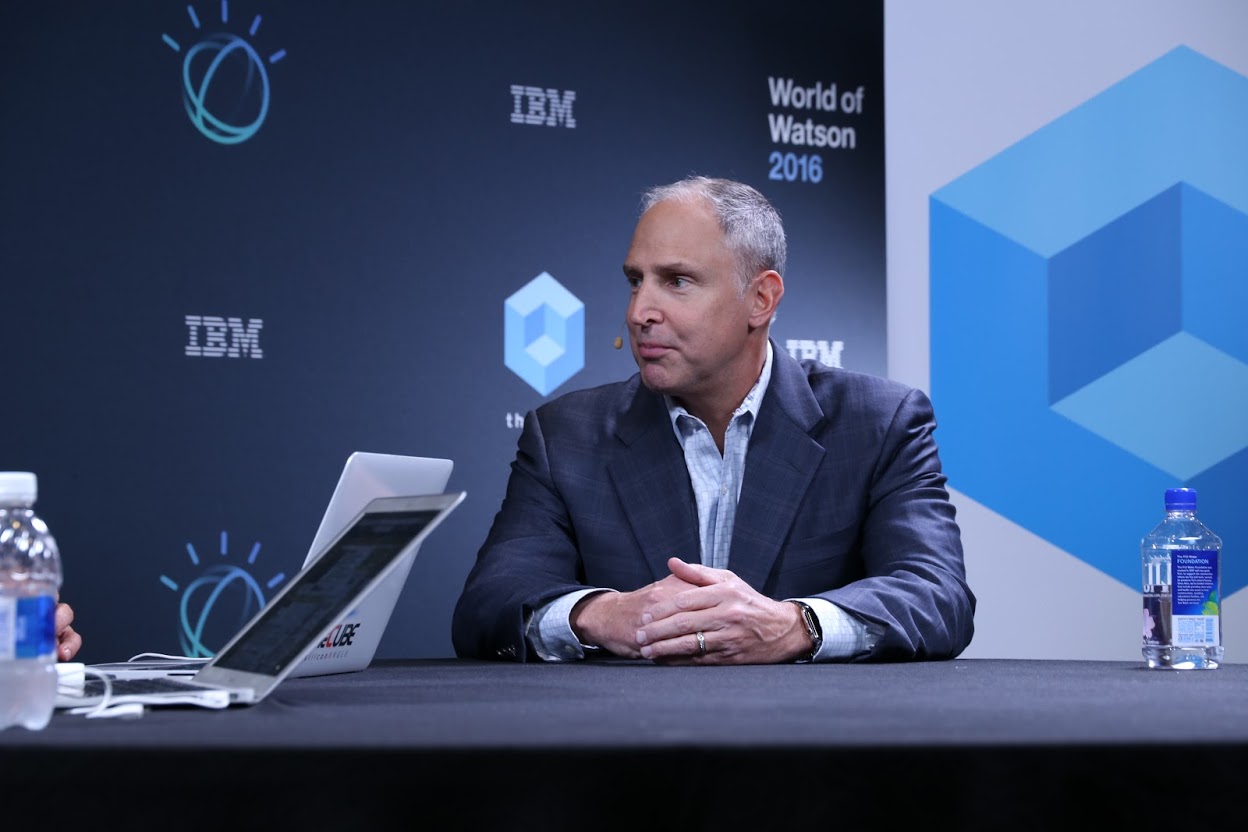
Big data is still young, but as top technology companies experiment and work with it, it is possible to glimpse into its future. The endgame of all this data aggregating and analyzing, of course, is insight — succinct answers to business or commercial questions. The more insights we generate, catalog and play off of each ...
The future of investment banking is coming, and it doesn’t wear a suit and tie | #ibmwow

The world of investment management is no stranger to predictive gimmicks. There is always some enterprising broker or analyst telling investors he or she has uncovered the way to predict tomorrow’s stock spikes tonight. It’s usually hot air — there are too many variables for a human’s mind to calculate. But what about a machine’s ...
What SoftLayer’s disappearance means for IBM’s container, API strategy | #ibmwow

The use of container technology to fold one area of IT into another, and into another yet, is a game-changing process for tech professionals and vendors alike. The main benefits of consolidating technology through containers and application program interfaces include the democratization of development — making development easier for those without specialized skills — and the shortened timeline for ...
How are creators tweaking technology to get every player in the game? | #GHC16

Technology applications can stand or fall on the facility of the user interface. Some household names like Google rose to the top of the heap largely because they were just one or two clicks easier to use than competitors. Video and virtual reality games must focus on user interaction even more obsessively. Increasingly, creators strive ...