Victoria Gayton
Latest from Victoria Gayton
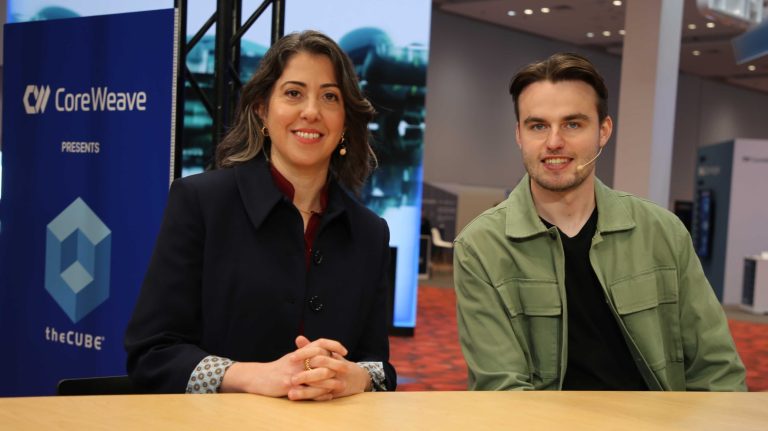
An enterprise AI foundation depends on more than models and agents. It also requires governed operational data and infrastructure that can carry AI into production, a foundation-first approach emerging among Brazilian companies. Technology company TOTVS S.A. is building that foundation from its …
Always-on AI agents turn infrastructure into a continuous learning loop
AI agent infrastructure is evolving to support systems that move continuously among inference, feedback and training. Cognition AI Inc.’s Devin now assists throughout the software development lifecycle, from planning and writing code to reviewing it and responding to production problems. That expanding …
Nvidia ties AI factory economics to tokens and power efficiency
Artificial intelligence factory economics increasingly depend on more than access to high-performance graphics processing units. As agentic systems draw on multiple models, databases and tools, the entire data center must work as one computing system. That transition is shifting attention from individual …
CEO George Kurian outlines NetApp’s data strategy for production AI
Intelligent data infrastructure is becoming critical as enterprises move artificial intelligence from curated pilots into production. NetApp Inc. is positioning its Novus architecture for that transition. Ninety-three percent of organizations pursuing production AI identify data as their leading challenge, according to NetApp …
Agentic security strategy faces a shrinking breach window
An agentic security strategy must account for software that can act on legitimate instructions in unexpected ways. Agents can use credentials, call tools and choose their own routes toward a goal, expanding the paths security teams need to watch. The risk arises …
Oracle CISO puts humans at the center of AI security governance
As enterprises face AI-driven cyberattacks, AI security governance must control autonomous systems that can reach data, connect applications and act on users’ behalf. That makes human accountability a core security requirement. Traditional controls remain necessary, but security teams must also understand the …
Agentic AI security pushes vendors toward shared safeguards
Agentic AI security is becoming a cross-industry challenge as autonomous systems move among products and platforms. Okta Inc. argues that building trust will require coordinated safeguards rather than isolated vendor controls. The implications extend beyond enterprise architecture, according to Charlotte Wylie (pictured), …
Vanderbilt University extends identity governance to AI agents
Identity governance must accommodate changing relationships among people, institutions and technology. Vanderbilt University sees that complexity deepening as artificial intelligence agents enter institutional workflows. Vanderbilt uses OneVU, powered by Okta, for single sign-on. Its broader environment includes residential life, athletics, its own …
Collibra brings runtime governance to enterprise AI agents
Runtime governance is becoming critical as autonomous agents move from answering questions to taking action across enterprise systems. Organizations need to govern both the business context agents receive and the boundaries they operate within. Collibra BV is addressing those requirements through Live …
Okta turns Dex AI agent into a customer-zero proving ground
The Dex AI agent is helping Okta Inc. streamline employee support. It also serves as a testbed for the identity controls the company offers customers. After surpassing last year’s goal of saving 250,000 employee hours, Okta raised this year’s target to 1 …