 BIG DATA
BIG DATA
BIG DATA









BIG DATA

Slack and other general-purpose collaboration tools can significantly speed up certain team projects, but they only go so far in areas such as data science where the work is usually too complex to be sorted out with a few chat messages.
As a result, analytics teams at Tesla Motors Inc. and other leading companies have turned to Domino Lab Inc., which today closed a $10.5 million funding round led by Sequoia Capital. The startup will use the cash to step up marketing efforts and develop more features for its namesake cloud service.
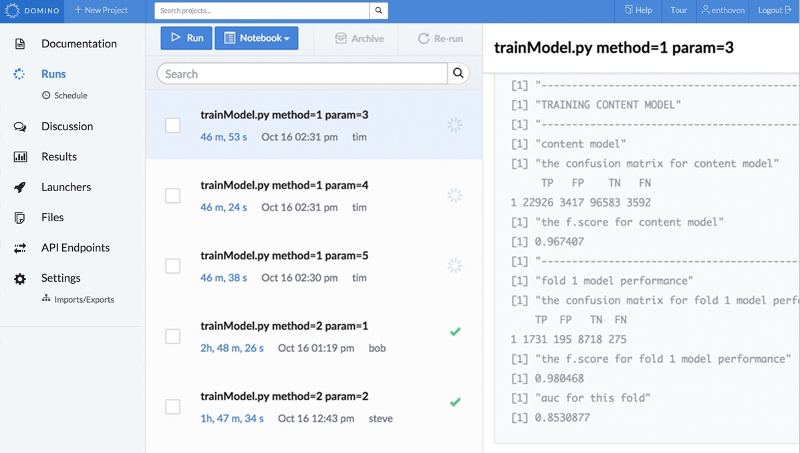
Sold under the brand Domino Data Science Platform, the offering is described as a centralized environment for business intelligence professionals to develop models with their peers. The starting point for every new project is Domino Scalable Compute, a provisioning tool that makes it possible to quickly create a cloud instance customized to the specific task at hand. Users can define how much hardware resources should be allocated to the environment and install the analytics tools needed for their work through a graphical interface.
According to Domino’s website, its platform supports a wide variety of data-crunching technologies ranging from Apache Spark to proprietary software such as SAS. The service is also compatible with R and other popular programming languages in the data science community.
Once the setup process is complete, a worker can use the platform’s built-in automation features alongside the tools they’re deployed in their cloud instance to start producing data insights. Domino says that projects are displayed in a shared board where members of an analytics team can see what their colleagues are doing, compare results and provide input if they see areas for improvement.
Peers from outside the analytics team, meanwhile, can be brought into the fray through a sharing component that the startup refers to as the Domino Publication Bridge. The tool provides the ability to expose models through a REST application programming interface, a way of providing interoperability between computers on the Internet. It makes data available in preconfigured web apps and let colleagues add their own code via a self-service form interface.
Support our mission to keep content open and free by engaging with theCUBE community. Join theCUBE’s Alumni Trust Network, where technology leaders connect, share intelligence and create opportunities.
Founded by tech visionaries John Furrier and Dave Vellante, SiliconANGLE Media has built a dynamic ecosystem of industry-leading digital media brands that reach 15+ million elite tech professionals. Our new proprietary theCUBE AI Video Cloud is breaking ground in audience interaction, leveraging theCUBEai.com neural network to help technology companies make data-driven decisions and stay at the forefront of industry conversations.