



 APPS
APPS
APPS
APPS

APPS

While the original idea behind open-source software was to make licenses easier to share, it quickly developed into a new way of teaching individuals and organizations how to collaborate, forming common communities. Today, most innovation that occurs is happening via open-source communities.
“Now, [open source] is permeating almost every human endeavor to solve new challenges,” said Tim Yeaton, executive vice president of corporate marketing at Red Hat Inc.
In almost every field — including healthcare, education and agriculture — open source has moved from a basic collaboration mechanism to build better software to the front of innovation for technology, Yeaton stated.
During today’s Red Hat Summit keynote in Boston, Massachusetts, a host of open-source experts gathered to celebrate open-source innovators and how community contributors are helping to build an open-source future.
As the theme of this year’s summit is, ‘the impact of the individual,’ Yeaton dedicated this keynote to those individuals infusing their respective fields with open source innovation.
Red Hat began the keynote by presenting its Women in Open Source Awards to “two incredibly inspiring women who use open source to break down barriers and open doors,” said DeLisa Alexander, executive vice president and chief people officer at Red Hat.
Jigyasa Grover won the Women in Open Source Academic Award for her contributions to the open source community. During her university days, Grover began working in competitive algorithmic C/C++ programming, Java, Python and other computer languages, which led her to explore open source. She began working on Pharo, an open source Smalltalk IDE, and eventually became one of the top contributors to Pharo 4.0, released in 2015.
The Women in Open Source Community Award was presented to Avni Khatri for empowering kids to change their lives through technology. Khatri’s dream is for everyone, especially children, to have unlimited access to education so that they have more autonomy over their lives and the ability to improve their communities. She views open-source software as instrumental to realizing this vision, and she has worked to bring technology to underserved communities around the world with the nonprofit Kids on Computers.
Further underscoring the importance of tech and open-source initiatives and the impact they have on youth, the Penn Manor School District in Lancaster County, Pennsylvania, introduced a 1:1 laptop program. The initiative allows kids to customize their own machines using open technology.
It helps kids not only to understand how computers and software work, but also how they can use that knowledge to impact the world, according to Charlie Reisinger, IT director of the Penn Manor School District. “Education is, without a doubt, the most important human endeavor; everything flows from learning,” he stated.
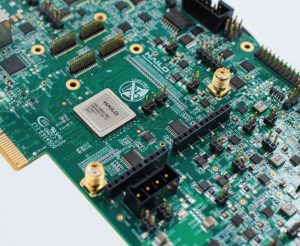
Alicia Gibb, executive director of the Open Source Hardware Association, also joined in during the keynote to discuss the benefits of using open-source hardware. Gibb has worked within the open-source hardware community since 2008, having founded the Open Hardware Summit and co-chairing the first two summits.
“I’m hoping we can create an open-source future,” Gibb said.
And to discuss open-source’s value in an industry not always top of mind when considering tech, Caleb Harper, principal investigator and director of the Open Agriculture Initiative at the Massachusetts Institute of Technology Media Lab (known as OpenAg), joined in during the keynote.
OpenAg’s primary mission is to create healthier, more engaging, and more inventive future food systems. “We chase after dreams,” Harper said.
To tackle the problems of a world where climates are changing and where there are fewer farmers to raise our food, OpenAg uses an open-source ecosystem of food technologies to enable and promote transparency, networked experimentation, education and hyper-local production.
Watch the complete keynote video below, and be sure to check out more of SiliconANGLE’s and theCUBE’s independent editorial coverage of Red Hat Summit 2017. (* Disclosure: Red Hat Inc. sponsors some Red Hat Summit segments on SiliconANGLE Media’s theCUBE. Neither Red Hat nor other sponsors have editorial control over content on theCUBE or SiliconANGLE.)
Support our mission to keep content open and free by engaging with theCUBE community. Join theCUBE’s Alumni Trust Network, where technology leaders connect, share intelligence and create opportunities.
Founded by tech visionaries John Furrier and Dave Vellante, SiliconANGLE Media has built a dynamic ecosystem of industry-leading digital media brands that reach 15+ million elite tech professionals. Our new proprietary theCUBE AI Video Cloud is breaking ground in audience interaction, leveraging theCUBEai.com neural network to help technology companies make data-driven decisions and stay at the forefront of industry conversations.