 EMERGING TECH
EMERGING TECH
EMERGING TECH












EMERGING TECH

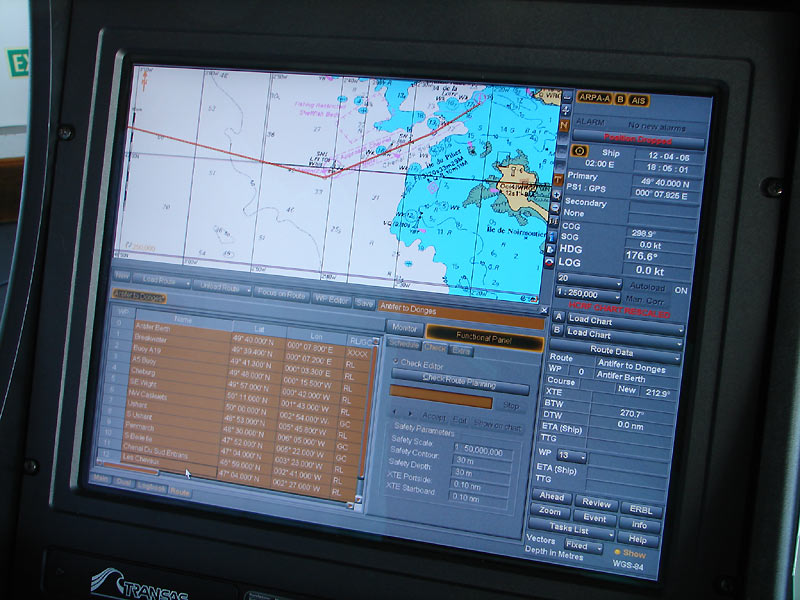
Fears over hacking have driven the South Korean government to develop an alternative to satellite tracking for shipping that’s based on updated World War II-era technology.
The new navigation system uses technology known as eLoran that uses radio signals as navigation points as an alternative to or as a backup for traditional GPS navigation systems. An eLoran system works by using multiple radio signal broadcasting points that can be used by a ship to triangulate its position and the direction in which it is heading – an evolved version of radio tracking first deployed by the British during World War II.
While perhaps not as well-known as conventional hacking, disruption of shipping through the jamming GPS signals is apparently fairly common. South Korea’s particular interest comes because North Korea on occasion does just that – jamming GPS signals so ships don’t know where they are going. About 90 percent of shipping worldwide is said to rely on GPS navigation alone and, unlike aircraft, ships do not have backup navigation systems.
South Korea isn’t the only country getting in on the act, with the United States and Russia also said to be investigating the deployment of eLoran systems.
ELoran systems are not perfect but a reasonable alternative to GPS. U.S. engineer Brad Parkinson, described as the “father of GPS,” told Reuters that he supports the deployment of the system as a backup. “ELoran is only two-dimensional, regional, and not as accurate, but it offers a powerful signal at an entirely different frequency,” Parkinson said. “It is a deterrent to deliberate jamming or spoofing (giving wrong positions), since such hostile activities can be rendered ineffective.”
The jamming of GPS signals is not the only hacking-related concern currently facing the global shipping industry. A report in July noted that satellite communication systems used by many ships are also wide open to hacking. Global shipping giant A.P. Moller–Maersk Group was one of the companies that found itself locked out of its computer systems, though its ships weren’t affected directly, during the NotPetya ransomware attack in June.
Support our mission to keep content open and free by engaging with theCUBE community. Join theCUBE’s Alumni Trust Network, where technology leaders connect, share intelligence and create opportunities.
Founded by tech visionaries John Furrier and Dave Vellante, SiliconANGLE Media has built a dynamic ecosystem of industry-leading digital media brands that reach 15+ million elite tech professionals. Our new proprietary theCUBE AI Video Cloud is breaking ground in audience interaction, leveraging theCUBEai.com neural network to help technology companies make data-driven decisions and stay at the forefront of industry conversations.