



 CLOUD
CLOUD
CLOUD
CLOUD
CLOUD

Between its struggles to build a public cloud presence and the perceived threat of containers to its virtualization empire, a lot of people have an waiting for VMware Inc. to hit a wall for the last couple of years. They’re going to have to wait a little longer.
The virtualization giant today beat revenue and profit forecasts in its fiscal 2018 third quarter and raised projections for the coming year on strong growth in license revenue and new products. Shares climbed slightly in after-hours trading.
VMware reported $1.98 billion in revenue and a profit of $1.34 a share, beating Wall Street estimates of $1.97 billion in revenue and VMware’s own earlier guidance of $1.28 a share. Revenue grew 11 percent over the third quarter of 2016.
License revenue of $785 million grew 14 percent from a year ago, accelerating from the 13.7 percent growth the company reported in August. Total revenue plus sequential change in total unearned revenue grew 21 percent year-over-year, indicating strong momentum going into next year.
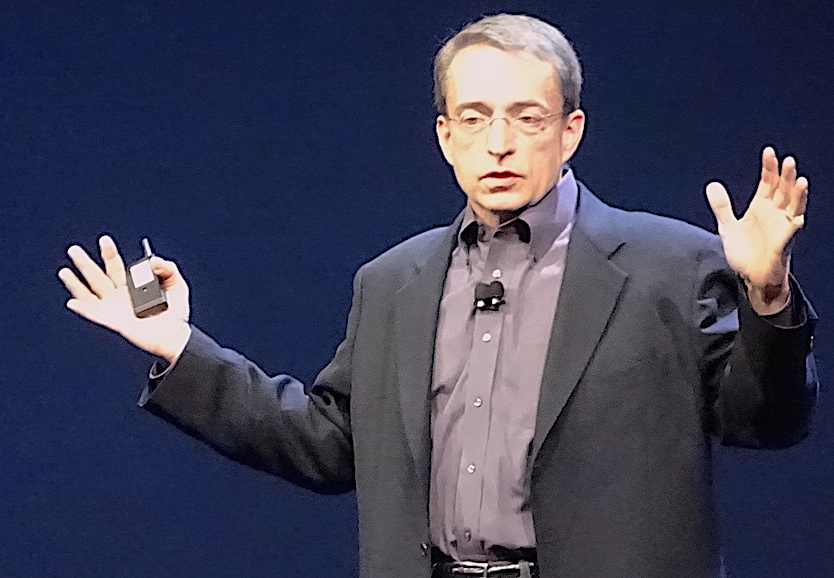
“We see this as a very strong bookings year and we see that continuing through next year,” Chief Executive Pat Gelsinger (pictured) told analysts on the earnings conference call.
VMware said it expects full-year revenues to come in at $7.875 billion, up 11 percent over last year and the strongest growth rate in three years. The company doesn’t break out revenue by product line, but executives said nine of the top 10 deals in the quarter included its end-user computing products such as desktop virtualization and mobile management, nine in 10 included the NSX network virtualization and security platform and eight in 10 included the vSAN to the storage virtualization product.
NSX license bookings more than doubled from a year ago, vSAN license bookings jumped 150 percent and the end-user computing business expanded 40 percent. “We’re optimistic about the momentum across all of our growth businesses,” Gelsinger said.
The traditional on-premises computing business didn’t do too shabbily either, growing in the “low single digits,” according to Chief Financial Officer Zane Rowe. That’s in contrast to the declines being seen by many legacy vendors. Gelsinger said the continued strength of on-premises licenses is fueling the company’s diversification strategy. “There is a broad installed base we can sell into with VSAN and NSX, as well as into the cloud,” he said.
“Though workload migration to the cloud continues, the company seems to be benefitting from greater appeal for hybrid clouds,” Mizuho Bank Ltd. tech analyst Abhey Lamba wrote in a note to clients.
Speaking of cloud, officials said the burgeoning partnership with Amazon Web Services Inc. is performing as planned. The two companies significantly sweetened the appeal to enterprise customers this week with the announcement of tools that simplify wholesale migration of VMware environments to and from the cloud.
“Most of what we’ve seen so far is test/dev and proof-of-concept, but we’re now seeing enterprise production because of the ability for customers to have VMware tools extended to the cloud,” Gelsinger said. “We expect to ramp quickly.”
In fact, the Amazon partnership has even been a boost for VMware’s on-premises business because customers no longer believe cloud migration is an either/or proposition, he said. That, combined with rising interest in the “internet of things” and edge computing, is rejuvenating interest in preserving on-premises investments.
“We see a very robust hybrid environment developing, and the ability for VMware to sit in the middle of that is powerful,” Gelsinger said. “We find that in a multicloud future customers are more comfortable with their on-premises investments.”
Executives said they’re particularly optimistic about the potential inherent in VeloCloud Networks Inc. which VMware announced plans to acquire earlier this month. VeloCloud’s software defined wide area network technology fits neatly with NSX and addresses an area of growing customer demand. “VeloCloud offers NSX everywhere,” Gelsinger said. “It allows us to stretch to the branch, where many customers are looking to securely support applications and replace the dedicated circuits they’ve had in the past.”
All of which means it may be a long time before VMware hits that wall.
Support our mission to keep content open and free by engaging with theCUBE community. Join theCUBE’s Alumni Trust Network, where technology leaders connect, share intelligence and create opportunities.
Founded by tech visionaries John Furrier and Dave Vellante, SiliconANGLE Media has built a dynamic ecosystem of industry-leading digital media brands that reach 15+ million elite tech professionals. Our new proprietary theCUBE AI Video Cloud is breaking ground in audience interaction, leveraging theCUBEai.com neural network to help technology companies make data-driven decisions and stay at the forefront of industry conversations.