










 Yesterday, CNN Fortune published an article by Cyrus Sanati about Bitcoin entitled “Bitcoin looks primed for money laundering.” In what could be best described as an odd screed against Bitcoin and its potential financial impact on the world, it delves into places that paint the cryptocurrency as a boogeyman while at the same time reporting on money laundering occurring in current banking industry.
While Bitcoin is a dark market right now due to its semi-anonymous nature and its lack of acceptance as a currency in the world at large—it’s hard to see this sort of editorial as anything more than playing on fears and speculation than looking at how Bitcoin really is shaping into a very real, living market.
Sanati starts by poisoning the well: citing the black market success of Bitcoin due to its high liquidity and current underground nature in order to make it seem sinister. He even uses a lot of weasel words such as “shady” and “sketchy,” even going so far as to put “currency” in scare-quotes as if to avoid having to define what a currency is.
The thesis of the article, I think, is summed up in this sentence,
If Bitcoin is able to stabilize its value on the international markets, it could eventually creep into the legitimate world of finance, threatening major profit centers for both the banks and payment operators like Visa and MasterCard.
To me, this sounds more like the major movers in the credit industry seeing a disruptive innovation walking down their street than anything sinister. That this sentence comes attached to a paragraph about how Bitcoin is being used in Iran to hire hitmen makes it feel entirely inappropriate, rather than a statement about how world finance might just have to change to meet the needs of a highly wired economy.
Mentions of countries with weak economies certainly come to play because having an alternative exchange currency can enable ease-of-commerce when the central banking system for a local region is on the verge of collapse or is otherwise inaccessible to the population. Yes, this includes countries such as Iran that have been cut off from richer countries such as the US and EU due to sanctions; but we’re also seeing it play out in economies such as exist in Africa where there’s no workable central banking system.
Often what happens is local populations begin to look to barter systems, or alternative currencies to their own.
After all, you can do money laundering with virtually any commodity
Indeed, authorities in the US and Europe are already concerned that Bitcoins could soon grow in value and become a major problem. The FBI recommended in a report this spring that third-party exchanges of Bitcoins be forced to adhere to the same anti-money laundering that the banks (are supposed) to be following.
Money laundering can be done with any commodity; it’s just far easier with something with currency-like liquidity (and not a fundamental use.) In the past, plain money has been used for laundering by passing it through businesses such as restaurants, supermarkets, or convenience stores—a Bitcoin exchange would become no different than one of these when transferring money for BTC and back again.
Fears that Bitcoin might be used for laundering aren’t without merit; they just have nothing to do with the currency per se but how laundering works. Any system that has proven to work is going to become a useful tool for criminal activity—after all the USD is used in exactly this way, thus why finance laws exist. We’ve seen watchdogs appear noting their concerns about it already as well as a leaked FBI document noting Bitcoin’s underground attractiveness towards those who value anonymity.
One of the important things that this article misses is that financial crimes, money laundering, and their ilk are already illegal. Furthermore, in order to engage in any large scale exchange between BTC and USD there’d already have to be a large scale USD transaction somewhere and that would happen via the financial regulations already in place (and most likely through a US Bank) and therefore would have a paper trail of that activity.
What happens for investigators when money laundering or drug sales happen through an alternative barter-system such as Tide detergent bottles?
How does this track with Bitcoin outfits that have opted into regulation?
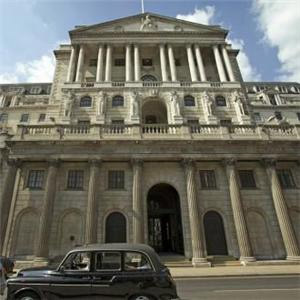 Further in the article, Sanati mentions the recent bank-like activities granted to Bitcoin-Central when their parent company Paymium partnered with a financial sector PSP Aqoba. What this doesn’t cover is that by partnering with a registered financial sector payment processor, a Bitcoin exchange is entering into the regulatory framework of the financial sector! The activity that this exchange processes and takes part in now has regulators looking over their shoulder (via Aqoba) to make sure shady dealings don’t happen.
If Bitcoin does gain legitimacy via exchanges connecting with regulated arms of the finance industry it will become part of the system. Regulators don’t need to catch up with it, the exchanges will come to them.
Any bank that adopts a Bitcoin exchange as part of its services would both do to further legitimize Bitcoin’s part to play in the world economy; but it would also place transactions done through that exchange directly within the purview of anti-laundering regulations, anti-crime, and the like. All of which already affect the exchange of Bitcoins when they’re bought-and-sold as commodity anyway—just in a smaller way.
In the end, parts of Sanati’s article do read like a hopeful examination of where Bitcoin could go. He sometimes reflects on the same things I do: that Bitcoin is still in its infancy, popular adoption hasn’t happened yet, exchanges have often been hacked with massive losses (and crashes), the currency is too volatile currently to be used to store wealth and that’s a problem for its use as an alternative currency.
However, none of these issues lend to an entirely criminal nature—they’re all growing pains.
Bitcoin may yet rise or fall on its merits, part of that road may yet be more outfits like Bitcoin-Central joining into the already-regulated financial sector—that fabled “legitimacy”—but really there’s nothing inherent to the cryptocurrency that makes it a perfect criminal enterprise as much as it makes it a useful medium of value exchange.
Support our mission to keep content open and free by engaging with theCUBE community. Join theCUBE’s Alumni Trust Network, where technology leaders connect, share intelligence and create opportunities.
Founded by tech visionaries John Furrier and Dave Vellante, SiliconANGLE Media has built a dynamic ecosystem of industry-leading digital media brands that reach 15+ million elite tech professionals. Our new proprietary theCUBE AI Video Cloud is breaking ground in audience interaction, leveraging theCUBEai.com neural network to help technology companies make data-driven decisions and stay at the forefront of industry conversations.