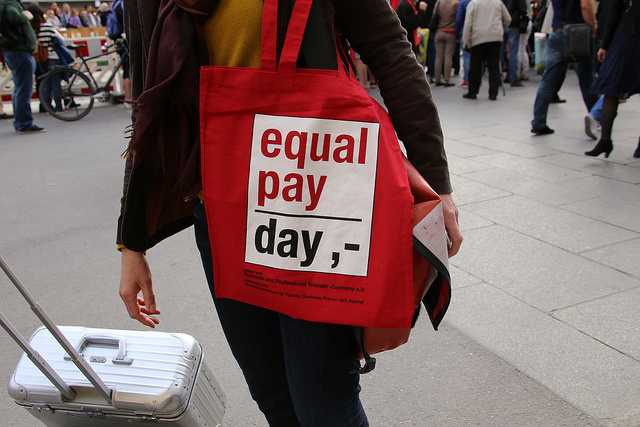












Wage equality for women working in technology in the U.S. is making some progress, although sexual discrimination still persists.
That’s according to a new report from Hired Inc. The San Francisco-based tech recruiting company released the report today on Equal Pay. Within the tech industry Hired found that 63 percent of the time women are offered a lower salary than men for the same job at the same company. The majority of the interviewees in the study worked in the fields of data science, software engineering, product management and design.
On average, said the report, women receive an offer of 4 percent less money than men for the same role, with some companies offering a staggering 50 percent less for the same role. “For one out of every 10 job openings we analyzed, companies offered men salaries that were at least 20 percent higher than those they offered to women,” Hired said.
One reason for the disparity is companies that offer a salary based on what the interviewee was previously earning, rather than what that person brings to the table and the market rate for those skills and experiences. “In order to fix the gap in our data — same job at the same company — companies must take action by evaluating their current compensation and hiring structures and fixing any unfair wage discrepancies,” Hired’s data scientist, Jessica Kirkpatrick, told SiliconANGLE. “Until more companies begin to hold themselves accountable for wage equality, the problem will persist,” she added.
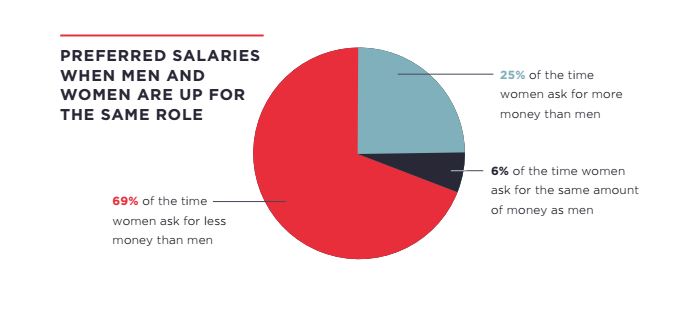
Another factor was that women were simply asking for less. “69 percent of the time, women ask for less money than men, averaging 4 percent less,” said the report. Negotiation is a key factor in male-female wage disparity, says Hired, noting the similarity in what women ask for and what they are offered.
This trend is changing, though, with the report also saying younger women with less than four years’ experience tend to ask for higher salaries than more experienced female employees in the same industry field. Moreover, the report found that women with less than one year of experience “ask for an average of 4 percent more than men, and are ultimately offered 8 percent more.” This is reversed for women with 6 years’ experience, who ask on average for 4 percent less than men.
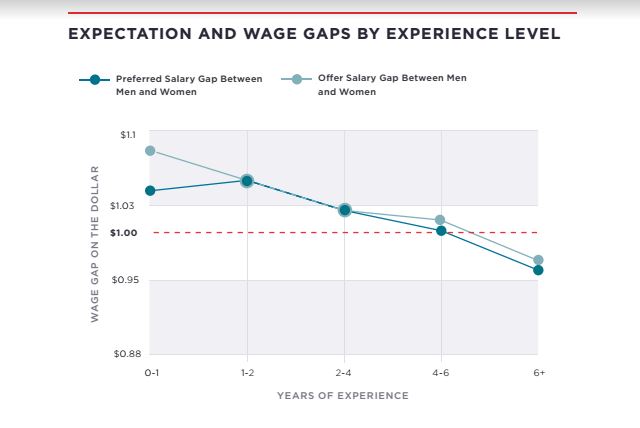
Kirkpatrick said the fact younger women are recognizing their market value is encouraging. This might expedite the process for closing the wage gap, she said, while she also explained why at 6 years’ experience women tend to ask for less. She gave three main reasons:
Women with more experience are more likely to be mothers. Studies have shown that women’s salaries are likely to decrease after they start a family, while men experience the opposite when they become fathers.
As candidates gain more experience, the effects of women being paid slightly less begin to compound and create a wider gap.
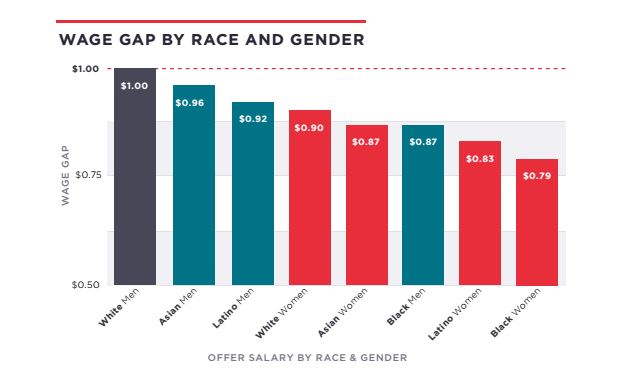
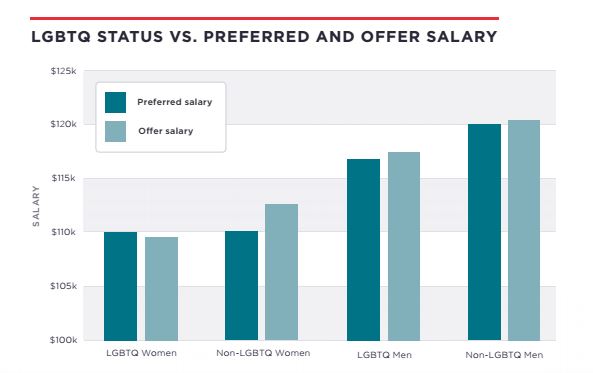
Race and LGBTQ (Lesbian, Gay, Bisexual, Transgender, Queer) status also has a negative impact on salaries, according to Hired’s findings. “On average, white men are offered the highest salaries and black women are offered the lowest salaries,” says Hired. “The gap between white men and black women is 21 percent, which is twice as large as the gap between white men and white women.” The report also found that men of all races on average are paid higher salaries than women, except white women who on average earn 2 percent more than black men.
Non-LGBTQ men out-earn all other categories, said the report, followed by LGBTQ men, non-LGBTQ women and finally LGBTQ women. Hired also said that salary expectations follow the same pattern.
Support our mission to keep content open and free by engaging with theCUBE community. Join theCUBE’s Alumni Trust Network, where technology leaders connect, share intelligence and create opportunities.
Founded by tech visionaries John Furrier and Dave Vellante, SiliconANGLE Media has built a dynamic ecosystem of industry-leading digital media brands that reach 15+ million elite tech professionals. Our new proprietary theCUBE AI Video Cloud is breaking ground in audience interaction, leveraging theCUBEai.com neural network to help technology companies make data-driven decisions and stay at the forefront of industry conversations.