

 NEWS
NEWS
NEWS
NEWS
NEWS

 Imagine being able to text or view maps whilst driving, or better yet, read up on your emails while taking a shower in the morning, without even so much as glancing at your mobile phone. Such fanciful ideas are no longer the stuff of science fiction, thanks to the development of new technology that can project such information directly onto a contact lens.
Key to this invention is the development of minute-sized spherical, curved LCD displays, which can be made small enough to fit inside a contact lens – and what’s more, they’re transparent too so they won’t even impact on your eyesight.
RT News reports that the lenses were developed by researchers at Ghent University’s Center of Microsystems in Belgium, who say that the technology could become commercially available in just a few years time.
Jelle De Smet, chief researcher of the project, explained:
“This is not science fiction. This will never replace the cinema screen for films. But for specific applications it may be interesting to show images such as road directions or projecting text messages from our smart phones straight to our eye.”
De Smet says that the contact lens displays are an upgrade on earlier models based on LEDs, in which only a small portion of the lens’ surface was used. Using LCDs instead, it’s become possible to use the entire surface of the lens for displaying information.
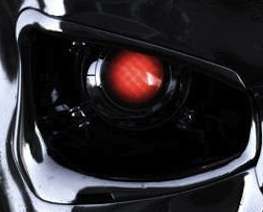
But Belgian researchers are not the only ones working on so-called “Terminator eyes”, as a similar project is underway at the University of Washington.
Another proposed use of the lens might be so-called adaptable sunglasses – lenses that automatically darken when exposed to bright sunlight, before reverting back to normal when the sunlight fades away. In addition, there could be both medical and cosmetic applications for the lenses.
The ultimate aim of researchers at both universities is to come up with a fully-pixelated contact lens display that would have the same level of detail and clarity as a television screen. This is still some way off, but it hasn’t stopped computer giants like Google and Apple from attempting to develop similar technological advancements. Google’s Project Glass is remarkable similar, with the only difference being that its display is projected using a pair of glasses rather than a lens, whilst Apple is reported to have patented similar technologies.
Support our mission to keep content open and free by engaging with theCUBE community. Join theCUBE’s Alumni Trust Network, where technology leaders connect, share intelligence and create opportunities.
Founded by tech visionaries John Furrier and Dave Vellante, SiliconANGLE Media has built a dynamic ecosystem of industry-leading digital media brands that reach 15+ million elite tech professionals. Our new proprietary theCUBE AI Video Cloud is breaking ground in audience interaction, leveraging theCUBEai.com neural network to help technology companies make data-driven decisions and stay at the forefront of industry conversations.