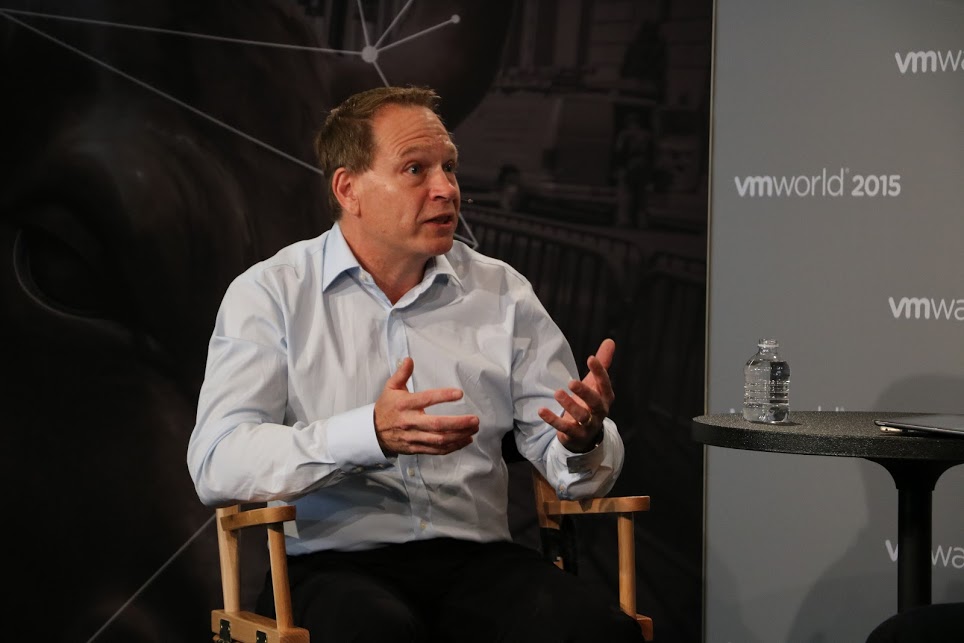




Snowflake Computing Inc.’s cloud data warehouse differentiates itself in two ways: elasticity and simplicity. “We’re a SaaS,” says CEO Bob Muglia. “We’re fully turnkey. You load data, you run queries. There’s no administration, no keys that need to be built to do distribution across different nodes. We handle all of that. That’s different than other cloud data warehouses, and certainly different than getting a data warehouse appliance or software that’s installed in a set of machines within a data center.”
Muglia, formerly president of Microsoft’s Server and Tools business, discussed with theCUBE cohosts Jeff Frick and George Gilbert from the SiliconANGLE Media team, the architecture behind Snowflake’s services, and the pros and cons of its rival Amazon RedShift, which is getting lots of attention in the startup community. Muglia says that much remains exposed in terms of admin knobs.
“Amazon acquired rights to ParAccel [technology] and hosted it in the AWS cloud environment,” says Muglia. “They’ve done a very good job. It’s easy in Amazon to instantiate a Redshift cluster. But that’s where it ends. You still have to do all of the administrative tasks. You still have to vacuum it, manage it, determine your distribution keys, all of the things that you had to do with ParAccel or with any shared nothing database, you have to do with Redshift.
“That’s one of the differentiators that SnowFlake has,” Muglia continues. “All of those tasks don’t exist. We don’t use a traditional architecture. We have a new architecture that has never existed before that we call multiclustered shared data that essentially makes this administrative work go away and provides us with an incredible degree of elasticity.”
Muglia is enthusiastic about his company’s product for the problems it solves. “It’s a modern data warehouse that was built to solve the problems that today’s customers have,” he says. “Those problems include a fully functional structured relational data warehouse that’s super competitive against Oracle and TerraData. But it’s also a product that seamlessly solves problems for customers that work with machine-generated data and blows the socks off of alternative solutions.”
Watch the full interview below, and be sure to check out more of SiliconANGLE and theCUBE’s coverage of VMworld 2015.
Support our mission to keep content open and free by engaging with theCUBE community. Join theCUBE’s Alumni Trust Network, where technology leaders connect, share intelligence and create opportunities.
Founded by tech visionaries John Furrier and Dave Vellante, SiliconANGLE Media has built a dynamic ecosystem of industry-leading digital media brands that reach 15+ million elite tech professionals. Our new proprietary theCUBE AI Video Cloud is breaking ground in audience interaction, leveraging theCUBEai.com neural network to help technology companies make data-driven decisions and stay at the forefront of industry conversations.