

 NEWS
NEWS
NEWS
NEWS
NEWS

The U.S. may have been the birthplace of modern day ridesharing thanks to apps like Uber, Lyft and the now defunct Sidecar, but a new report shows that the growing trend is now driven by users in emerging markets rather than those in the U.S.
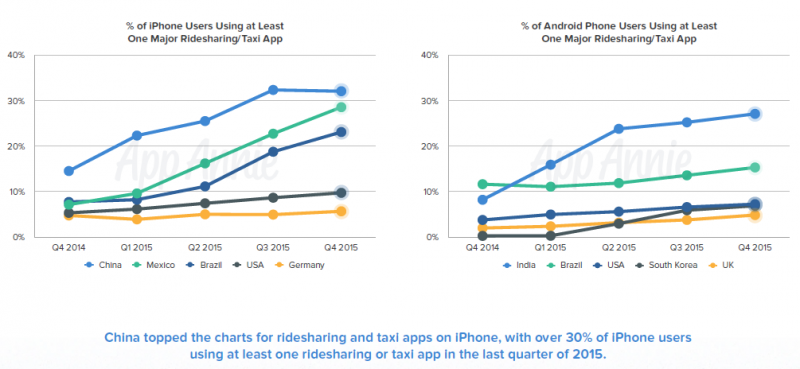
In its “2015 Retrospective” report, app analytics firm App Annie claims that in China, Mexico, Brazil and India, more than 20 percent of smartphone users actively used a taxi-hailing or ridesharing app during the last quarter of 2015, compared to less than 10 percent in developed markets like the U.S. and South Korea.
The report also points out that users in China, Mexico and Brazil predominantly use an iPhone to hail their rides while those in India appear to favor Android-based smartphones. Notably, though, App Annie’s China data only includes iPhone, likely skewing the data somewhat.
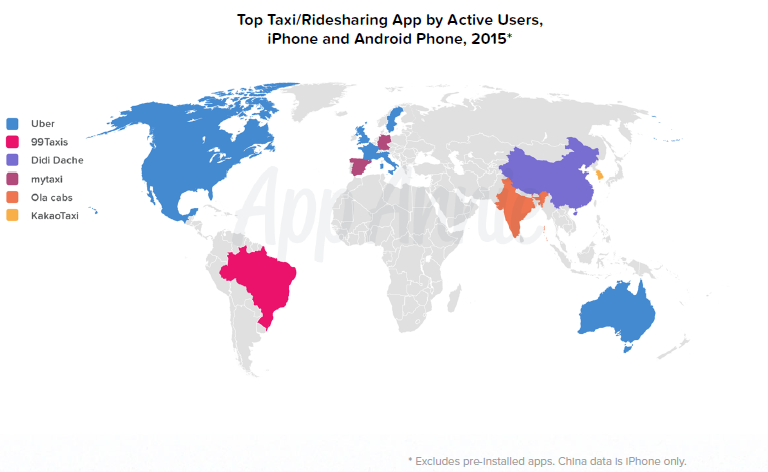
Uber Technologies Inc., which operates in 68 countries and 375 cities, is the only global ridesharing app and holds the top two spots in nearly every market it operates in, but the report shows that it faces strong competition from local operators like 99Taxis in Brazil, Ola cabs in India, Didi Dache in China and mytaxi in parts of Europe.
In response to Uber’s continued expansion, regional ridesharing and taxi-hailing services Lyft, Ola, GrabTaxi and Didi Kuaidi formed a global alliance in December that allows users travelling internationally to use their local app to order a ride in the country their visiting. For example, an American visiting India can order a ride from an Ola driver using the Lyft app or someone from Thailand visiting the U.S. can order a ride from Lyft using the GrabTaxi app.
The ridesharing space seems set to change as companies offer new services and explore new technologies. In India, users are already able to order rickshaws thanks to local player Jugnoo as well as Uber. Meanwhile, Uber continues to expand outside ridesharing by offering a delivery services for anything from groceries to lunch.
Emerging technologies, like self-driving cars, are also a major focus for ridesharing services. Uber has invested heavily in autonomous vehicle research and earlier this month General Motors Inc. announced that it would invest $500 million in Lyft as part of a project to develop a fleet of self-driving Lyft cars.
Support our mission to keep content open and free by engaging with theCUBE community. Join theCUBE’s Alumni Trust Network, where technology leaders connect, share intelligence and create opportunities.
Founded by tech visionaries John Furrier and Dave Vellante, SiliconANGLE Media has built a dynamic ecosystem of industry-leading digital media brands that reach 15+ million elite tech professionals. Our new proprietary theCUBE AI Video Cloud is breaking ground in audience interaction, leveraging theCUBEai.com neural network to help technology companies make data-driven decisions and stay at the forefront of industry conversations.