



 NEWS
NEWS
NEWS
NEWS
NEWS

No major tech company can afford to ignore the changing nature of the business in which it deals. Solutions that have served perfectly well for years can become obsolete almost overnight, and without adjusting to these changing realities, even the largest of institutions can falter and fail.
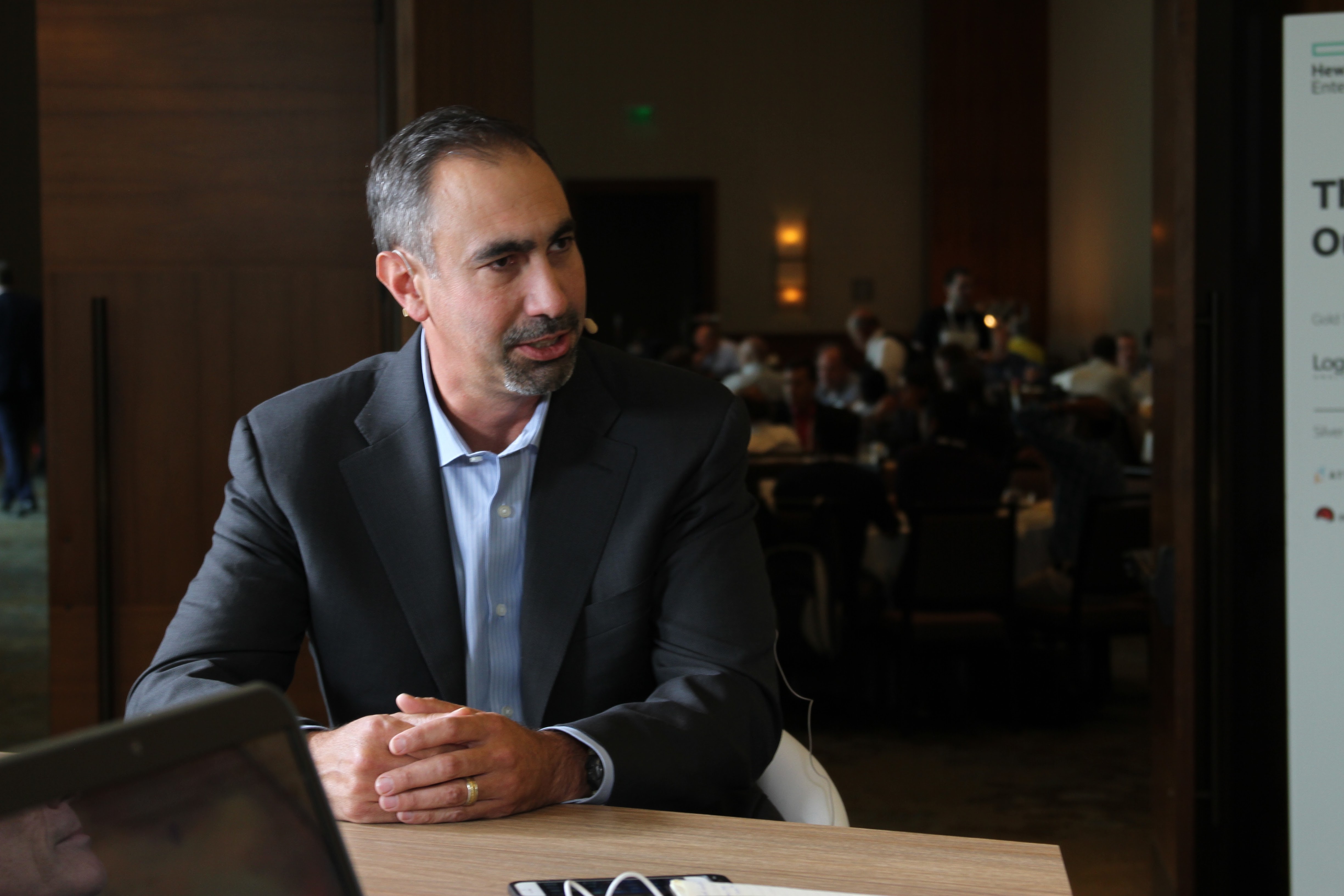
Michael Schutz, GM of Product Marketing for the Server and Tools Division of Microsoft, joined Dave Vellante (@dvellante) and Paul Gillin (@pgillin), cohosts of theCUBE, from the SiliconANGLE Media team, during the HPE Big Data Conference to discuss Microsoft’s move toward improved customer choice, warming up to Linux, and finding the balance point between freedom and control.
Schutz began by addressing Microsoft’s connection with HPE, a collaboration built on their assessment of the market’s future. “We really share the vision of customers that are going to be in this hybrid-cloud world for a very long time to come,” he said. “Customers are betting with their feet, moving to the cloud really rapidly, but they’ve got a lot of existing investments, applications and data in their existing environment on premises, and we really are interested in helping customers harness all of that. That was the basis of … the partnership we created with HPE.”
Schutz was also enthusiastic about the changes taking place within Microsoft, saying, “It’s a fantastic time to be with the company. Our interactions with customers are unlike they’ve ever been in my 14 years that I’ve been at the company.”
In satisfying customer needs, there has been a move by Microsoft to enable a wider range of software for use in its clouds. “The heart of that is really … just to meet customers where they are … and if they have a particular set of tools that they want to use, well, let’s go make our technology work really great with those tools and technology,” he said.
Furthering this swell of support for customer choice, Microsoft is creating semi-local centers for handling customer data. “Right now we operate in what we call ‘data-center regions’; these are clusters of data-centers, and we now are operating 26 of these … and we’ve announced a total of 34,” Schutz shared.
“What’s important about this to customers is not the number, necessarily; it’s really that their applications and their data is closer to them. … At the end of the day, it’s plumbing. We want it to be invisible,” he said.
“The platform for us is less about whether it’s Windows or not, it’s [that] the cloud is the platform,” Schutz explained, addressing the evolving nature of storage and deployment platforms with recognition that every such utility eventually hits a point of proving either its viability or lack of such.
“There’s a maturity curve for all those technologies when they become mainstream or when we think there’s real use-cases in the private cloud, that’s when we can bring them in. … The reality is that most customers just want to run their applications in an ‘Infrastructure as a Service’ model, really efficiently, and they wanna build new applications that are cloud-native on a platform as a service,” Schutz stated.
He added: “There’s no ‘one size fits all’ solution out there,” Schutz concluded. “Our job is to make sure the customers run the things that they choose in our cloud.”
Watch the complete video interview below, and be sure to check out more of SiliconANGLE and theCUBE’s coverage of the HPE Big Data Conference.
Support our mission to keep content open and free by engaging with theCUBE community. Join theCUBE’s Alumni Trust Network, where technology leaders connect, share intelligence and create opportunities.
Founded by tech visionaries John Furrier and Dave Vellante, SiliconANGLE Media has built a dynamic ecosystem of industry-leading digital media brands that reach 15+ million elite tech professionals. Our new proprietary theCUBE AI Video Cloud is breaking ground in audience interaction, leveraging theCUBEai.com neural network to help technology companies make data-driven decisions and stay at the forefront of industry conversations.