 EMERGING TECH
EMERGING TECH
EMERGING TECH


EMERGING TECH

Uber Technologies Inc. has expanded its push into artificial intelligence through the acquisition of New York City-based Geometric Intelligence Inc., a company that is making an ambitious attempt to do machine learning more efficiently from less data.
Under the deal, Geometric Intelligence’s 15-person staff will relocate to Uber’s hometown of San Francisco and form Uber AI Labs. Two of them, founding Chief Executive Gary Marcus and cofounder and Chief Science Officer Zoubin Ghahramani, will lead the new group. The new unit will work on software that tries to more accurately estimate rider locations and travel times, along with building software for Uber’s self-driving vehicles project.
“In spite of notable wins with machine learning in recent years, we are still very much in the early innings of machine intelligence,” Uber Chief Product Officer Jeff Holden said in a statement. “The formation of Uber AI Labs … represents Uber’s commitment to advancing the state of the art, driven by our vision that moving people and things in the physical world can be radically faster, safer and accessible to all.”
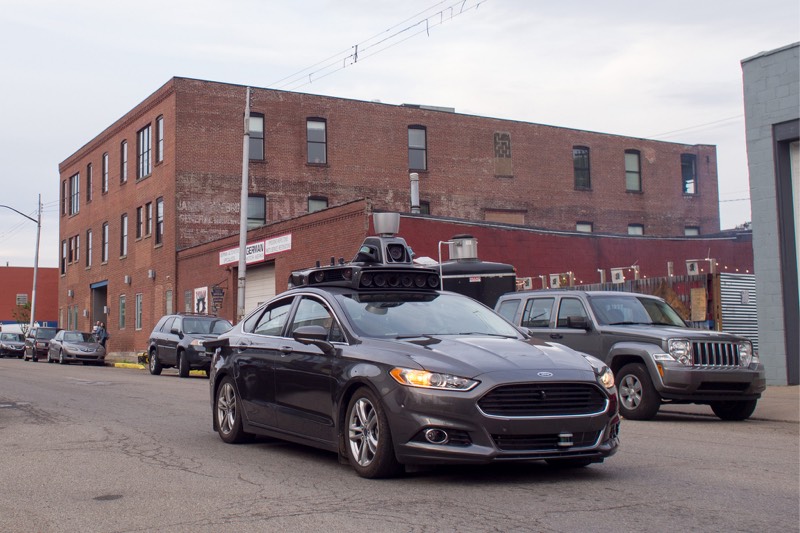
Uber’s self-driving car efforts have quickly taken off, including the company starting real world testing of their current tech in Pittsburgh in September.
Marcus told The New York Times that “because of the scale of data people are operating on, even the smallest gains in efficiency can turn out enormous changes at these companies, especially in terms of profit.”
The landing of Geometric Intelligence to form the core of Uber AI Labs isn’t a huge acquisition as startups in the space go, but it does bring a wealth of knowledge to Uber nonetheless.
Marcus, a cognitive scientist from New York University, has been a persistent critic of most current approaches to artificial intelligence, in particular deep learning. Although that branch of AI, roughly modeled on how the brain learns, is responsible for big improvements lately in speech and image recognition and language translation, it requires lots of data to be trained adequately.
“Children can do better even at 2 years old in terms of syntax and logic,” Marcus noted at a 2015 conference. “We wanted Rosie the Robot and instead we got Roomba.” The reason, he said, is that “AI is fixated on Big Data, and I’d argue that children learn with small data. The only route to true machine intelligence is going to begin with a better understanding of human intelligence.”
Ghahramani is a Cambridge professor of machine learning. Others at Geometric Intelligence include Kenneth Stanley, a professor of computer science at the University of Central Florida, and Douglas Bemis, a recent NYU graduate with a Ph.D. in neurolinguistics.
With reporting from Robert Hof
Support our mission to keep content open and free by engaging with theCUBE community. Join theCUBE’s Alumni Trust Network, where technology leaders connect, share intelligence and create opportunities.
Founded by tech visionaries John Furrier and Dave Vellante, SiliconANGLE Media has built a dynamic ecosystem of industry-leading digital media brands that reach 15+ million elite tech professionals. Our new proprietary theCUBE AI Video Cloud is breaking ground in audience interaction, leveraging theCUBEai.com neural network to help technology companies make data-driven decisions and stay at the forefront of industry conversations.