 APPS
APPS
APPS
APPS


APPS

A Princeton University researcher may have just dealt Facebook Inc. a sucker punch in its war against ad blockers, creating a new tool that goes undetected by the company’s anti-ad-blocking software.
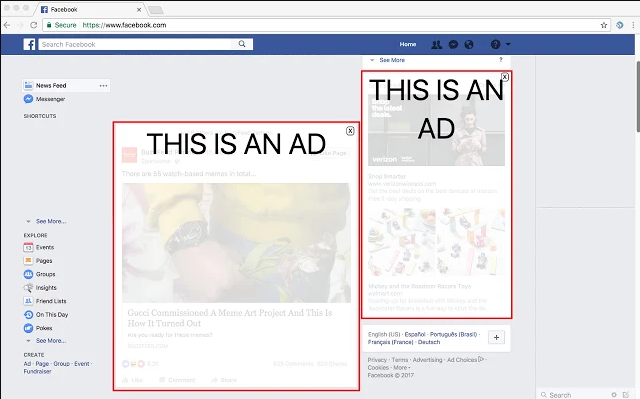
Computer scientist Arvind Narayanan and Princeton undergraduate Grant Storey have created a new kind of ad blocker that works in a similar way to how humans identify ads. Quite simply, it looks at things like the word “sponsored,” icon graphics and container sizes to spot ads on a web page. The researchers call it Perceptual Ad Blocker.
The researchers are trying to skirt around the ethical argument of ad blocking by covering ads it detects with text stating, “This is an ad,” rather than blocking them completely. The Perceptual Ad Blocker is available as an extension on the Chrome browser for those who wish to try it out.
Narayanan and Storey’s ad blocker works differently from existing tools, which scan the source code of each website a user visits to look for advertisements. The problem with this method is that companies such as Facebook have become very good at disguising the ads they place, hence last year’s “war” between it and AdBlock, the world’s leading ad blocker. What Perceptual does is avoid looking at the hidden HTML code of the websites it visits, instead focusing on the actual content.
The two researchers actually created a version of Perceptual specifically for Facebook last year, after the social media giant announced its plans to make advertisements look like regular posts in an effort to dodge ad blockers. That version is currently being used by “several thousand” people, and the latest version of the tool now covers the rest of the Internet, not just Facebook.
The researchers don’t claim the Perceptual ad blocker is unbeatable, but they do believe it’s a war that Facebook and others cannot win. “We don’t claim to have created an undefeatable ad blocker, but we identify an evolving combination of technical and legal factors that will determine the ‘end game’ of the arms race,” Narayanan wrote in a blog post at Freedom to Tinker.
Narayanan reckons that because advertisers are required by law to label their ads as such in order to not mislead consumers, there will always be some way to tell if an ad is an ad. So far, Narayanan has tested Perceptual on fifty known “anti-ad-blocking” sites, and was able to identify every single advertisement without being detected.
Your move, Facebook.
Support our mission to keep content open and free by engaging with theCUBE community. Join theCUBE’s Alumni Trust Network, where technology leaders connect, share intelligence and create opportunities.
Founded by tech visionaries John Furrier and Dave Vellante, SiliconANGLE Media has built a dynamic ecosystem of industry-leading digital media brands that reach 15+ million elite tech professionals. Our new proprietary theCUBE AI Video Cloud is breaking ground in audience interaction, leveraging theCUBEai.com neural network to help technology companies make data-driven decisions and stay at the forefront of industry conversations.