
 INFRA
INFRA
INFRA
INFRA
INFRA

Hackers like to hack other hackers.
That bit of poetic justice is the main takeaway from new research published by security firm Trend Micro Inc. that studied the actions of hackers who operate on the dark web.
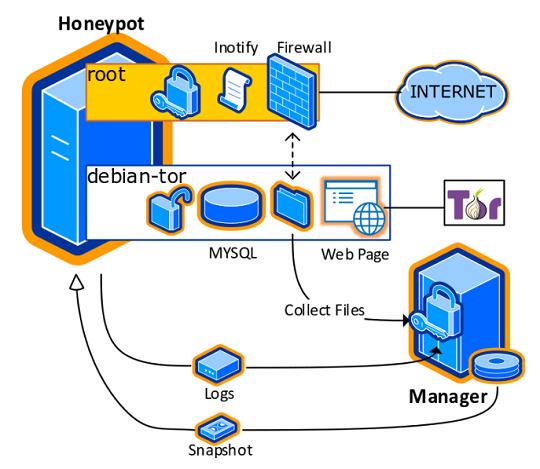
The company set up a number of “honeypots,” that is, decoy server setups to gather information, to gain some knowledge of the attack landscape within the dark web. That’s the network of sites and marketplaces, reached primarily through the anonymity software Tor, that specialize in selling products and services used by hackers along with other illegal goods.
The four honeypots included setting up sites that imitated services that are regularly found on the dark web. They included a site that pretended to be an invitation-only black market for stolen goods, a blog that pretended to offer custom criminal services, and two that pretended to be a private FTP service and an underground forum.
The researchers ran the honeypots for six months and also listed the sites on traditional search engines to attract further attention. The results proved that hackers indeed like to hack other hackers. Within the first two months of operation, the honeypots were attacked 170 times, with a number of attacks actually coming from the public Internet via the Tor2Web service. The majority of attacks saw hackers adding web shells to the honeypot service, giving them the ability to run system commands.
“Our key finding is that organizations operating in the Dark Web seem to be attacking each other,” Trend Micro Senior Threat Researcher Macro Malduzzi said in a blog post. “Our honeypot was set up to mimic underground services like VIP marketplaces and forums run by ‘shady’ organizations and/or individuals.”
Attackers accessing the honeypots attempted to undertake a variety of actions. Some simply tried to deface and subvert the business to promote a competitor website. Others attempted to hijack and spy on communications. In the case of the fake FTP service, hackers attempted to steal confidential information from the server.
“There is no honor among thieves” may be a biblical quote, but it appears to be just as relevant thousands of years later.
Support our mission to keep content open and free by engaging with theCUBE community. Join theCUBE’s Alumni Trust Network, where technology leaders connect, share intelligence and create opportunities.
Founded by tech visionaries John Furrier and Dave Vellante, SiliconANGLE Media has built a dynamic ecosystem of industry-leading digital media brands that reach 15+ million elite tech professionals. Our new proprietary theCUBE AI Video Cloud is breaking ground in audience interaction, leveraging theCUBEai.com neural network to help technology companies make data-driven decisions and stay at the forefront of industry conversations.