

 BIG DATA
BIG DATA
BIG DATA

BIG DATA

Technology for social good is an expanding domain attracting boot-strapped entrepreneurs and industry giants alike. Sussing out solutions for epidemics, emergencies and natural disasters isn’t exactly simple arithmetic. Ingenious use of open-source technologies, big data analytics, and agile computing methods is helping innovators slay some of society’s biggest beasts.
Red Hat Inc. and United Nations Children’s Fund have teamed up to develop technologies for global children’s causes and other social issues.
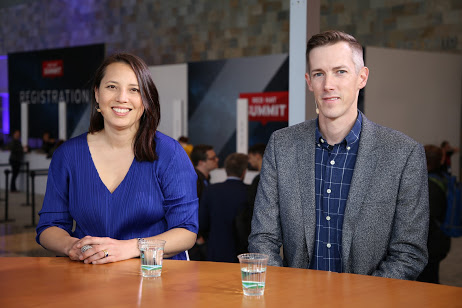
“One of the things that really aligns Red Hat and UNICEF is not just a commitment to open source and the values around that, but also this agile methodology,” said Erica Kochi (pictured, pictured left), co-founder of the UNICEF Innovation Unit in New York — the organization’s technology prototyping and scaling group — at UNICEF. Red Hat and UNICEF Innovation are taking the unbeaten path — through data layering, field research, and other methods — in search of solutions to difficult social problems.
Kochi and Mike Walker (pictured, right), global director of Open Innovation Labs at Red Hat, spoke with John Furrier (@furrier), host of theCUBE, SiliconANGLE Media’s mobile livestreaming studio, and guest host John Troyer (@jtroyer), chief reckoner at TechReckoning, during the Red Hat Summit in San Francisco.
Efficiency is king at Red Hat’s Open Innovation Labs, which has several global locations and also springs forth sporadic pop-ups, according to Walker. The team works on frugally funded projects geared for maximum impact. It doesn’t try to predict outcomes out of the gate; instead they rely on fast feedback and iteration. This naturally attracted the similarly oriented UNICEF. They two organizations came together in a workspace in New York City to focus on a tough problem. Then they wanted to test their prototype on end-users.
“We made a trip to Latin America to work with a UNICEF field office to get fast feedback on prototypes,” Walker said. “That helped us adjust what we ended up shipping as a product at the end of the two-month cycle.”
Layering data from multiple public and private sources helps paint a complete picture of a demographic or a particular problem, Walker added.
There are so many holes to fill in when looking at an epidemic, there can never be too much data to spackle them over, according to Kochi. “A really interesting picture emerges when you can start to layer all of these kinds of data, and that really helps us see where we should be focusing,” she said.
The duo serves their innovations back to the open-source community to learn from and contribute to as well.
Watch the complete video interview below, and be sure to check out more of SiliconANGLE’s and theCUBE’s coverage of the Red Hat Summit event. (* Disclosure: TheCUBE is a paid media partner for Red Hat Summit. Neither Red Hat Inc., the event sponsor, nor other sponsors have editorial control over content on theCUBE or SiliconANGLE.)
Support our mission to keep content open and free by engaging with theCUBE community. Join theCUBE’s Alumni Trust Network, where technology leaders connect, share intelligence and create opportunities.
Founded by tech visionaries John Furrier and Dave Vellante, SiliconANGLE Media has built a dynamic ecosystem of industry-leading digital media brands that reach 15+ million elite tech professionals. Our new proprietary theCUBE AI Video Cloud is breaking ground in audience interaction, leveraging theCUBEai.com neural network to help technology companies make data-driven decisions and stay at the forefront of industry conversations.