









 EMERGING TECH
EMERGING TECH
EMERGING TECH
EMERGING TECH

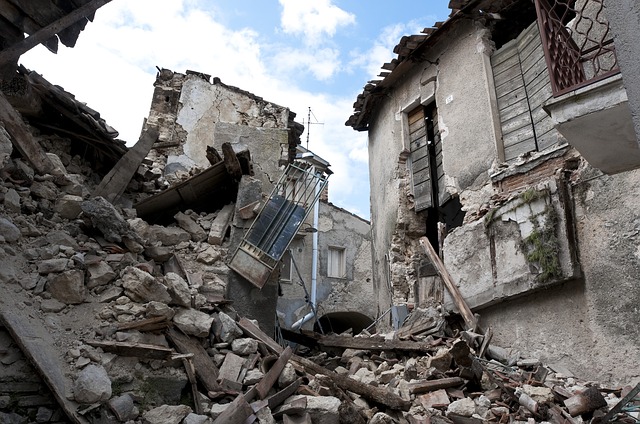
Earthquakes play out in phases. The first major tremor, or mainquake, unleashes the brunt of the tectonic forces below and is then followed by a series of aftershocks that are smaller yet can still seriously endanger buildings damaged by the initial movement.
Google LLC and Harvard University hope to mitigate the threat posed by these aftershocks with artificial intelligence. This morning, they detailed a joint project in which they had built an AI system to predict where secondary quakes are likely to hit.
There is currently no reliable method to account for the countless physical factors that influence the location of aftershocks. Speaking to ScienceDaily, the researchers who worked on the AI model stressed that their system is not ready to make real-world predictions either. But they hailed the results of the project as a major step forward for the field and said they “clearly upend the most dominant theory” for predicting aftershocks.
The researchers achieved the breakthrough after training the AI with a dataset of over 131,000 mainshock-aftershock measurement pairs. According to the group, the data was collected from 199 major earthquakes around the world. The researchers broke up each tremblor site into 1.9-square-mile grids and had the neural network compare the locations against one another for correlations.
During this analysis phase, the AI discovered a new combination of factors with which aftershocks can be predicted. It isolated two metrics in particular the researchers claim had never been widely applied for forecasting quakes. These factors, called the maximum shear stress change and the von-Mises yield criterion, are mainly used in fields such as metallurgy to assess how bendable materials will fare under stress.
The researchers tested the approach by running their model against 30,000 mainshock-aftershock pairs. On a scale of accuracy running from 0 to 1, the system scored an impressive 0.849. The AI admittedly achieved that result under fairly narrow test conditions, but it handily beat the 0.583 score of the Coulomb failure stress change model, which has until now been considered the most reliable means of predicting aftershock locations.
“The end result was an improved model to forecast aftershock locations and while this system is still imprecise, it’s a motivating step forward,” wrote Phoebe DeVries, a post-doctoral fellow working at Harvard who took part in the project. “There was also an unintended consequence of the research: it helped us to identify physical quantities that may be important in earthquake generation.”
“When we applied neural networks to the data set, we were able to look under the hood at the specific combinations of factors that it found important and useful for that forecast, rather than just taking the forecasted results at face value,” DeVries explained. “This opens up new possibilities for finding potential physical theories that may allow us to better understand natural phenomena.”
Support our mission to keep content open and free by engaging with theCUBE community. Join theCUBE’s Alumni Trust Network, where technology leaders connect, share intelligence and create opportunities.
Founded by tech visionaries John Furrier and Dave Vellante, SiliconANGLE Media has built a dynamic ecosystem of industry-leading digital media brands that reach 15+ million elite tech professionals. Our new proprietary theCUBE AI Video Cloud is breaking ground in audience interaction, leveraging theCUBEai.com neural network to help technology companies make data-driven decisions and stay at the forefront of industry conversations.