



 INFRA
INFRA
INFRA
INFRA
INFRA

For Bernie Gracy, the culmination of 20 years of speaking experience came last fall when he stepped on stage in front of 7,000 people at a Amazon Web Services Inc. conference in Chicago last summer.
“This old dog had to learn some new tricks for that one,” said Gracy, chief digital officer at Agero Inc., a provider to roadside assistance and claims management services to the auto and insurance industry. But having to squeeze a 15-minute talk into eight minutes is all part of the expertise that Gracy said pays off handsomely for him and his employer in the long run.
When it comes to choosing executives to outline a vision for the company, few organizations put the chief information officer at the top of the list. Information technology has traditionally been a back-office function associated more with keeping the lights on than imagining the future. “Traditional IT was the engine room, a cost center,” Gracy said.
But with the digital transformation wave sweeping the business world, those old attitudes may be changing. “If the CIO isn’t the one speaking about technology enablement, I’m not sure who’s going to do it,” said Barry Libenson, CIO of Experian Corp., a provider of services to the credit and payments industry.
Of the thousands of public relations pitches a SiliconANGLE reporter receives in the course of a year, barely a handful offer the CIO as a spokesperson. Experian is an exception. The company has designated Libenson as a principal spokesman for its digital transformation initiatives, earning coverage in The Wall Street Journal last summer and a featured spot in a new book about driving transformational change. Last fall Experian tapped Libenson to anchor a webcast about modernizing the customer experience.
The motivations for both company and CIO are simple: “My goal is one and only one: to gain positive exposure for my employer,” Libenson said.
Little research exists on the topic of CIO personal branding, but there’s no doubt the role of the top technologist is ascendant. A survey commissioned last year by Intel Corp. and VMware Inc. found that four in five CIOs believe their function has become more important over the last five years and that communication and influence is second only to leadership on the list of critical skills.

Experian’s Libenson: “Many tech people don’t understand how important their voice can be to the company.” Photo: Experian
In today’s skill-starved environment, visible CIOs can boost an organization’s reputation as a place talented young people would want to work. That’s one of the reasons Peter Weis, CIO at Matson Navigation Co. Inc., took the plunge a few years ago.
The 135-year-old company was in the middle of a massive infrastructure transformation that included shutting down its data centers and moving all its applications to the cloud. “We needed new generation of talent that wanted to do things beyond keeping ships running on time,” he said.
Persuading talented technologists to work at a shipping company in the red-hot San Francisco Bay Area skills market is a constant challenge. Weis believed that telling the reinvention story could help establish Matson’s reputation as a technologically progressive employer that also puts a premium on work-life balance. From talking to potential recruits, he knew one thing for sure: “Anybody that’s going to join a company is going to Google its leadership,” he said.
If you Google Peter Weis and Matson, the results tell the story of a company that is going all in on digital transformation. A fluid writer, Weis has contributed extensively to various publications on leadership topics and he’s an accomplished self-taught speaker. The recognition has paid off in Computerworld’s designation of Matson as one of the top 100 places to work in IT last year and Weis’s induction into CIO magazine’s CIO Hall of Fame in 2014.
Matson maintains a healthy IT recruiting pipeline, and Weis believes publicity plays no small part. “Every single hire we make, we find out that people have done the research on the company,” he said.
Weis and Gracy credit International Data Corp’s CIO Executive Council with helping them promote themselves and their companies. Founded in 2005, the organization provides a variety of career and management development services for top IT executives. About 200 CIOs are paying members.
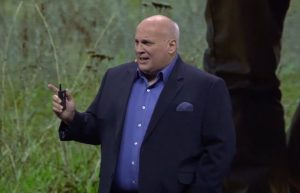
Agero’s Gracy: “This old dog had to learn some new tricks.” Photo: AWS
One of the Council’s more novel services is personal brand management, a discipline the grew out of the realization that “the CIO is coming out of the back room and being pushed to the forefront of building awareness for the organization,” said Tim Scannell, the council’s director of strategic content.
The group provides informal media training, screens inquiries and even advises CIOs on how to submit applications for industry awards. “There’s been quite a change in attitude” as members have seen the results of their outwardly focused colleagues’ efforts, said Kath Marston, the council’s group vice president for client experience/operations.
They include interviews with wire services, TV news crews and keynote speaking presentations. In the first quarter of this year, the council organization passed along media inquiries to 133 of its members, “and easily one-third of those people have been placed in media or event opportunities worldwide,” Scannell said.
Journalists appreciate the service, since CIOs can be some of the most difficult sources to nail down. “After a simple introduction from the council, I’m able to take the handoff and line up interviews with the industry’s biggest names and thought leaders without having to chase them down or work through lengthy public relations channels,” said Beth Stackpole, a veteran technology and business writer.
When Stackpole was preparing coverage of IDG’s 2019 State of the CIO report, the council lined up 20 candidate for interviews. “I had to literally whittle down the number by half because we couldn’t use all the content,” Stackpole said.
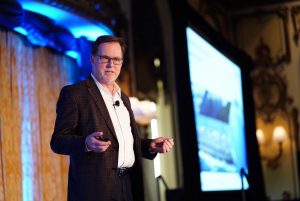
Matson’s Weis: “There’s not a talk I can give where I’m nervous anymore.” Photo: Peter Weis on Twitter
Not all CIOs are candidates for the spotlight, nor does every organization want to promote its technology prowess. Experian’s Libenson thinks CIOs who don’t seek the spotlight are missing an opportunity. “It’s incredible how many tech people don’t understand how important their voice can be to the company,” he said.
Not so at Experian. “The most exciting thing is when clients come back to us and say they saw something in the press and they want to talk,” said Michael Troncale, an Experian publicist who specializes in technology. “It benefits the company hugely from the standpoint of being perceived as a technology leader.”
In addition to recognition and recruitment benefits, CIOs can also use their pulpits to curry favor with preferred vendors, such as preferred service and discounts. “There are a lot of tangential benefits,” Libenson said.
Gracy encourages everyone in his organization to pursue public speaking opportunities as a way of highlighting the organization’s expertise and attracting talent. “Ultimately, when people choose to work for a company, they ask who they’re going to work with,” he said. “We create magnets for talent.”
For executives who fear they’re too introverted to face a crowd, he advises following the approach taken by comedians when testing out new material. “Go to a safe spot, an out-of-the-way conference where you can practice your craft,” he said. “Seek radical feedback on how you did and what you could do better.”
As an introvert, Weis admitted, speaking was initially difficult for him, but choosing the right venues and practicing in front of progressively larger helped him overcome his reservations. “There’s not a talk I can give where I’m nervous anymore,” he said. “I’ve developed a whole new set of muscles.”
After 22 years as a CIO, Weis is now in the process of transitioning to what he calls “post-corporate” life. Contacts he built on the speaking circuit helped him to land a position as a lecturer at the University of California at Berkeley, his alma mater. “It’s changed my career and, by extension, my life in ways I couldn’t have anticipated,” he said.
Support our mission to keep content open and free by engaging with theCUBE community. Join theCUBE’s Alumni Trust Network, where technology leaders connect, share intelligence and create opportunities.
Founded by tech visionaries John Furrier and Dave Vellante, SiliconANGLE Media has built a dynamic ecosystem of industry-leading digital media brands that reach 15+ million elite tech professionals. Our new proprietary theCUBE AI Video Cloud is breaking ground in audience interaction, leveraging theCUBEai.com neural network to help technology companies make data-driven decisions and stay at the forefront of industry conversations.