Artificial intelligence may dominate the headlines, but the real strain is buried deep in enterprise data infrastructure. As AI moves into everyday operations, can the systems beneath it withstand the scale and speed it demands — or will they quietly become the breaking point?
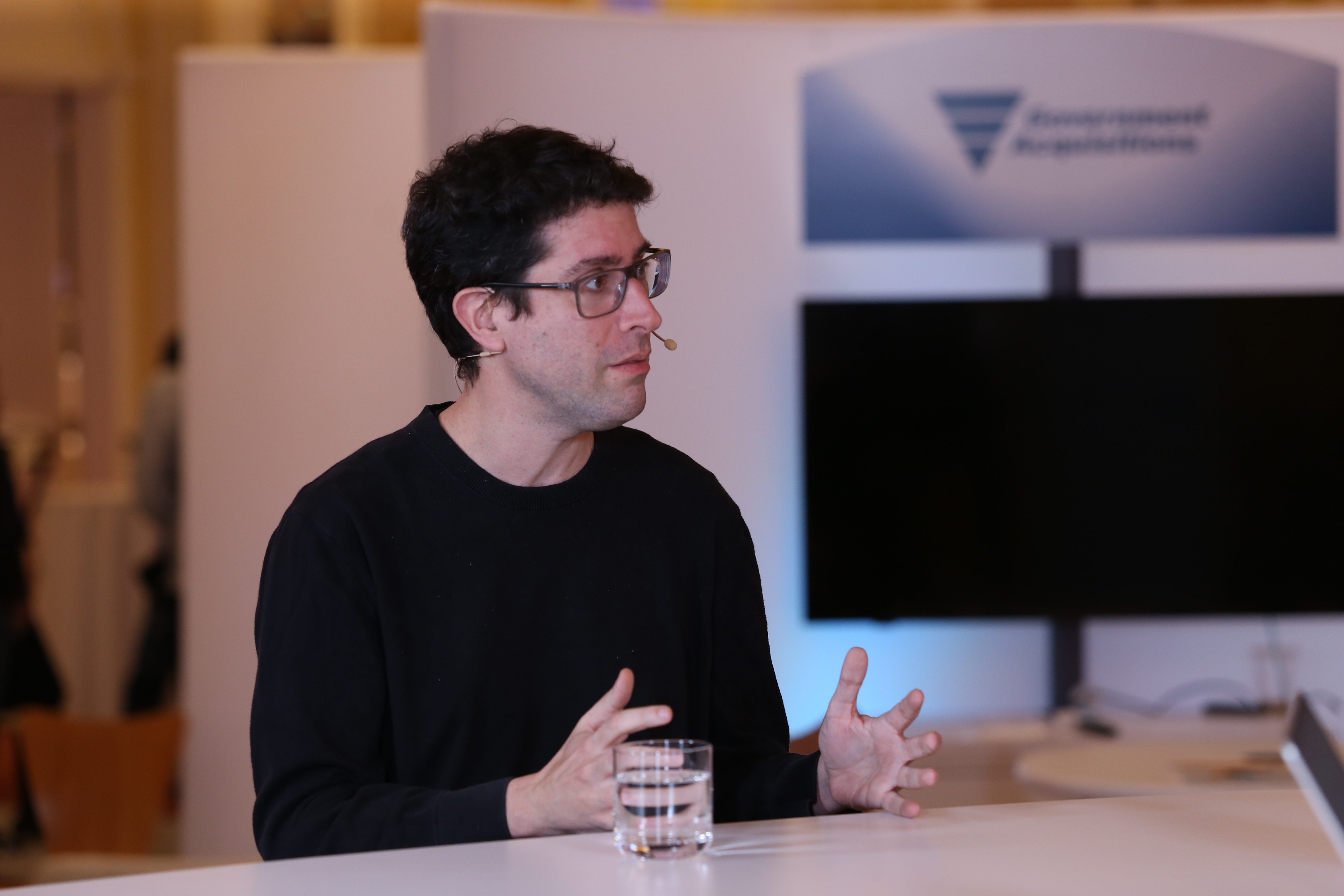
Vast Data Inc., a data platform company focused on high-performance infrastructure for AI and large-scale analytics, is staking its next moves on the idea that this foundational layer will determine who succeeds. The company was founded in 2016, the same year modern AI labs such as OpenAI began reshaping the industry. What then looked like a long bet on distributed systems now appears, in hindsight, well-timed. After a decade spent building for extreme scale and parallelism, that calculated risk on AI appears to be paying off, according to Vast founder and CEO Renen Hallak (pictured).
“I think we’ve been building towards this moment for the last 10 years,” he told theCUBE. “Ten years is a long time, but from the very beginning we were always hopeful that AI will happen. It’s happened a lot faster than we expected it to, and it’s going to accelerate into the next decade. But that’s what we live for.”
Hallak spoke with theCUBE’s Dave Vellante and Rebbeca Knight at Vast Forward 2026, during an exclusive broadcast on theCUBE, SiliconANGLE Media’s livestreaming studio. They discussed the evolution of data infrastructure for AI, the architecture behind the expanding Vast AI Operating System and the company’s long-term growth strategy. (* Disclosure below.)
AI turns data infrastructure into the operating layer
As Vast tightens its strategic relationships with companies such as Solidigm, those alliances point to a larger architectural shift. Each computing era has revolved around a defining principle, Hallak noted. Previous waves of computing were shaped by computing power or connectivity, but AI is defined by something different.
“Every one of the operating systems that we’ve had before was for a revolution — and a technological revolution that had a specific defining characteristic,” he said. “You both [hosts Vellante and Knight] have an Apple operating system in your desktop. That was computer-oriented. Internet was networking-oriented. AI is data.”
Naturally, a data-centric era forces enterprises to rethink their foundations. Training large models already requires enormous throughput, but inference at scale is even more demanding. As AI applications evolve into fleets of autonomous agents, data must be accessed simultaneously, refined continuously and fed back into learning loops. But traditional enterprise systems were not designed for this kind of concurrency, Hallak explained.
“Once you want to start inference, then it needs even faster access, because you have trillions of agents eventually all needing to access all of this data in parallel,” he said. “It’s not one-hop inference; it’s multi-hop for reasoning. And then it’s reinforced learning across inference and training as we fine-tune these models, and each agent will fine-tune its own [themselves] — every one of those things is another exponent.”
As those exponents compound, incremental upgrades are no longer enough. Vast’s position is that legacy architectures cannot stretch far enough to support agentic AI at a global scale, according to Hallak. What is required instead is a new, unified data infrastructure layer that integrates storage, database capabilities, scheduling and security into a single system built specifically for AI workloads.
“When you add two, three, four [or] five exponents, then you realize the old stuff was not built for it and it won’t be able to do it,” he said. “You need a new architecture; you need a new system. That’s why we’re becoming more relevant as we progress on this journey.”
Here’s the complete video interview, part of SiliconANGLE’s and theCUBE’s coverage of Vast Forward:
(* Disclosure: TheCUBE is a media partner for Vast Forward. Sponsors of theCUBE’s coverage, including presenting sponsor Solidigm, do not have editorial control over content on theCUBE or SiliconANGLE.)
Photo: SiliconANGLE
A message from John Furrier, co-founder of SiliconANGLE:
Support our mission to keep content open and free by engaging with theCUBE community. Join theCUBE’s Alumni Trust Network, where technology leaders connect, share intelligence and create opportunities.
15M+ viewers of theCUBE videos, powering conversations across AI, cloud, cybersecurity and more
11.4k+ theCUBE alumni — Connect with more than 11,400 tech and business leaders shaping the future through a unique trusted-based network
Are you an AWS customer? Support SiliconANGLE financially by buying your AWS services from our Marketplace portal page and links: https://siliconangle.com/aws-marketplace/
About SiliconANGLE Media
SiliconANGLE Media is a recognized leader in digital media innovation, uniting breakthrough technology, strategic insights and real-time audience engagement. As the parent company of SiliconANGLE, theCUBE Network, theCUBE Research, CUBE365, theCUBE AI and theCUBE SuperStudios — with flagship locations in Silicon Valley and the New York Stock Exchange — SiliconANGLE Media operates at the intersection of media, technology and AI.
Founded by tech visionaries John Furrier and Dave Vellante, SiliconANGLE Media has built a dynamic ecosystem of industry-leading digital media brands that reach 15+ million elite tech professionals. Our new proprietary theCUBE AI Video Cloud is breaking ground in audience interaction, leveraging theCUBEai.com neural network to help technology companies make data-driven decisions and stay at the forefront of industry conversations.








 AI
AI