
 AI
AI
AI
AI
AI

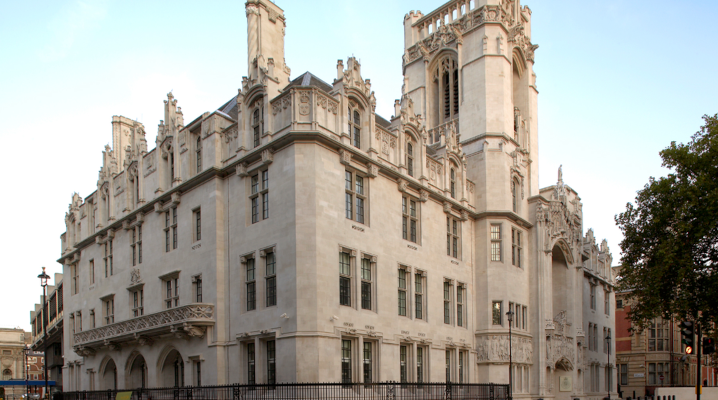
The Supreme Court of the United Kingdom today ruled that an artificial intelligence can’t receive a patient for an invention it has created without human assistance.
The judgment concludes a legal case launched in 2019 by Stephen Thaler, a Missouri-based computer scientist. Thaler has filed similar AI patent applications in the U.S., European Union and Australia that were likewise rejected.
The U.K. case revolved around an AI system dubbed DABUS, or Device for Autonomous Bootstrapping of Unified Sentience Inventions, that Thaler had developed a number of years ago. In 2019, he asked the U.K. Intellectual Property Office to grant DABUS patents for two inventions it’s said to have developed autonomously. The first invention is a container for storing food and beverage, while the other is a light beacon designed to attract attention in case of an emergency.
The Intellectual Property Office rejected the patent requests. After two unsuccessful appeals filed by Thaler, the matter was brought before the U.K.’s Supreme Court this past March.
The case revolved around two main questions. The first is whether an AI system such as DABUS is eligible to receive patents under the U.K.’s Patents Act 1977, the legislation that regulates such matters. Second, the judges discussed whether Thaler may receive the patents in DABUS’ place if the system doesn’t qualify for them.
“These questions raise policy issues about the purpose of a patent system, the need to incentivise technical innovation and the provision of an appropriate monopoly in return for the making available to the public of new and non-obvious technical advances,” the ruling states.
The five judges who presided over the case answered in the negative to both questions raised by Thaler’s patent applications. According to the ruling, the Patents Act 1977 specifies that only a person or a company may be issued a patent by the Intellectual Property Office. Second, the judges determined that Thaler can’t receive patents for DABUS’ two inventions because they were developed autonomously by the AI system.
“Neither application designated a human inventor, and no separate document designating a human inventor was ever filed,” the judges wrote in the ruling. “Instead, the request for grant forms accompanying the applications stated that Dr. Thaler was not an inventor of the inventions described in the applications.”
In 2020, the U.S. Patent and Trademark Office issued a similar decision following nearly identical patent applications that Thaler had filed with the agency. The U.S. Supreme Court declined to hear the case, leaving the decision in place. The Australian High Court and the European Union’s European Patent Office earlier likewise rejected patent requests from Thaler for the container and light beacon invented by DABUS.
Support our mission to keep content open and free by engaging with theCUBE community. Join theCUBE’s Alumni Trust Network, where technology leaders connect, share intelligence and create opportunities.
Founded by tech visionaries John Furrier and Dave Vellante, SiliconANGLE Media has built a dynamic ecosystem of industry-leading digital media brands that reach 15+ million elite tech professionals. Our new proprietary theCUBE AI Video Cloud is breaking ground in audience interaction, leveraging theCUBEai.com neural network to help technology companies make data-driven decisions and stay at the forefront of industry conversations.